



What to Consider When Buying a Log Splitter
These helpful tips can be useful for buying a log splitter for transforming your fallen trees into firewood
Log splitters are useful pieces of equipment, applying strong, consistent splitting force to turn your logs into firewood.
But what do you need to know before purchasing a log splitter?
Consider your specific needs, such as how often you’ll use the log splitter and the size of logs you plan to split, to ensure you choose the right equipment.
Let’s get into the basics so you can make an informed decision:
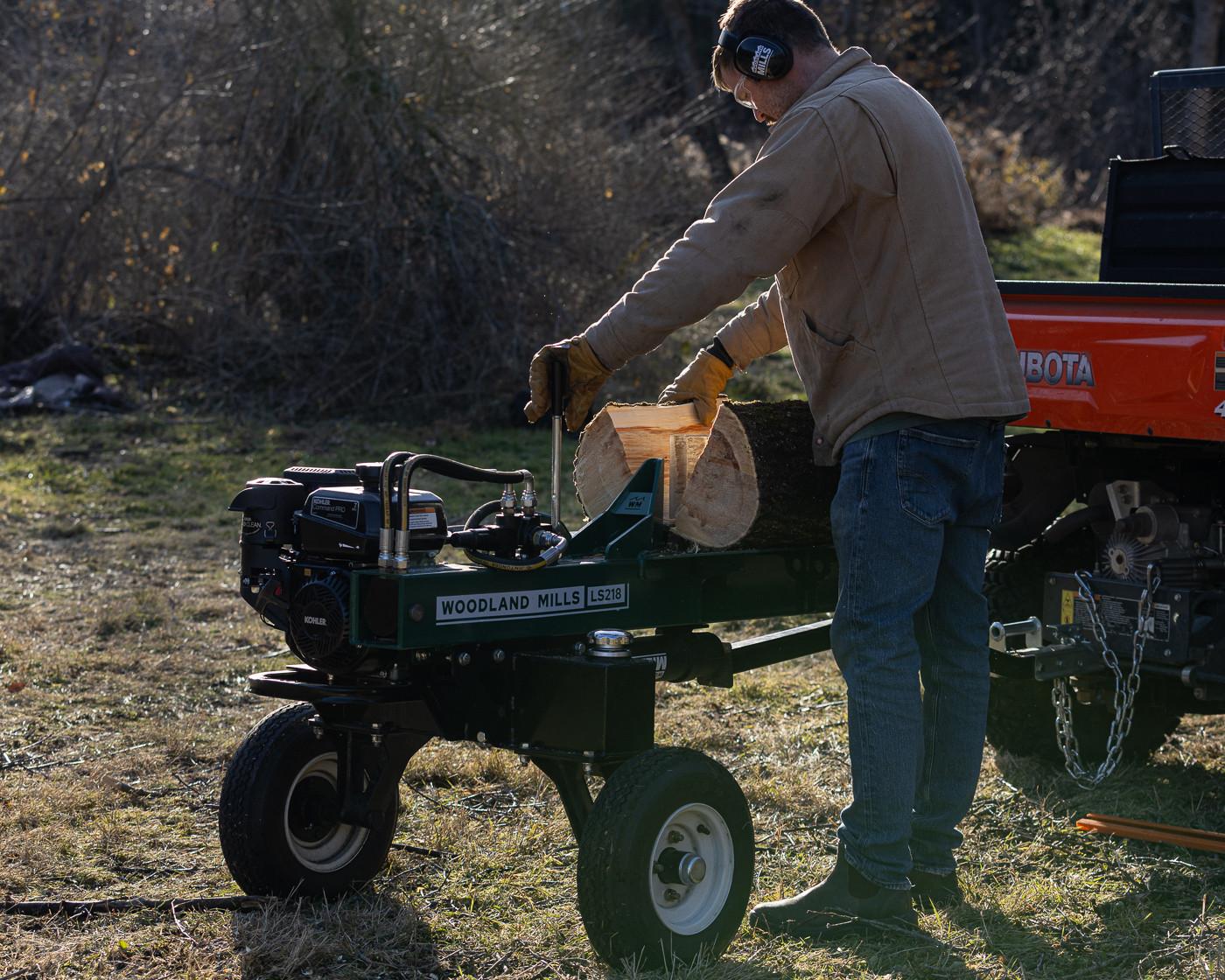
How does a log splitter work?
Log splitters are machines which apply force, typically from an engine-powered hydraulic system or manual force via leverage, to press a wedge into a log and split it. Some splitters push the log into a wedge while others push a wedge into the log, but both achieve the same function.
Types of log splitters
There are multiple types of log splitters, including:
-
-
Manual Log Splitters: Also known as a kindling splitter. These usually use a lever that's hand-powered to apply splitting force to a log and are often vertical log splitters.
-
Electric Log Splitters: These machines utilize an AC cord as a power source to automatically push the wedge through the log without manual input.
-
Gas Powered Log Splitters: These machines have their own engines and can be deployed on your property, on a campground or on a job site to split logs in places where you may not have access to electricity. Most gas powered log splitters, like the Woodland Mills LS218, can also be towed.
-
PTO Log Splitters: These machines utilize the power of your tractor's engine, driven by the PTO, as a power source. Because they use your tractor as a power source you only need to maintain a single engine.
-
Horizontal log splitters are the most common models where the log is laid on the splitting table and the wedge is driven through the log. This segment is largely comprised of one-way log splitters, but two-way log splitters offers significant efficiently gains, as they can split in the forward and return actions of the wedge.
What are the advantages of a log splitter?
Having a machine to split logs into smaller pieces for easier handling and use can help save you a ton of time over manual log splitting. It can be especially helpful for its large log table, able to safely split thick logs that may be difficult to hand split.
Some models also come with optional accessories, such as the LS218’s hydraulic log lift, that can help lift up large logs that would otherwise be too difficult to lift on your own. Splitters can also be used to handle tough logs, such as large, knotty, or hardwood pieces, making them ideal for demanding jobs.
Wood splitters are convenient whether you’re splitting smaller logs, bigger ones, hardwood logs, or anything too difficult to split by hand. Always consider the size logs you need to split and ensure the splitter’s capacity matches your needs.
Factors to consider when buying a log splitter
Now let's get into things to think about before making your purchase:
1. What is the benefit of a gas powered log splitter?
Gas powered log splitters like the Woodland Mills LS218 are great for splitting wood outdoors, whether you’re splitting firewood on your property or taking it on the go to a remote cabin or campground. Compared to electric models, gas powered log splitters also offer more tonnage options, letting you handle more varieties of logs.
They can be great for making fuel for a wood stove or fireplace, and they're self-sufficient, so you don’t need a wall outlet or any outside source of power. Just fuel up the engine and you can take it wherever you want, also making them more portable than an electric model.
2. What tonnage do I need on a log splitter?
Tonnage dictates how tough of wood the machine can handle, with 5-10 tons great for small softwoods and producing kindling, and 18 tons and more necessary for large diameter or more dense species.
The LS218 features an 18-ton hydraulic system that's easy to use and can consistently output firewood, even if you're splitting dense hardwood species. Around 18 tons is typically sufficient for most landowners processing common firewood. A weaker log splitter may not be able to process tough, knotty or difficult logs the way the LS218 can.
3. How does the cycle time impact a log splitter?
A great automatic, hydraulic log splitter only takes several seconds to cycle and split a log.
Cycle time is important because that determines how quickly you can split logs. A faster machine means you can split more logs in less time, but that's not the only important element.
A 2-way log splitter can split on the forward and return actions of the wedge. This effectively lets you split twice the amount of logs, so no fuel from the engine is wasted. It's a key feature of the LS218 Log Splitter, and why, if you're looking for a great economical unit that's fuel efficient, this model may be the right log splitter for you.
4. Can you tow a log splitter on the road?
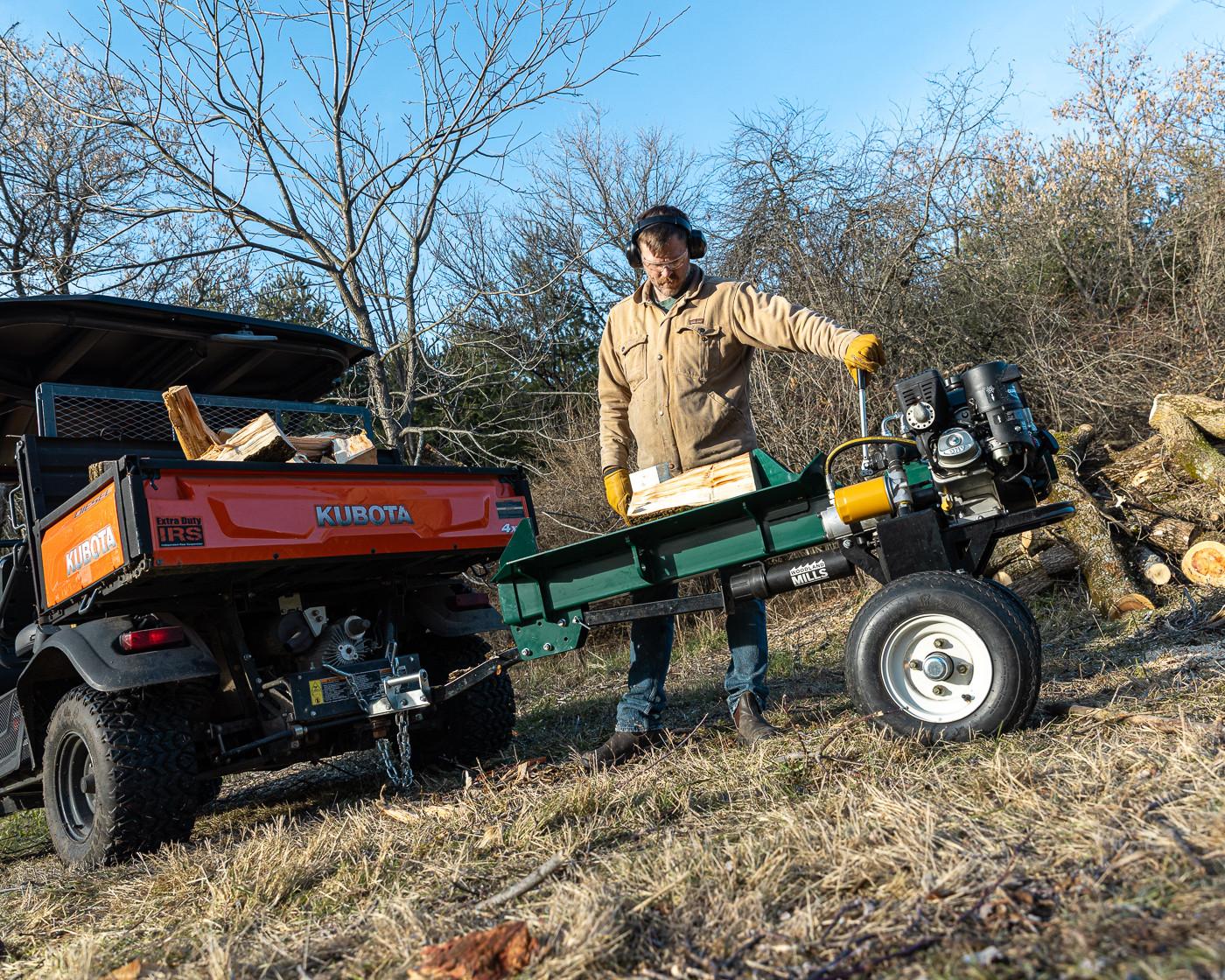
Most log splitters are equipped with a tow hitch, giving the user the ability to tow behind an ATV or truck to take it across your property, remote campgrounds, or where the wood pile is.
The LS218 Log Splitter is equipped with a solid steel axle, four-bolt hubs, and 8 inch steel rims with 4.8–8 DOT-approved tires, making it suitable for towing around your property and job site. Some regions may allow log splitters to be towed on public roads, but requirements vary. Always check local laws before towing on public roads.
It also features a 4-position adjustable tow hitch, allowing you to match the height of your tow vehicle. This allows you to match the splitter to your tow vehicle and maintain a level position without disconnecting during use, which is important because the hydraulic system must remain level during operation for proper performance.
Anything else I should know before buying a new log splitter?
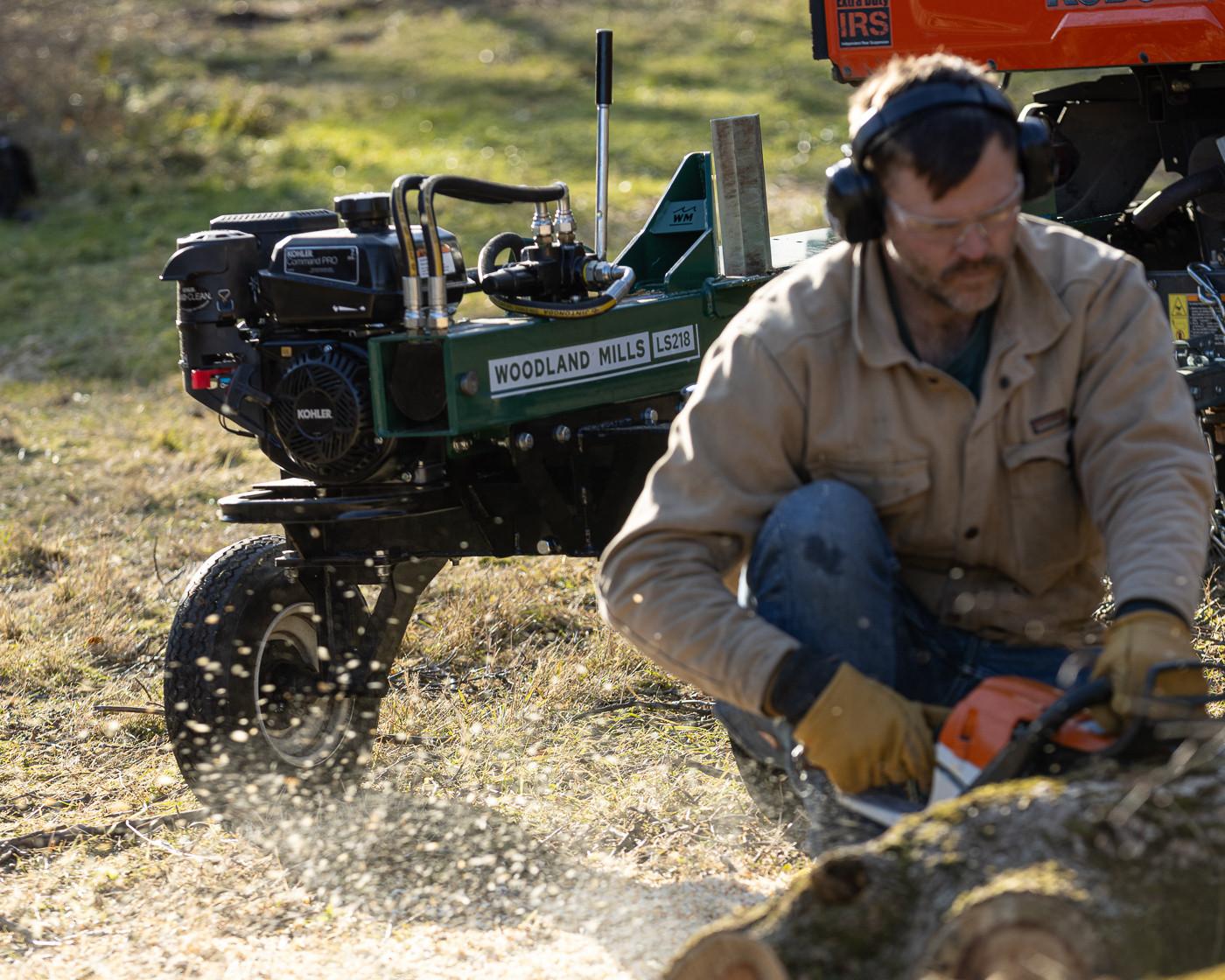
Here are a few tips before committing to a purchase of a new log splitter:
-
-
Figure out what type of wood you plan on splitting and get a log splitter with the right tonnage and size to accommodate them
-
Plan out what accessories you may need, such as a hydraulic lifting system or other optional add-ons
-
Plan a staging area on your land, or have portable bulk containers or bags you can easily use to store and move firewood
-
Have a covered area for storing your firewood and keeping it dry
-
Join the Woodland Mills Community Facebook group. Search advice and insights from over 65,000 knowledgeable, supportive members.
- Pre-purchase considerations
- Sawmill set-up support
- Project inspiration photos and videos
- Community troubleshooting support