



A Guide to Sharpening a Chainsaw
Here's how to get the cutting teeth sharpened and depth gauges tuned on your chainsaw chains
Chainsaws are important tools in your equipment arsenal, and ensuring you have sharp chains is key to being ready for the next job or project.
Getting the correct angles by hand can be difficult, especially for manually filing all the cutting teeth. Thankfully there are better ways of doing chainsaw sharpening.
So here are the steps you need to walking away with a fully sharpened chainsaw chain so you can get back to work.
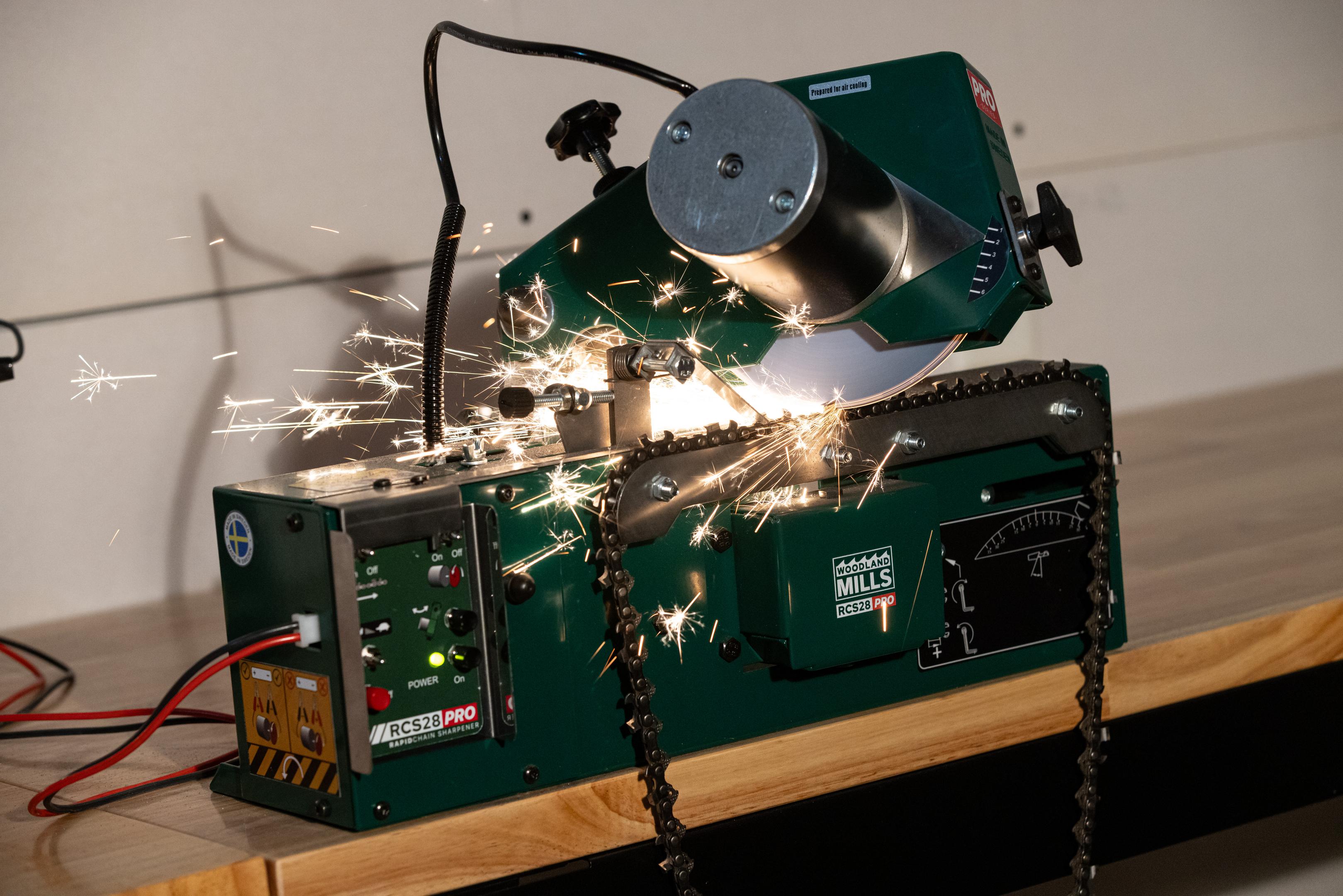
Why do I need to sharpen a chainsaw chain?
Over time and through use a chainsaw chain will gradually lose its edge and dull, making cuts more difficult. Side effects of cutting with dull chainsaw blades include:
-
-
More manual force needed to cut through wood
-
Higher potential for kickbacks that could potentially harm the user
-
That's why it's always recommended you sharpen your chainsaw chains before they get to the point where they're unsafe to use. Ensure you always have the proper tension on your chains and the bar rail is clean and free of debris.
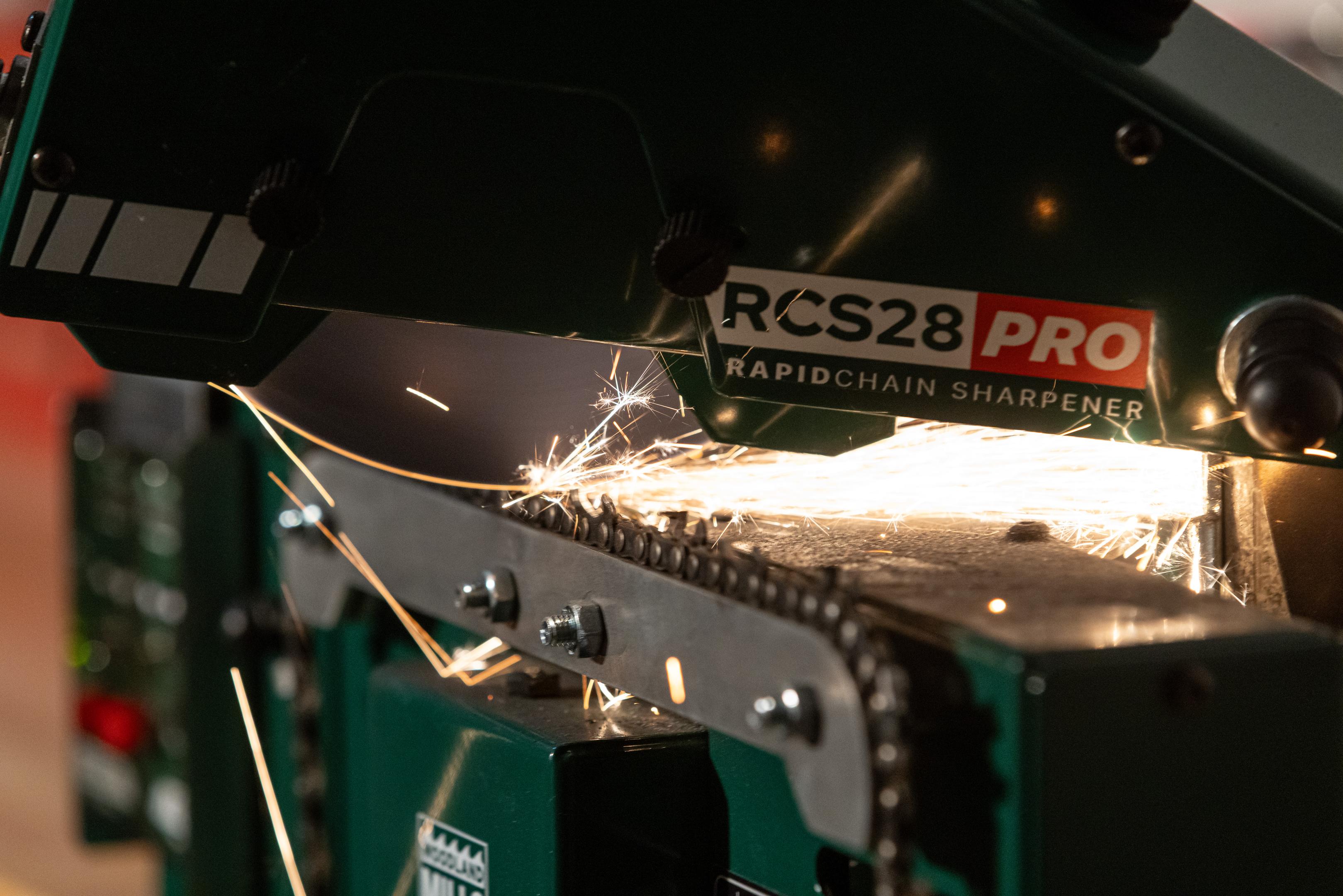
What is the best tool for sharpening a chainsaw chain?
You may want to consider a chainsaw chain sharpener like the RCS28 or RCS28 PRO which automatically sharpen all the cutting teeth on a chain. Manually filing chainsaw chains can be difficult, exhausting, time consuming and lead to inconsistent results.
Meanwhile these models of chainsaw chain sharpener are powered by a 12V battery and do the work on their own, so you can be working on other tasks and come back to sharp chains.
One of the main benefits to a chainsaw chain sharpener over manual filing is that you don't need to worry about using round files or flat files or getting inconsistent results. Regular maintenance from an automatic chainsaw sharpener will give you consistent results every single time, regardless of chain type or depth gauge.
How do I set up a chainsaw chain sharpener?
The RCS28 and RCS28 PRO come with a square profile ceramic grinding disc to file your chainsaw blades. A profiling gauge and dressing stone are also included to shape the disc to match the profile of your chain. To use the chainsaw sharpener:
-
-
Equip your chain onto the sharpener and place the stop clamp on the chain, so it will automatically turn the machine off when the chain is fully sharpened
-
Dial the grinding head to the exact dimensions and angle of your chain. The sharpener will advance to each cutter edge, grinding the tooth and gullet
-
The knob at the back of the grinding head will let you fine tune the exact amount of material you're grinding from each tooth
-
Once you've dialed in the grinding head, put the sharpener in high speed and watch as it sharpens your chain
-
On the RCS28, it will do one side of each cutter edge, and the grinding head will need to be manually pivoted to do the other side. The RCS28 PRO will do both cutter edges in one pass. Check the owner's manual for more details on how to operate the device.
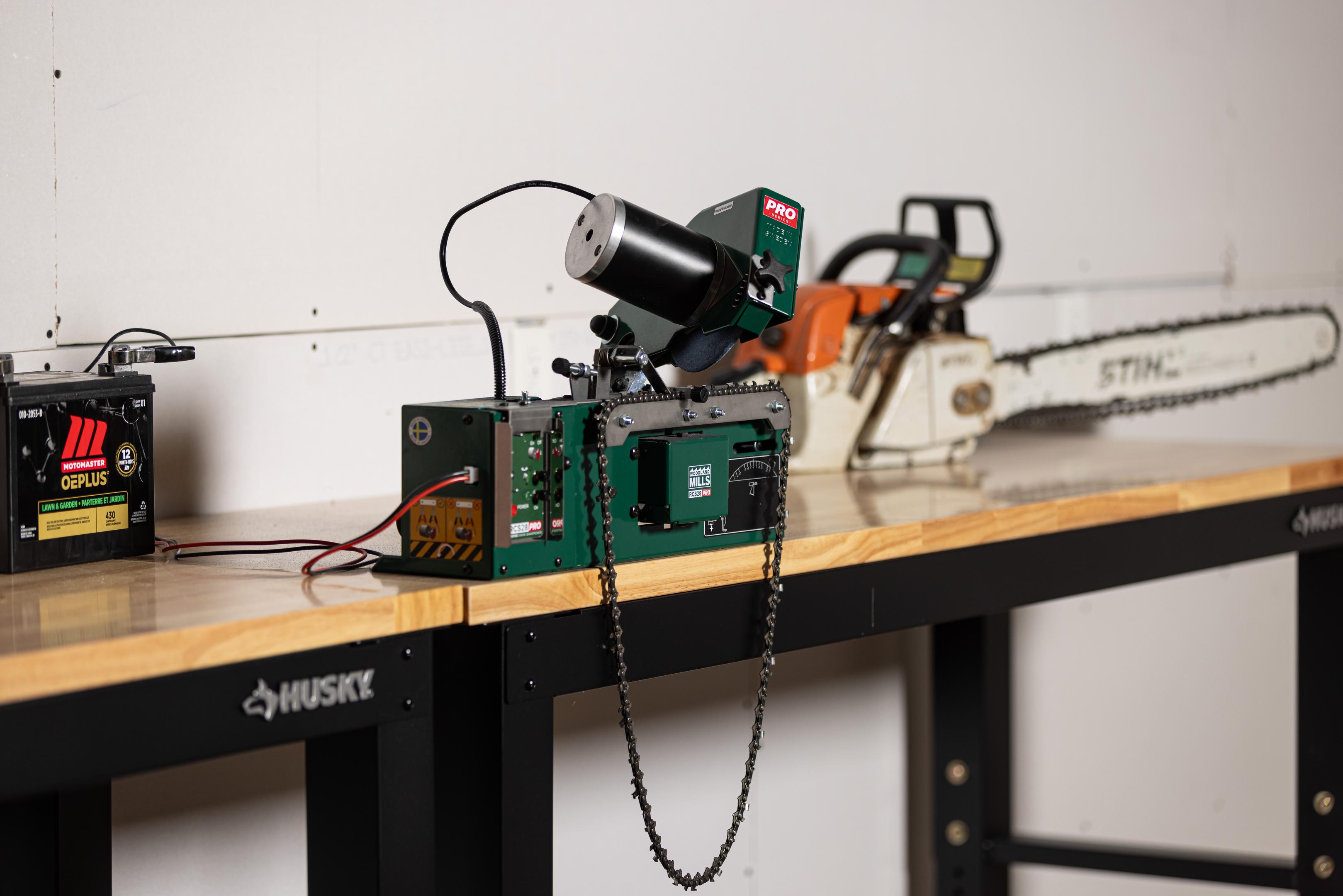
In Summary: How do I sharpen my chainsaw chains?
Having the right tools is the best way to sharpen a chainsaw.
-
-
Use a specialized piece of equipment like the RCS28 or RCS28 PRO
-
Ensure the grinding head matches the specific profile of your chainsaw chains
-
Use the fine control over the grinding head to ensure it files a small amount of material from the cutter edges and gullet
-
Walk away and come back to sharp chainsaw chains every time
-
Join the Woodland Mills Community Facebook group. Search advice and insights from over 65,000 knowledgeable, supportive members.
- Pre-purchase considerations
- Sawmill set-up support
- Project inspiration photos and videos
- Community troubleshooting support