



A Guide on How to Split Large Logs with a Log Splitter
Splitting wood is easy, and here are some helpful tips for splitting big logs
Having a heavy duty wood splitter that can split logs regardless of size can be a great asset for your property.
Many landowners have multiple species and sizes of trees, and while small ones can be easier to split, large diameter logs can present significant challenges. Not only does the diameter of the log matter, but the length of the log can also affect how easy it is to split or handle.
So you need a log splitter large enough to tackle large diameter logs and the ability to safely lift those logs up. Hand splitting often isn’t an option for these large logs, as it requires far too much effort.
So what’s the best equipment for handling these logs and how do you do it?
Let’s get into it:
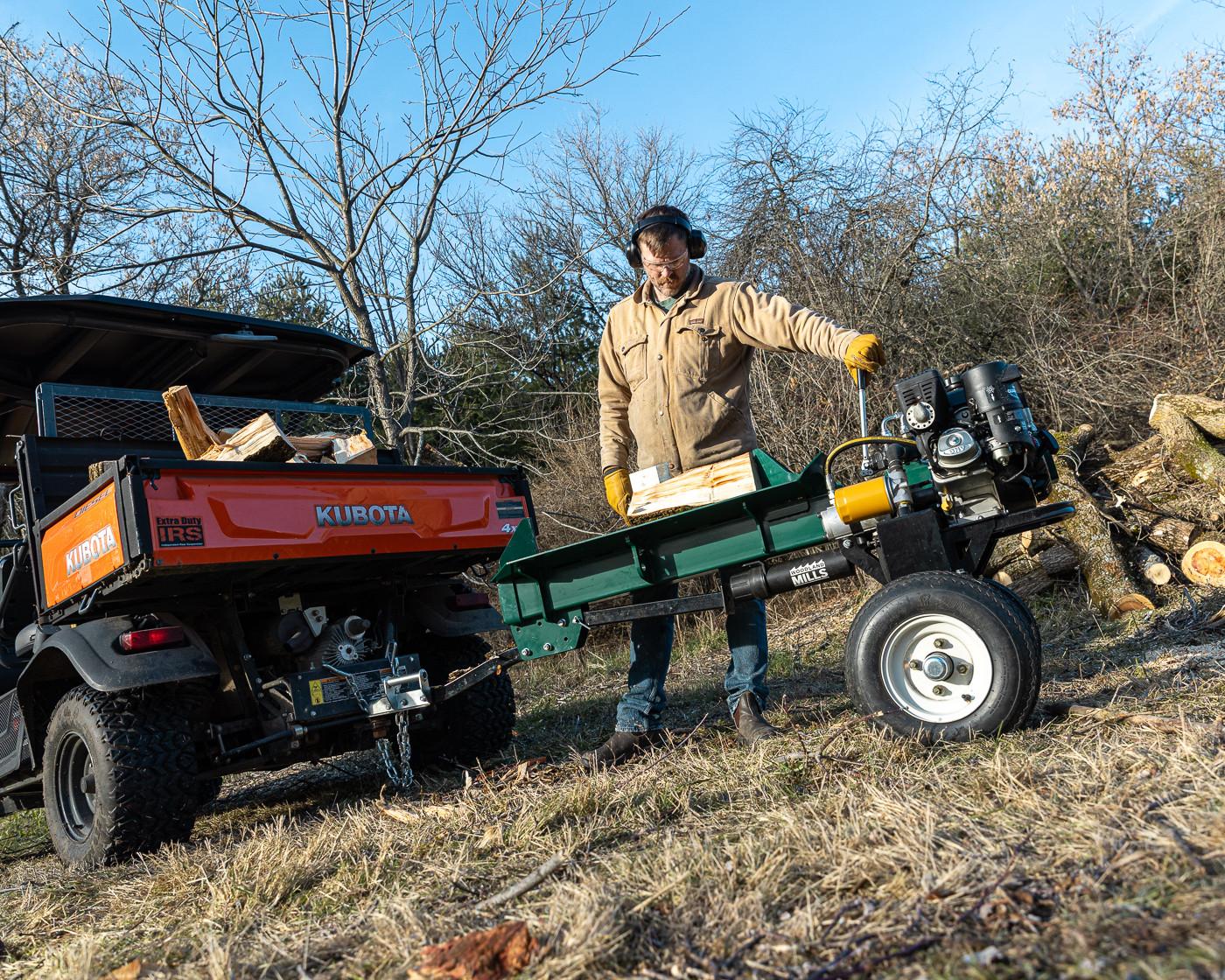
What should I look for in a log splitter?
Log splitters utilize a powered splitting wedge which drives into a round to split it apart, turning it into smaller pieces to be used for firewood.
Manual hand splitting can take hours and requires a lot of physical effort. Not all logs feature straight consistent grain, making them more difficult to cut.
The benefits of a log splitter are threefold:
-
-
The machine does the effort of log splitting for you
-
It's consistent, splitting green and dry wood, and produces even, uniform pieces
-
You can split wood much faster than doing it yourself by hand
-
So what should you consider when looking at log splitters?
-
-
Tonnage dictates how effectively the wedge drives through the round. While smaller tonnage splitters might get the job done for smaller softwoods, larger rounds and hardwoods require splitting force.
-
Cycle time determines how long it takes for the wedge to travel and return to its starting position. On a 2-way log splitter like the Woodland Mills LS218, you can use the return action of the wedge to split, doubling its efficiency.
-
Portability is also important. If you need your log splitter to be mobile, pick one with heavy-duty axles and a ball hitch to equip to your truck or ATV.
-
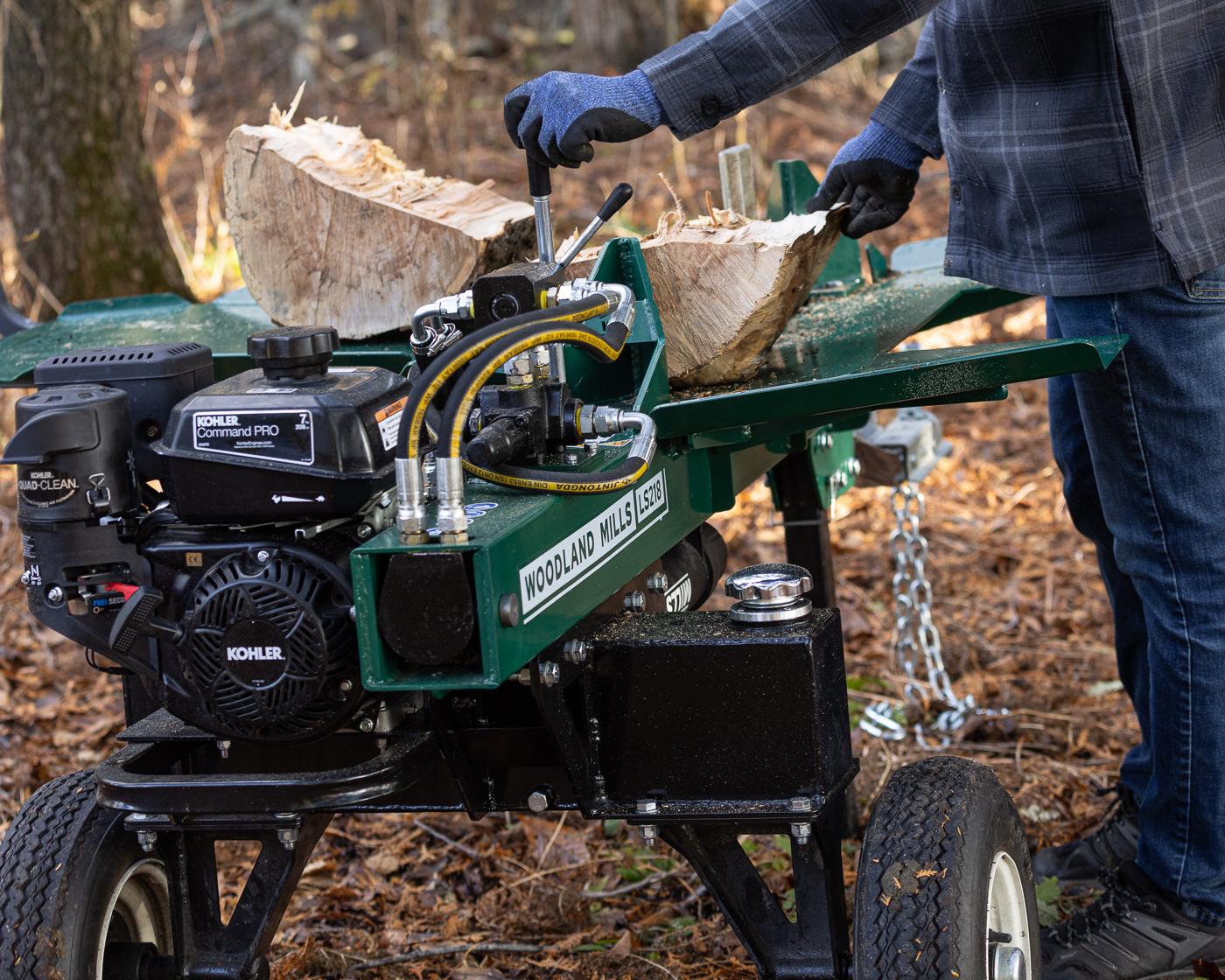
Preparation and Safety When Splitting Large Logs
Before you start splitting large logs, taking the time to prepare your workspace and prioritize safety is essential for a smooth experience. Understanding the process and your tools will help you split large rounds efficiently and safely.
-
-
Take your chainsaw and cut your log up into rounds that fit within the stroke length of your log splitter. On a splitter like the LS218 with a 24" stroke length, you can fit logs up to that size.
-
Begin by inspecting each log for existing cracks or natural splits. These can make splitting much easier. Position the log so you can take advantage of these weak points, especially when working with tough or knotty wood.
-
Personal protective equipment is a must. Wear safety glasses to shield your eyes from flying wood chips, heavy-duty gloves for grip and protection, and sturdy boots to safeguard your feet.
-
When setting up your workspace, clear away any debris or obstacles that could cause you to trip or lose your footing. Make sure your tools are in good condition, a sharp chain on your chainsaw and a well-maintained splitting wedge will make the job safer and more efficient.
-
Start by targeting the center of the log or an existing crack. Use your wedge to break the log into manageable pieces. Pay attention to the grain and knots, as these can make splitting more challenging and unpredictable.
What is the best log splitter for me?
If you're interested in a 2-way splitter the LS218 is a great option. It's an efficient model, using the forward and return action of the splitting wedge to turn logs into manageable pieces. This action creates an efficient workflow where you can be consistently processing logs, and the machine itself is durable, capable of being put through many hours of rough work.
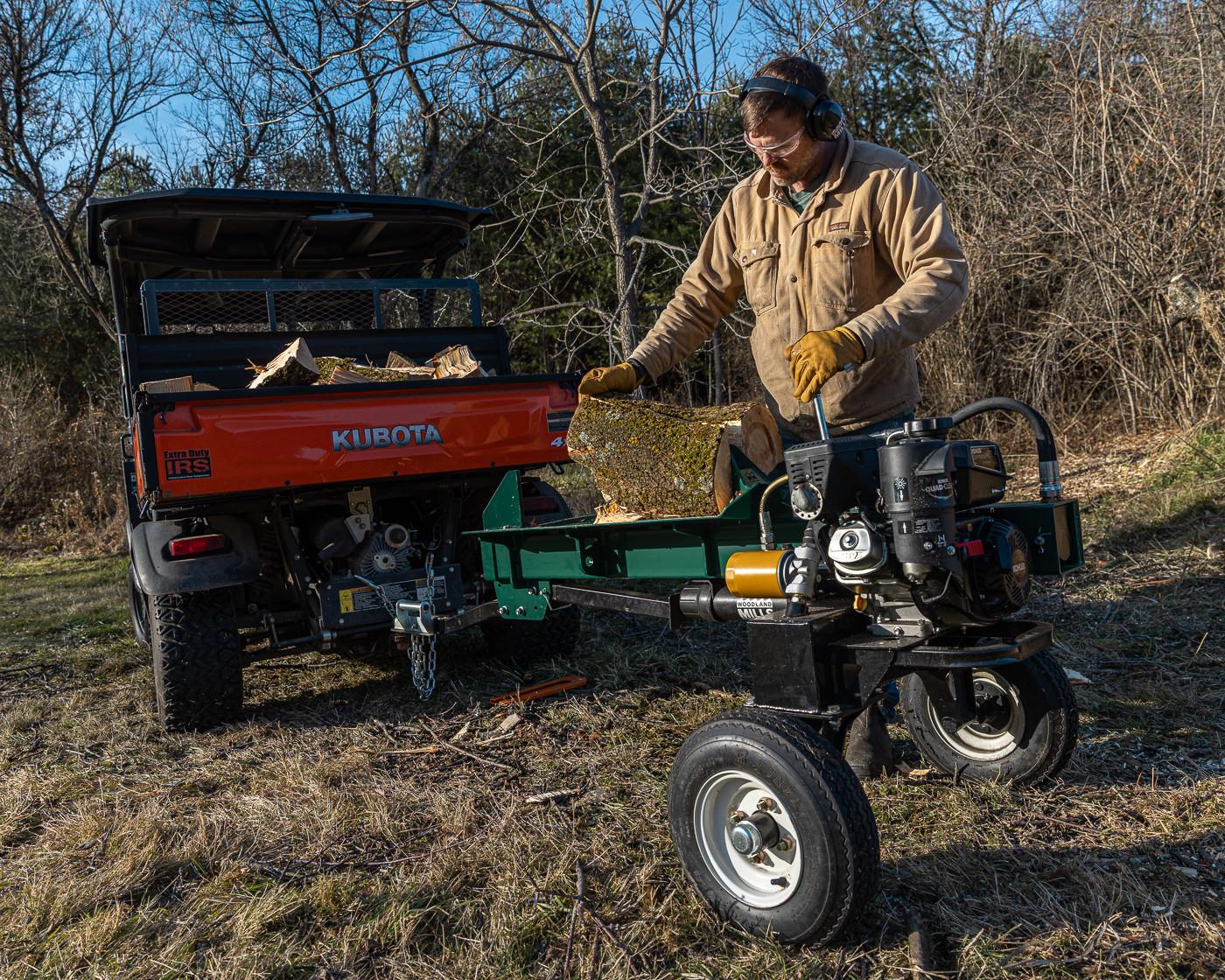
What do I need to split large logs?
For splitting larger rounds on a log splitter, you'll need a few things:
-
-
A machine with the right tonnage to split the log
-
A way of lifting the logs onto the log table
-
A work area that will help manage staging and handling of split wood while you work
-
To do that, here's what we recommend:
-
-
The Woodland Mills LS218 features an 18-ton wedge, capable of splitting a wide variety of log sizes
-
The optional table extension can help for larger logs
-
The optional hydraulic lifting table is very helpful to reduce the effort of raising the logs to the splitter
-
This setup provides a great way to turn large logs into smaller pieces of firewood with minimal effort on the user.
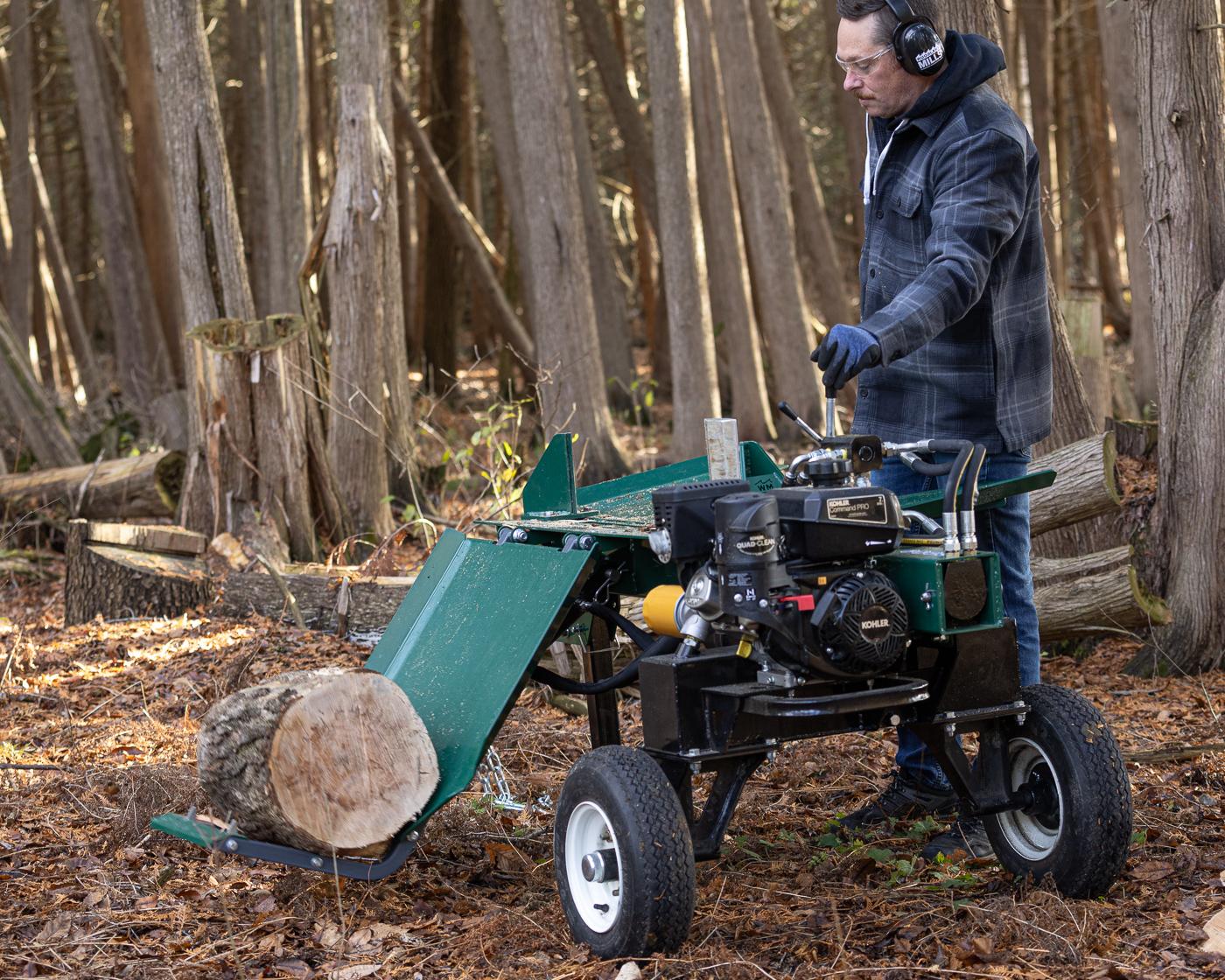
What advice should I follow for splitting large logs on a log splitter?
So what are the best practices for splitting larger pieces of wood using a splitter? Here are some general tips you should follow:
-
-
Avoid lifting heavy pieces yourself: Utilize tools like a cant hook to roll heavier logs to their destination. Accessories like the hydraulic log lift are very helpful for raising logs to the log table with minimal effort from the operator.
-
Cut logs into smaller pieces: Wider logs may be easier to move and split if cut into shorter pieces. Consider this when you’re cutting them up to split using your wood splitter. Existing cracks or following the natural line or grain of the wood can be handy for splitting these logs more easily.
-
Extra hands make light work: Even if you can handle larger logs by yourself, an extra pair of hands can speed up the process and improve your efficiency, especially if you’re using a 2-way log splitter like the LS218.
-
Multiple splits may be necessary: Use your splitter to make multiple cuts. Regular logs usually only need to be quartered, but for large diameter logs you may need to split it into eights to make them usable in a fireplace or wood stove.
-
While splitting larger logs may be more difficult than smaller ones, it’s definitely easier to have the mechanical assistance of a splitter or a handy tool like a chainsaw than trying to do it manually with an axe or a sledge hammer.
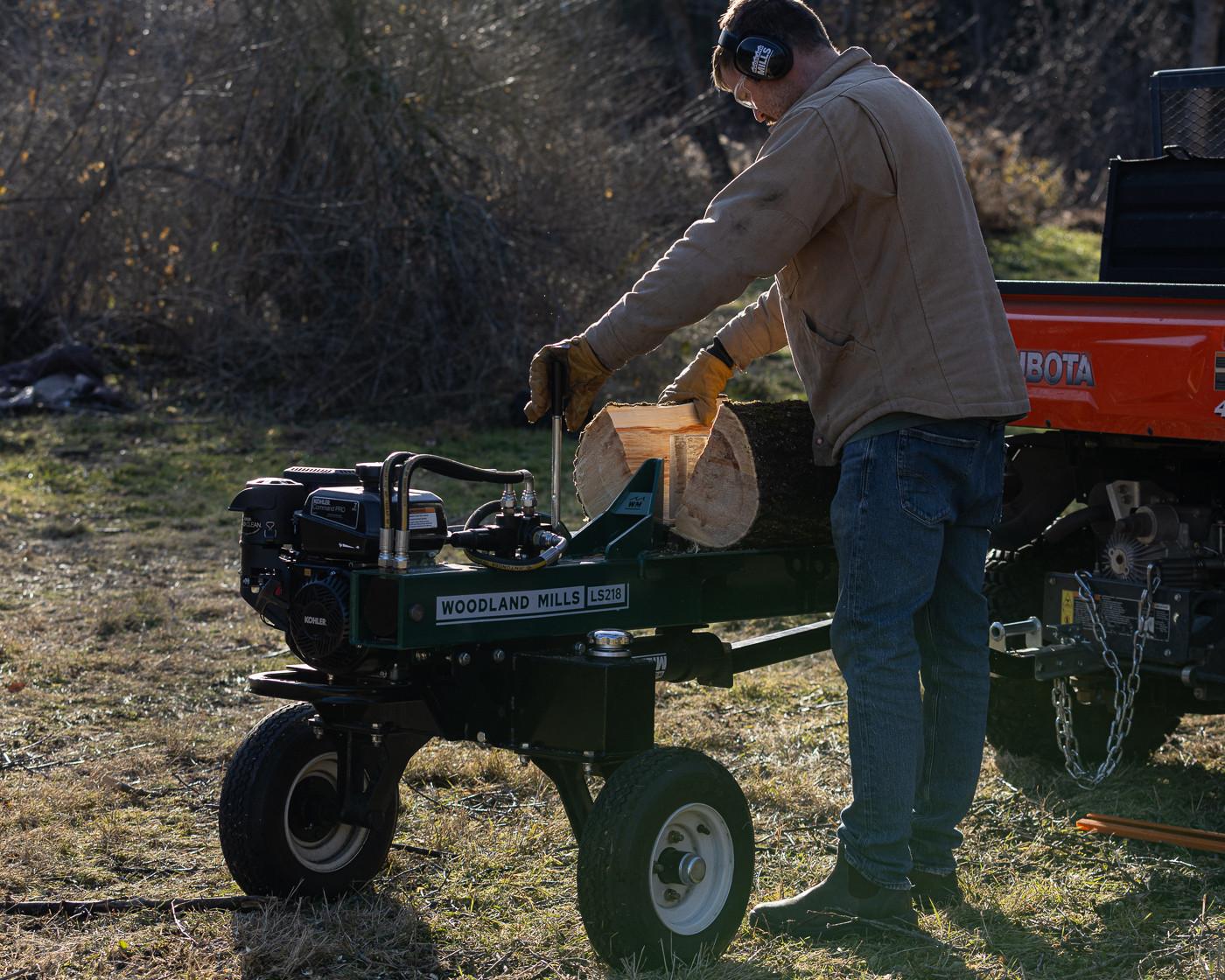
What should I do to improve my workflow for splitting wood?
There are many little things you can do to ensure your work area is optimized for speedy log splitting:
-
-
On a 2-way log splitter, use the forward action to split the log in half, then the return action to split it into quarters. If its a smaller log, you can just cut it into two pieces and use the return action for the next log.
-
Have a safe walking area around your log splitter where the ground is free of tripping hazards. Have a storage bin or shed nearby for storing your logs, or a bulk container for moving them around.
-
Tree bark, branches and other wood waste can be put to use. Have a scrap pile nearby for composting or wood chipping.
-
Keep all necessary equipment within arms reach so you don't have to waste time travelling from one place to another.
-
Have a chainsaw on-hand for tricky logs or ones where you've miscalculated and they won't fit on your log splitter.
-
Be aware of knots and other imperfections that may cause logs to split in unpredictable ways.
-
In Summary: What do I need to split large logs?
For transforming larger logs into firewood we recommend:
-
-
An efficient log splitter with at least 18 tons of force like the Woodland Mills LS218
-
A hydraulic lifting table to efficiently carry logs onto the log table
-
A safe, clean workspace free of tripping hazards that's setup for efficient work
-
Having an extra pair of hands to handle and process logs faster
-
Join the Woodland Mills Community Facebook group. Search advice and insights from over 65,000 knowledgeable, supportive members.
- Pre-purchase considerations
- Sawmill set-up support
- Project inspiration photos and videos
- Community troubleshooting support