



What is the Best Log Splitter?
What are different types of log splitters and why are 2-way splitters the best for personal use?
Looking to split firewood on your own property? There are many different models and types of log splitters on the market, each with different advantages and price points.
Most people do not need high-tonnage or commercial-grade splitters, as their splitting needs are usually met with intermediate machines designed for typical use on a farmstead or homestead.
And Woodland Mills has the LS218, a two-way log splitter that can make a huge difference to landowners looking to produce their own firewood.
So what is a 2-way log splitter, what are its strengths and what should you look out for? When choosing the best log splitter, be sure to take your specific needs and budget into account to find the right fit for your workload. Let’s get into it.
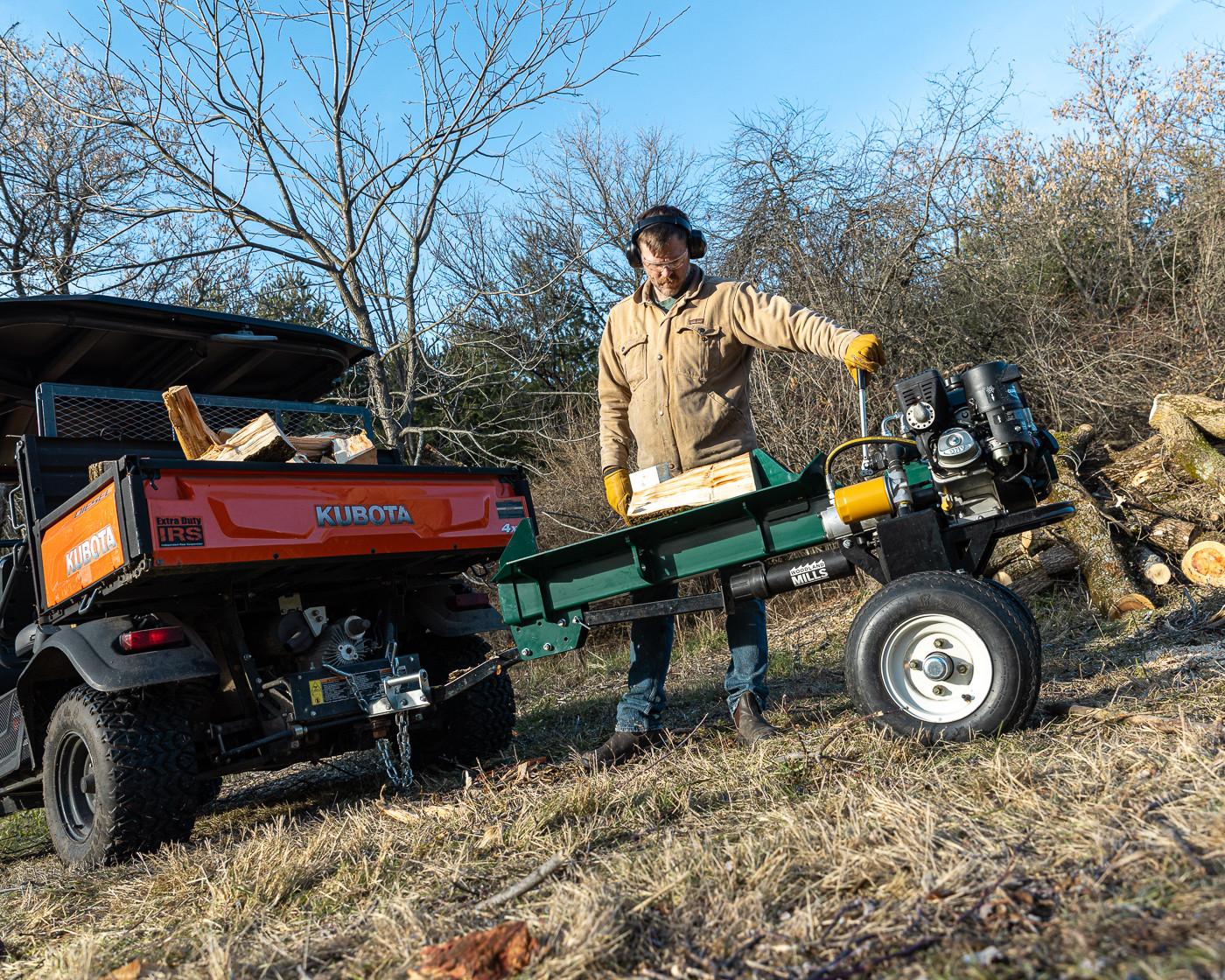
What are some of the different types of log splitters?
Log splitters come in a variety of different types. Sometimes referred to as wood splitters, these machines serve the simple purpose of taking short pieces of wood, or rounds, and cutting them into halves, quarters or smaller to be used for burning.
-
-
Hydraulic Log Splitters: These machines use hydraulic power to bring a wedge down to split lumber. Hydraulic log splitters can be either gas or electric powered. Gas engines provide the highest power and mobility for heavy-duty, large-diameter rounds. Hydraulic splitters offer superior brute force for tough wood applications.
-
Manual Log Splitters: These tools utilize hand cranks and manual effort, made easier by the machine itself, to split smaller sizes of cut wood. Such splitters are often used for splitting kindling.
-
Firewood Processors: These are automated machines designed for high-volume operations, splitting fire wood in large quantities and using conveyors to dump them in a pile or bin. Firewood processors are often more expensive units typically used in a commercial setting.
-
Models like the LS218 Log Splitter use hydraulic force to split logs, fueled by a gas-powered engine.
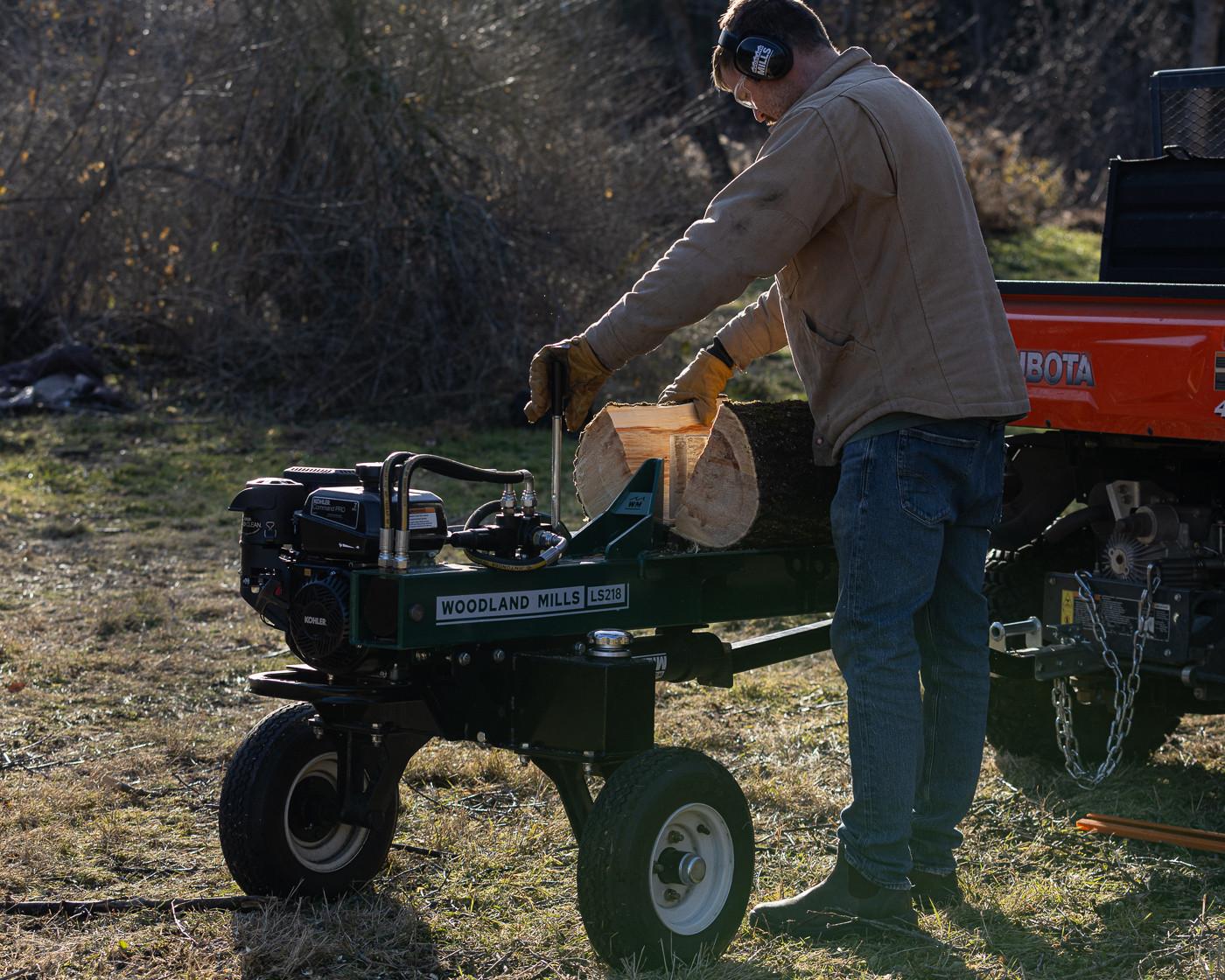
How many cords can I produce with a log splitter?
As many as you want. A log splitter like the LS218 only takes a few seconds to split a round, and because it's a 2-way log splitter, you can halve it on the forward action and quarter it on the return action.
Because of this, you're only limited by the amount of times you can spend in a day splitting. Within an hour you can easily split a cord, or a few if you're splitting all day.
Why is a 2-way log splitter the best splitter for homesteaders and hobby farmers?
Commercial firewood producers often use expensive units that can produce a lot of firewood, but these machines typically cost several thousand dollars on the low end, and tens of thousands on the high end. For most homesteaders, small-to-mid-sized farmers, or small companies producing firewood, such an expensive unit is usually not necessary.
A more smart, efficient machine makes sense for these types of landowners. A 2-way log splitter like the LS218 utilizes both the forward and return actions of the wedge for splitting. It has a 7-8 second cycle time, so it’s fast and can turn whole logs into a pile of firewood quickly.
-
-
One way splitters use their energy to reset to their default position, but that movement isn't used for splitting.
-
Two-way splitters ensure the return action doesn't go to waste. That means more splits per cycle and less waiting between logs.
-
Landowners having access to a wood splitter like the LS218 can significantly increase their efficiency in producing firewood, whether they’re making it for their own use or to sell to customers. And because it has its own motor, it can be deployed in the field to create firewood wherever you need it. It’s a good deal for landowners looking for an efficient, affordable log splitting solution.
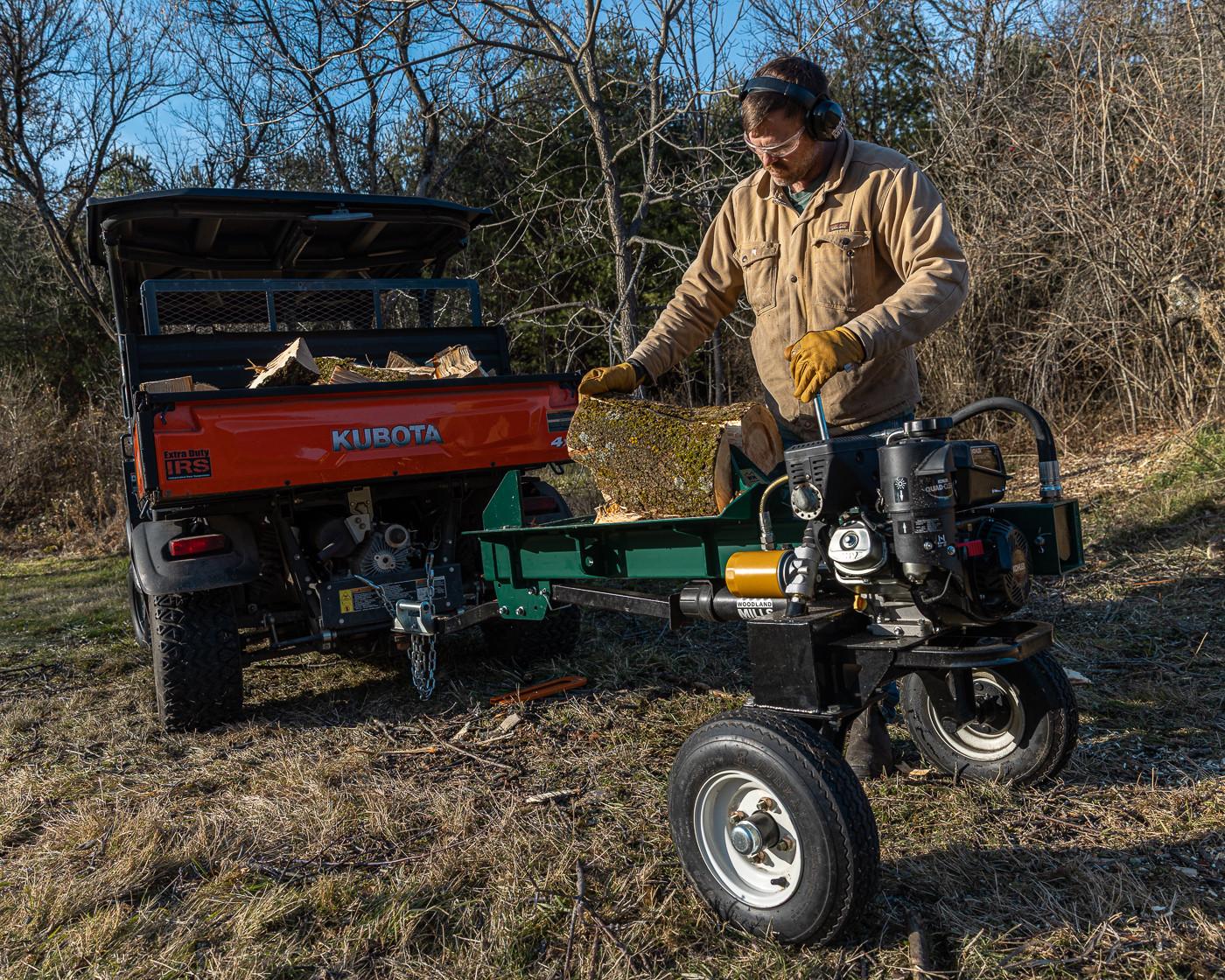
What type of setup should I have for a log splitter?
Gas-powered log splitters like the LS218 are portable. It's equipped with a ball hitch so it can be attached to your ATV or tractor and taken deep in the brush or to a remote part of your property to split wood.
If you want a permanent log splitting setup, you should keep your log splitter in a central area nearby your log pile. Have clear pathways for maneuvering. Bulk containers, racks or firewood bulk bags to hold your firewood while it's being processed is ideal. A covering will ensure your firewood dries and isn't exposed to rain or snow.
In Summary: What's the best log splitter for me?
If you're a small or mid-sized farm owners, looking to produce firewood consistently and without spending tens of thousands of dollars, a model like the LS218 can satisfy your needs. It features:
-
-
An efficient design that makes use of forward and return action
-
18-ton splitting force to cut through most softwoods and hardwoods
-
Can come with optional accessories like a hydraulic lifting table or bolt-on table extensions
-
Features a solid steel axle system and ball hitch for off-road wood splitting
-
Join the Woodland Mills Community Facebook group. Search advice and insights from over 65,000 knowledgeable, supportive members.
- Pre-purchase considerations
- Sawmill set-up support
- Project inspiration photos and videos
- Community troubleshooting support