



What are the Benefits of a Log Arch for Log Skidding?
Learn how log arches make moving logs easier while helping protect your trails, equipment and timber
Once landowners begin moving larger logs, travelling longer distances or looking for a more efficient extraction system, the next logical step is often a log arch.
Direct log skidding may work for short pulls across level ground, but dragging an entire stem creates resistance. The leading end can dig into soil, strike rocks and catch on roots. The log may also roll or wander as the tow vehicle changes direction.
Log arches address these problems by lifting the leading end of the timber. This simple change can make log skidding smoother, more controlled and easier on both the towing machine and the trail.
What Is a Log Arch?
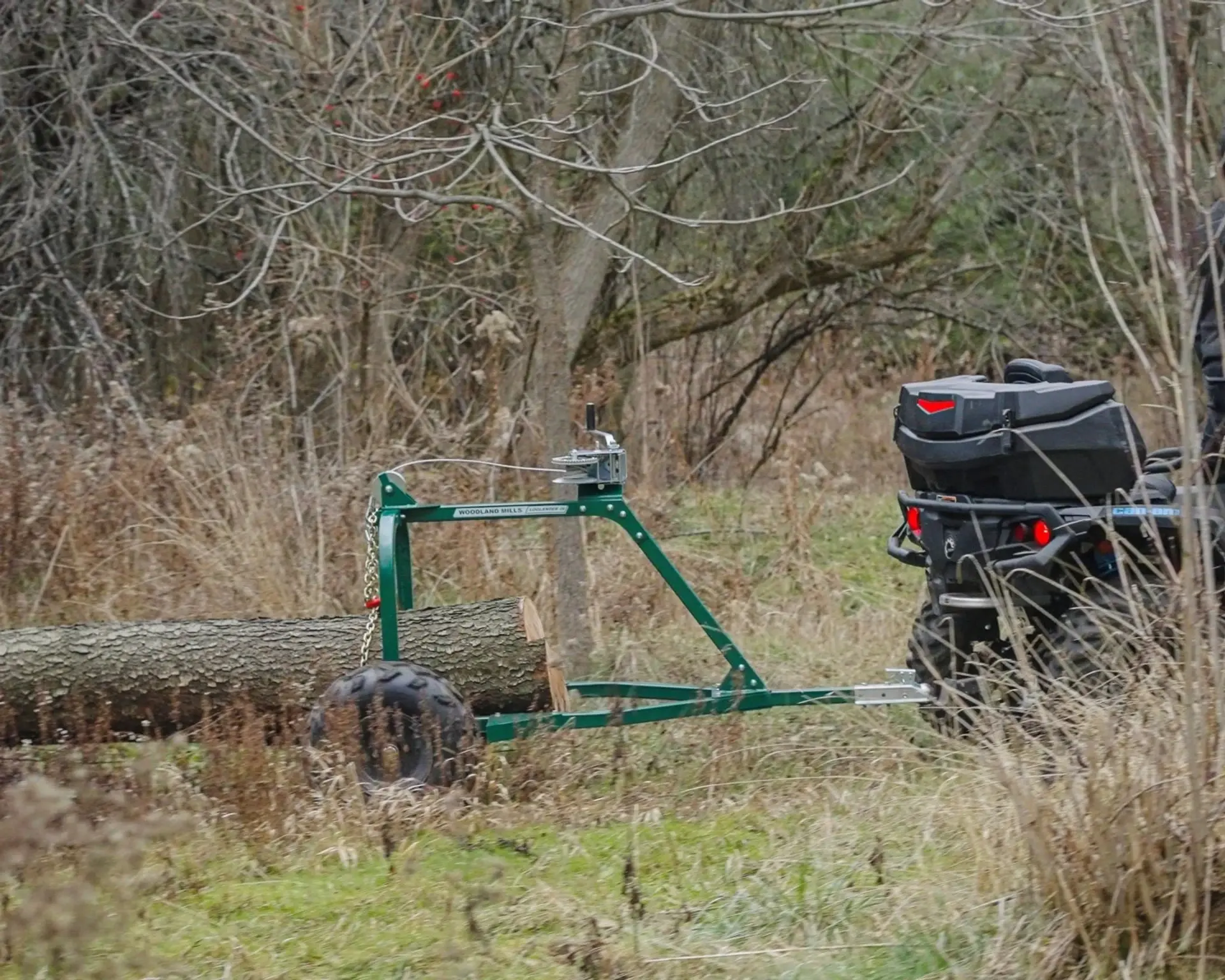
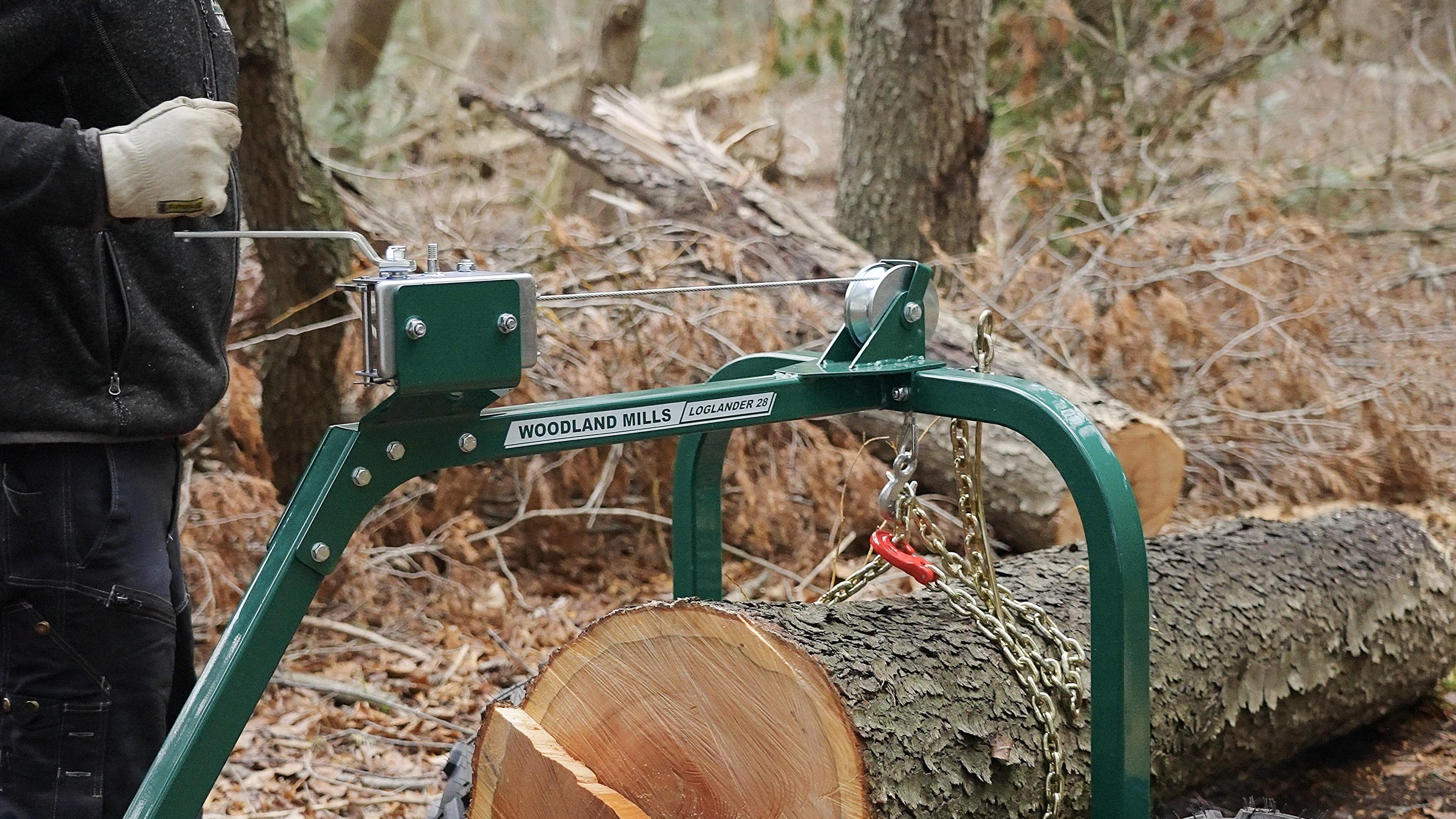
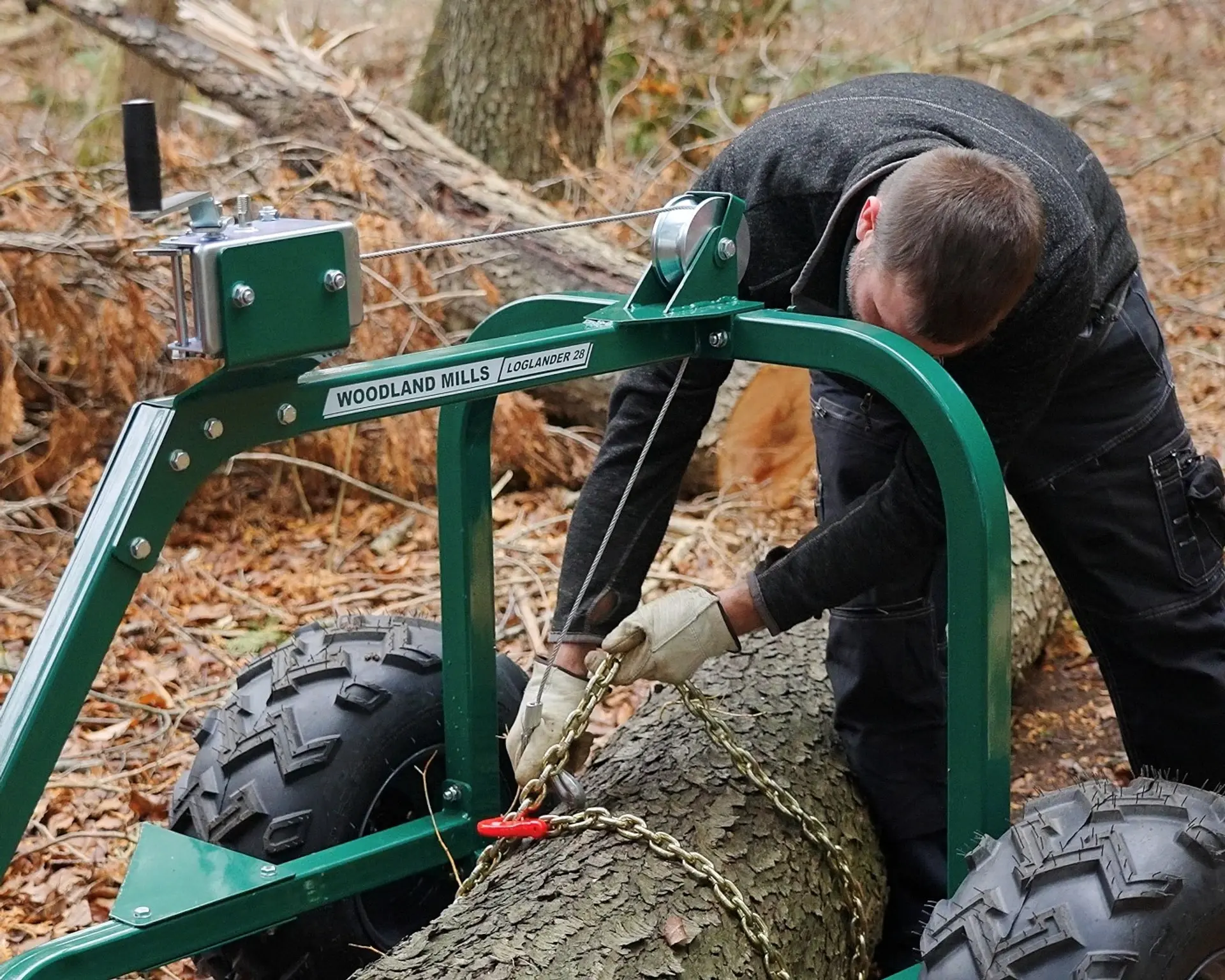
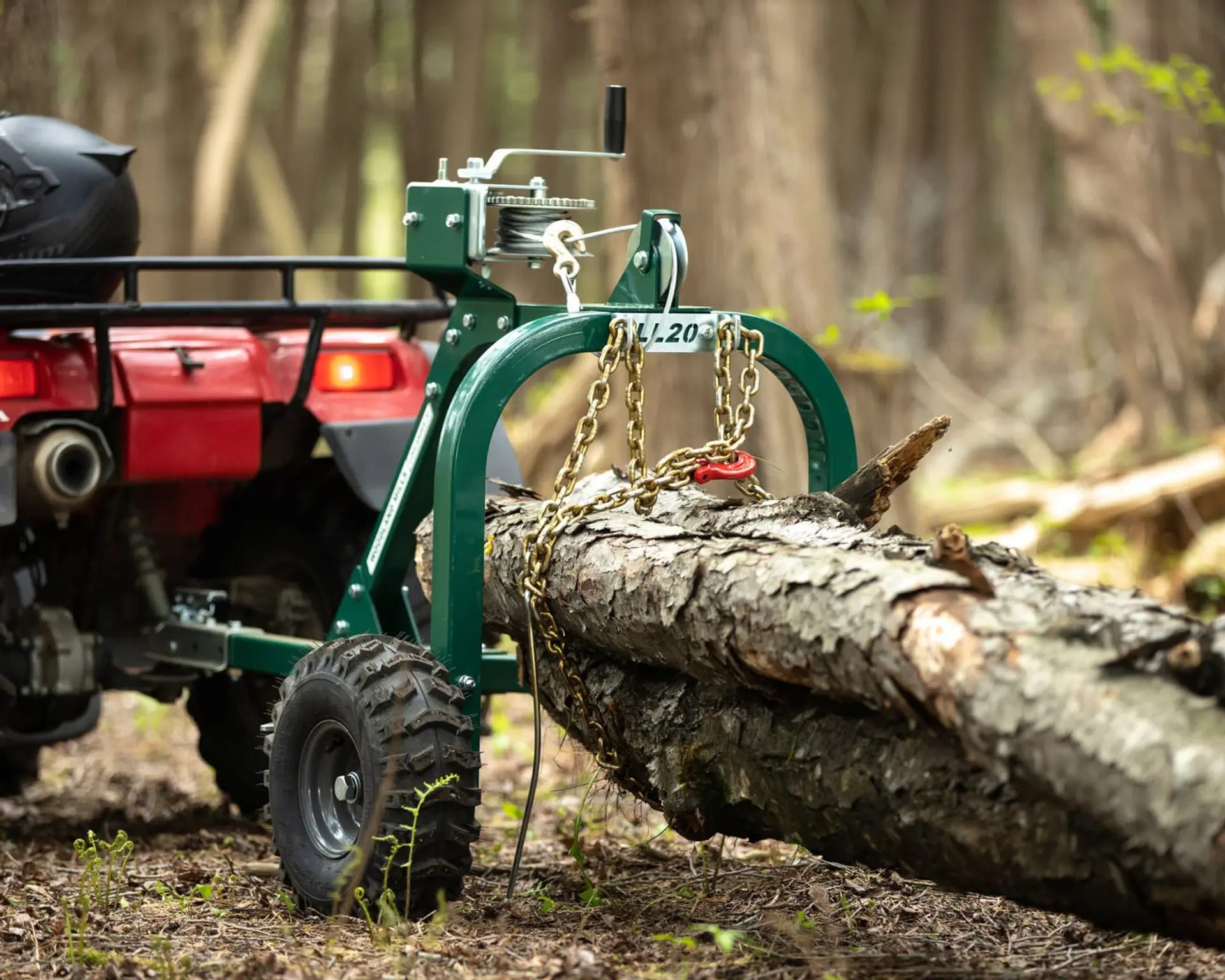
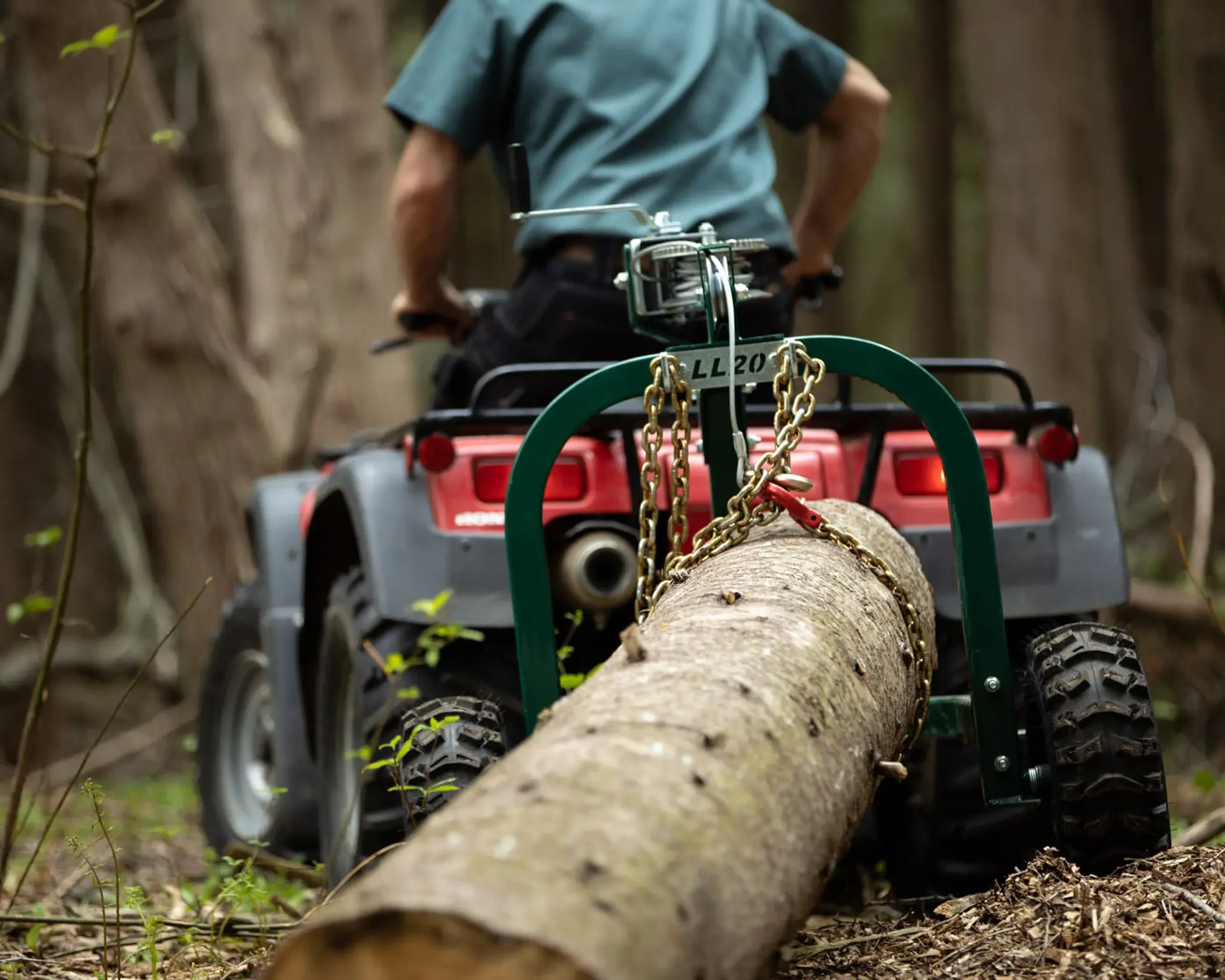
A log arch is a uniquely-structured frame that skids a log by suspending the leading end above the ground. The log is secured beneath the arch with a choker chain, then pulled behind a compatible tow vehicle.
Once landowners begin moving larger logs, travelling longer distances or looking for a more efficient extraction system, the next logical step is often a logging arch.
Log arches may be used behind:
-
-
Garden tractors
-
ATVs
-
UTVs
-
Pickup trucks
-
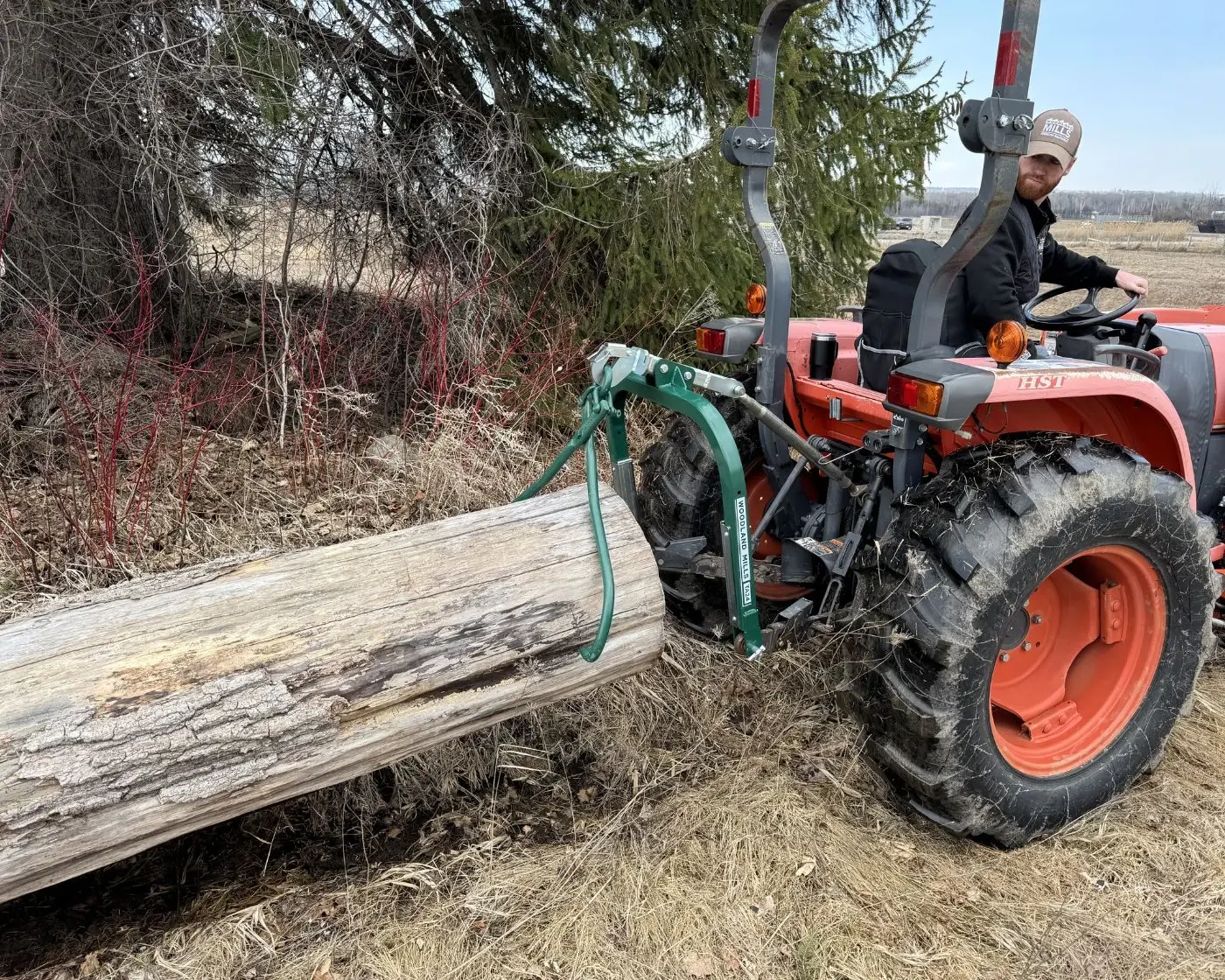
Compact tractors
-
Larger utility tractors
-
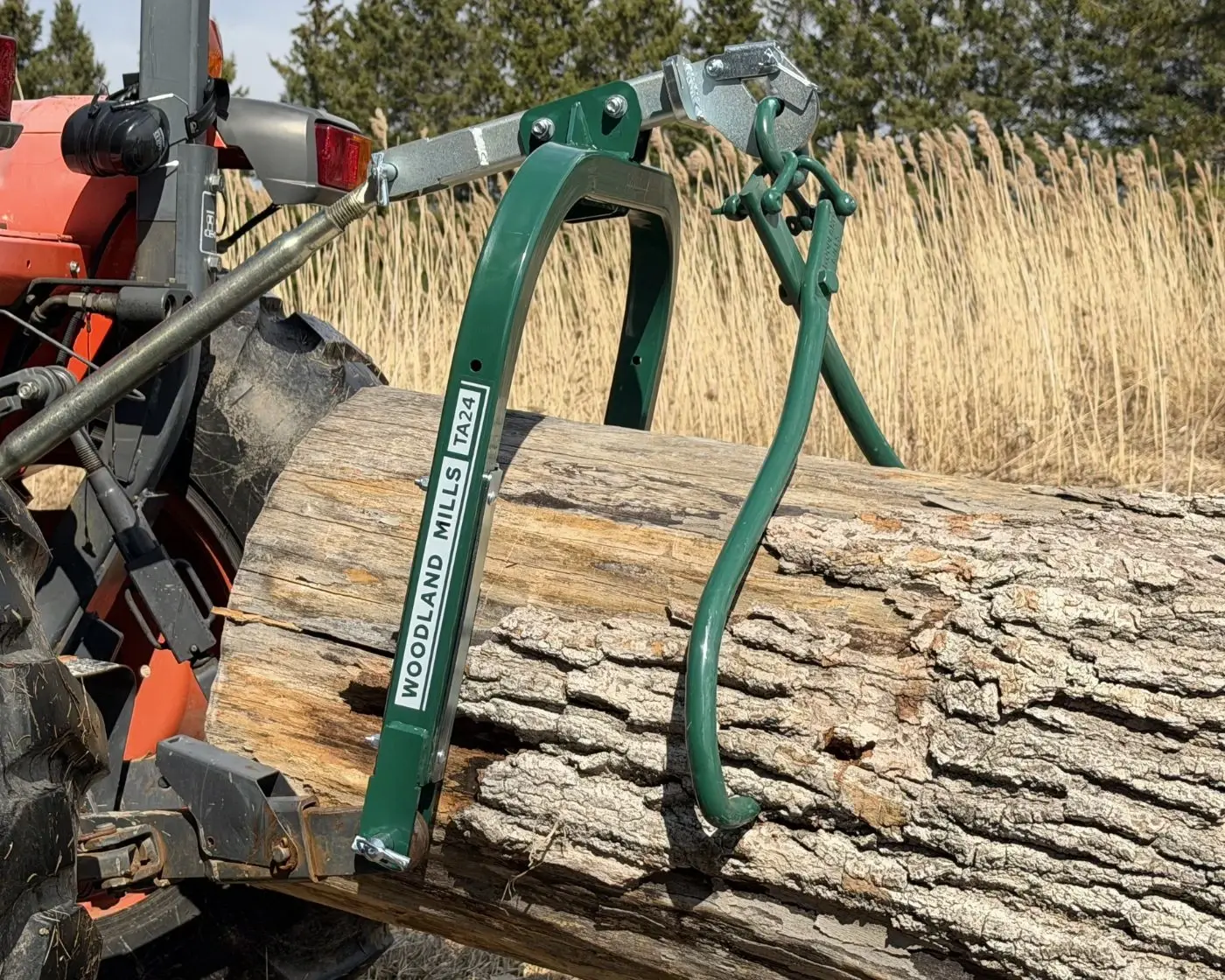
An ATV arch that ball hitch such as the Loglander 20 or the Loglander 28, or that attaches with a 3-point hitch like the TA24 and TA30, can be especially useful for forest land owners with established trails that are too narrow for larger equipment. Before selecting one, compare its log capacity with the diameter and weight of the timber you expect to move.
How Do Log Arches Improve Log Skidding?
With direct skidding, the front of the log remains on the ground. Every foot of travel creates friction and another opportunity for the stem to catch on an obstacle.
A log arch transfers the weight of the leading end onto wheels. Because one end is suspended beneath the frame, the log follows the tow vehicle more consistently.
This improves log skidding in several ways:
-
-
Reduces the amount of timber dragging across the trail
-
Helps the log pass over roots, rocks and small obstacles
-
Limits uncontrolled rolling and side-to-side movement
-
Reduces shock loads on the tow vehicle and rigging
-
Makes repeated trips more predictable
-
Helps smaller tow vehicles move larger logs within their rated limits
-
The choker connection still allows the log to adjust beneath the lifting point as the tow vehicle changes direction. This gives the operator control without making the load completely rigid.
What are the Benefits to Log Arches?
Here some of the ways your log hauling setup can be improved with a log arch.
1) The Log Follows the Tow Vehicle
With direct skidding, the log is free to roll, pivot and wander across the trail. A logging arch changes that. Because the leading end of the log is suspended beneath the arch, it follows the path of the tow vehicle more consistently. The result is a smoother, more predictable pull with less side-to-side movement.
2) Reduced Rolling and Better Control
Because the leading end is supported beneath the arch, the log is less likely to roll or rotate unexpectedly when it encounters uneven terrain. The extraction process becomes more controlled and consistent, while the choker connection still allows the log to adjust beneath the arch as the tow vehicle changes direction.
3) Log Arches Less Likely to Snag
The leading end of a directly skidded log acts like a plow. It can dig into soft soil, push debris along the trail or stop suddenly when it encounters a root or rock.
Raising that end removes the most vulnerable part of the log from many common obstacles. Instead of forcing the tow vehicle to pull the log through an obstruction, the arch helps carry it over.
Fewer snags can mean:
-
-
Dramatically less pulling resistance
-
Cleaner logs
-
Less bark damage
-
Reduced wear on equipment
-
Smaller tow vehicles can move larger logs
-
-
-
Reduced soil disturbance
-
Clean timber is particularly important when preparing logs for portable sawmilling. For portable sawmill applications, keeping the log above the trail can improve the complete workflow from the stump to the mill. Landowners collecting logs for portable sawmilling may spend less time cleaning mud and debris from each stem before loading it onto the sawmill.
Are Log Arches Better for Forest Trails?
Log arches can reduce the amount of timber scraping, digging and pushing material along the route.
This may result in:
-
-
Less rutting
-
Less soil displacement
-
Reduced damage to established trails
-
Less disturbance around roots and vegetation
-
Fewer repairs after repeated hauling trips
-
For sensitive areas minimal ground disturbance is often one of the main priorities. Using wheeled equipment can help provide these areas minimal ground disturbance compared with dragging the entire log, although site conditions, tow vehicle traffic and operator technique still matter.
Can Log Arches Navigate Tight Woodland Trails?
At first glance, a log arch may appear harder to maneuver through dense woods. In many situations, the opposite is true.
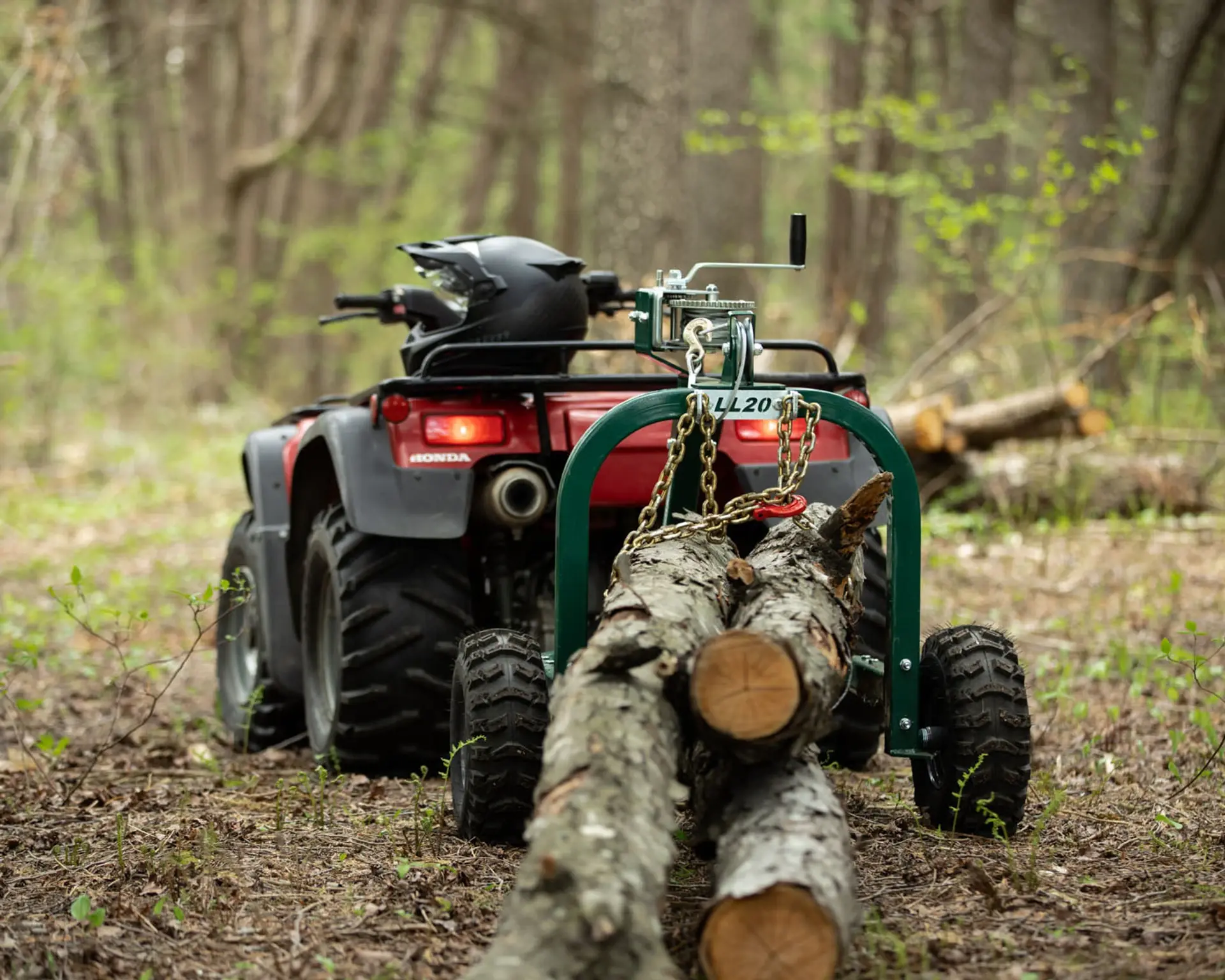
Because the leading end is controlled beneath the arch, it follows the tow vehicle more predictably. The trailing end remains on the ground and can slide sideways as the ATV, UTV or tractor moves around a corner. This movement allows the load to follow winding trails while reducing the uncontrolled rolling associated with direct skidding.
The result is a system that is:
-
-
Predictable during turns
-
Easier to guide between trees
-
Less prone to catching the leading end
-
Well suited to established woodland trails
-
Trail width, turning radius, slope and log length must still be considered before beginning the pull.
Which Woodland Mills Log Arch Is Right for You?
Woodland Mills offers two towable Loglander models for different log and material handling requirements.
| Product | Log Capacity | Best Fit |
|---|---|---|
| Up to 1,500 lb and 20 inches in diameter | Smaller logs, narrower trails and lighter ATV or UTV setups | |
| Up to 2,000 lb | Larger timber and more demanding hauling work | |
| Up to 1,750 lb | Smaller, lighter log hauling with a tractor | |
| Up to 2,000 lb | Larger, heavier timber hauling with a tractor | |
| Up to 1,100 lb and 20 inches in diameter | Supporting the trailing end of a compatible log, used as a companion to a log arch |
Both Loglander models include a two-speed manual winch and an 8-foot choker chain. The winch helps lift the front of the timber beneath the arch before transport.
Choose according to the weight and diameter of your logs, the towing capacity of your vehicle and the conditions of your trails. The tow vehicle, hitch, arch, rigging and log must all remain within their respective limits.
Landowners comparing Woodland Mills log-hauling setup should look beyond the product name and consider capacity, compatibility, terrain and how each tool fits into the complete workflow. Consider Woodland Mills for future forestry products for routine timber operations or selective harvesting.
Should You Add a Log Dolly?
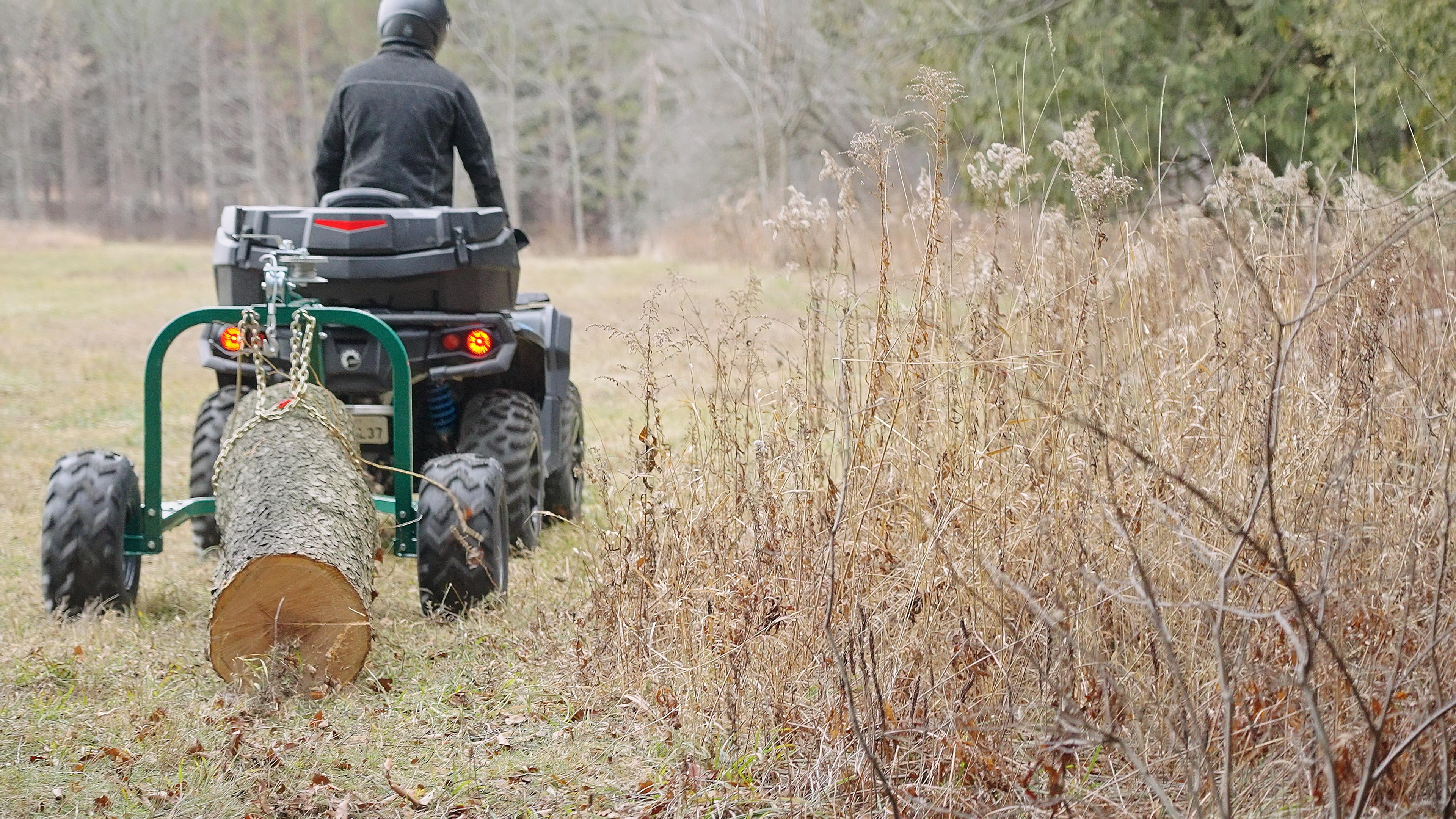
Operators who want to eliminate almost all ground contact can place a log dolly beneath the trailing end.
With the log arch supporting the leading end and the dolly supporting the rear, the entire stem travels on wheels rather than dragging along the trail.
This setup can:
-
-
Keep the whole log cleaner
-
Further reduce pulling resistance
-
Limit trail impact
-
Protect valuable timber from ground contact
-
Help transport logs through sensitive areas
-
The LD20 Log Dolly can be used with compatible Woodland Mills log arches and other suitable lifting methods. Its anti-roll teeth and included cam buckle strap help keep the timber positioned during transport.
What Is the Main Limitation of a Log Arch?
The tow vehicle and arch must still reach the log.
Whether you are using:
-
-
A tow-behind logging arch
-
A tractor-mounted logging arch
-
A logging arch paired with a log dolly
-
... the tow vehicle still needs to reach the log. That means you need:
-
-
An access trail
-
Space to maneuver
-
A practical route from the trail to the log
-
If a log is deep within standing timber, building a trail to it may be time-consuming, expensive or undesirable.
In these situations, a tractor-mounted forestry winch can pull the timber from the brush to an accessible trail. The log can then be connected to the arch for transportation to the landing or sawmill.
This combined approach is useful across forestry arborist and portable sawmill workflows. The forestry winch reaches the log, while the arch handles moving logs across the property with greater control.
Why Do Landowners Trust Woodland Mills for Log-Hauling Equipment?
Woodland Mills designs equipment for landowners who want to manage more of their harvesting, extraction and portable sawmilling work themselves.
Customers regularly highlight rugged construction, thoughtful engineering, detailed assembly instructions and knowledgeable service in their reviews and testimonials. Woodland Mills also works directly with customers when they are selecting equipment, assembling a new machine, ordering replacement parts or maintaining it over time.
"Bought to move logs out the woods in Missouri," says Loglander 28 owner Derek G. "Does a fantastic job navigating the terrain. Woodland Mills done another great job with another great product."
The Woodland Mills Product Owners and Community Facebook Group connects owners who share trail setups, towing methods, equipment experience and completed projects. That combination of capable equipment, direct support and an active community helps landowners choose a log-skidding setup suited to their property.
Key Takeaway: When Should You Use a Log Arch?
Log arches address many of the main limitations of direct log skidding.
They can:
-
-
Reduce snagging
-
Improve tracking
-
Limit unwanted rolling
-
Lower pulling effort
-
Keep logs cleaner
-
Protect trails and soil
-
Help compatible smaller vehicles move larger logs
-
Adding a log dolly takes the concept further by placing the entire stem on wheels, although the extra setup and reduced maneuverability may not suit every trail.
For many landowners, a log arch is the first upgrade that transforms log extraction from a difficult pull into a controlled, repeatable process. A log fetching arch makes the timber easier to move, the remaining question is how to reach logs located beyond the trail.
FAQ: Frequently Asked Questions
Q: What Is the Difference Between a Log Arch and Direct Log Skidding?
A: Direct skidding drags the entire log along the ground. A log arch lifts the leading end, reducing friction, snagging, soil disturbance and contamination while helping the timber follow the tow vehicle more predictably.
Log arches come in small, midsize and large types to ensure ability to skid a variety of log sizes.
Q: Can You Tow a Log Arch Behind an ATV?
A: Yes, a compatible ATV arch can be towed behind an ATV, UTV, garden tractor or other suitable vehicle. Confirm the towing capacity, hitch compatibility, terrain and combined weight of the arch and log before use.
Q: Do I Need a Log Dolly With My ATV Arch?
A: Not always. A log arch alone reduces most ground contact while allowing the trailing end to slide through tight turns. A dolly is helpful when you want the entire log off the ground, particularly for valuable sawlogs, longer hauls or sensitive areas.
Using a log arches with a log dolly is especially helpful for keeping logs clean for portable sawmilling, since dirt and debris can cause additional wear to your sawmill blades. They are commonly used in small scale logging by hobby sawyers.
Join the Woodland Mills Community Facebook group. Search advice and insights from over 65,000 knowledgeable, supportive members.
- Pre-purchase considerations
- Sawmill set-up support
- Project inspiration photos and videos
- Community troubleshooting support