



How to Season and Store Firewood Properly
A practical guide to getting firewood bucked, split, stacked and ready for the firebox.
There’s a good feeling that comes with heading into colder weather with a stack of firewood already put away.
But a full woodshed doesn’t necessarily mean the wood inside is ready to burn.
A tree can be down for months and still hold a surprising amount of moisture. How soon you buck it, the size, the species, where it’s stacked and how much air can move around it all affect how quickly firewood seasons.
If you’re heating a home, cabin or cottage with wood, the best time to think about all of this is well before the first cold night.
Here’s what matters.
What Does “Seasoned Firewood” Actually Mean?
Seasoning is the process of allowing moisture to leave freshly cut wood until it reaches a suitable moisture level for burning.
Freshly cut, or “green,” wood contains a significant amount of water. Put that wood into a stove and some of the fire’s energy has to go toward driving that moisture off rather than producing useful heat.
Properly seasoned firewood burns more readily and efficiently.
A commonly used target is around 20% moisture content or less.
The important thing to remember is that firewood doesn’t become seasoned simply because a tree has been down for a long time. How that wood has been processed matters.
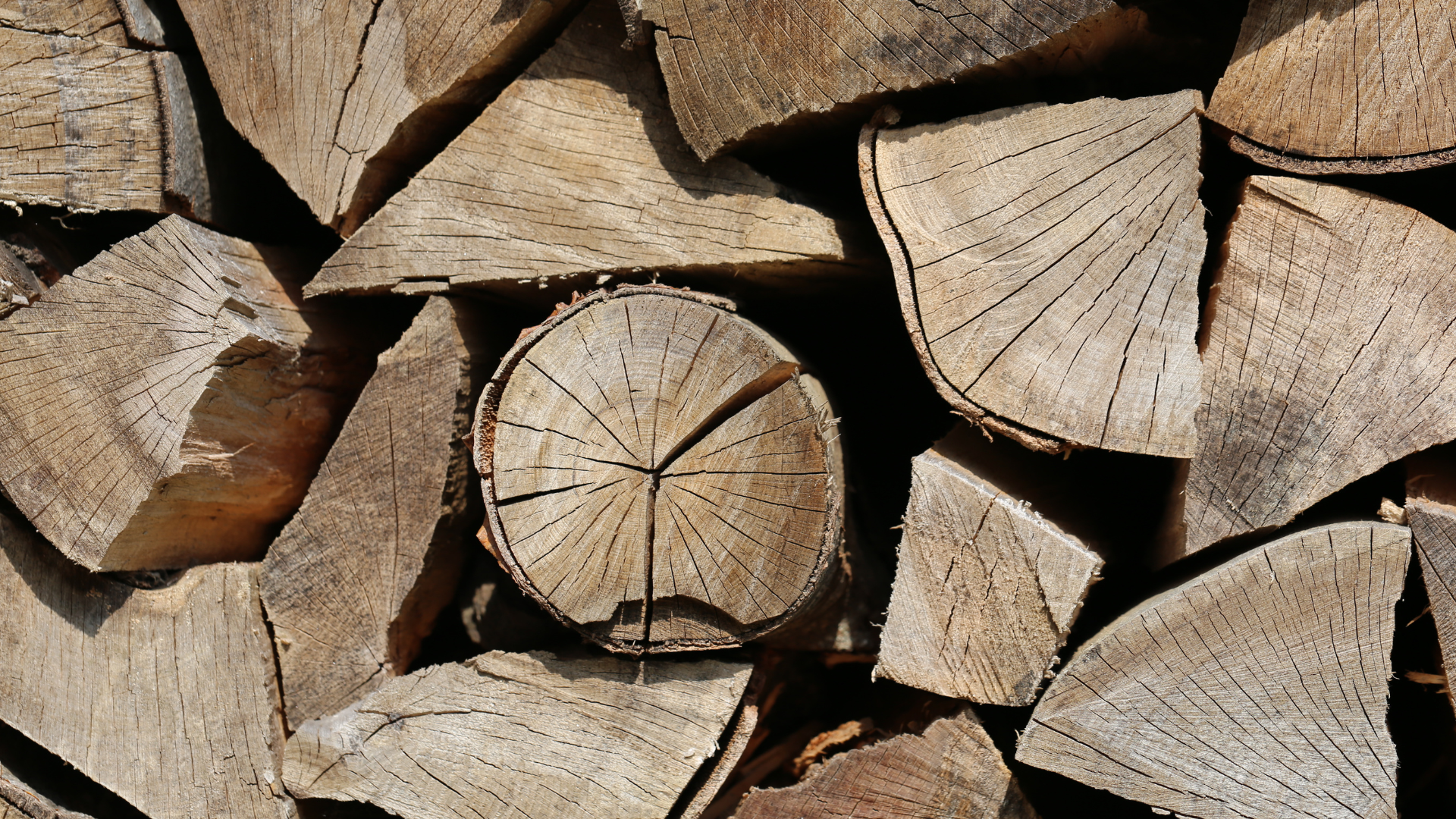
When Does Firewood Actually Start Seasoning?
Imagine you fell a tree and leave the trunk sitting at tree length for a year.
It has certainly been drying. But not nearly as efficiently as the same wood would have if it had been bucked and split.
Why? Surface area.
A tree-length log still has bark covering almost its entire exterior. Moisture has relatively little exposed surface through which it can escape.
Cut that log into firewood-length rounds and suddenly you’ve created exposed end grain at every cut.
Split those rounds and you expose considerably more of the interior wood directly to the air.
That’s when the drying process really gets moving.
So if you’re putting firewood away for a future heating season, don’t just think about when the tree came down. Think about when you got it bucked and split.
Does Splitting Firewood Help It Dry Faster?
Yes.
In fact, splitting is one of the most important things you can do to help firewood season.
Splitting exposes the interior of the wood directly to moving air. It also creates smaller pieces, reducing the distance moisture trapped inside the wood has to travel before reaching an exposed surface.
That means split size matters, too.
Large, chunky splits can be useful when you want a longer burn, but they’ll generally take longer to season than smaller pieces from the same species.
If your timeline is tight, splitting smaller can help.
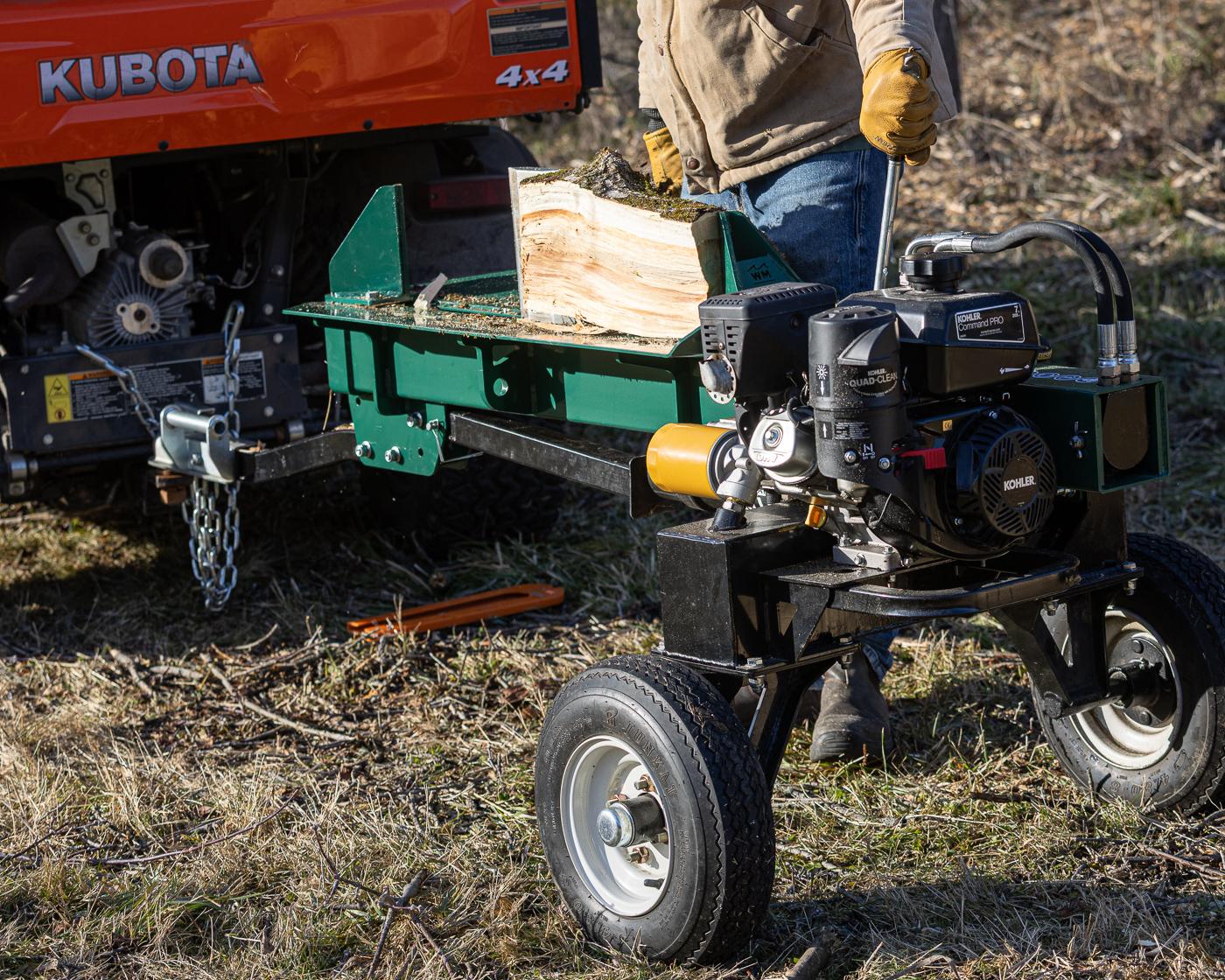
If you want to season it, get it split
Leaving rounds sitting beside the woodshed for months and splitting them shortly before you plan to burn them isn’t the same as having split firewood seasoning for those months.
If you’re only putting away a small amount of firewood, a maul may be all you need. But when you’re processing several cords for a home, cabin or cottage, a log splitter can make it much easier to get your wood processed earlier and give it more time to season.
Hydraulic splitters are particularly useful for mixed firewood piles where species, diameter, knots and grain can change from one round to the next.
How Long Does Firewood Take to Season?
There isn’t one answer. Different species give up moisture at different rates, and climate, split size, airflow and storage conditions can move the timeline in either direction.
As a general planning guide for already-split firewood stored with good airflow:
| Wood Species | General Seasoning Range |
|---|---|
| Cedar | 3–6 months |
| Pine, Spruce, Fir | 4–8 months |
| Ash, Birch, Cherry | 6–12 months |
| Sugar, Maple, Hickory | 9–18 months |
| White & Red Oak | 12–18 months |
| Elm | 12–20 months |
Treat these as planning ranges, not deadlines. An oak split doesn’t suddenly become ready to burn when the calendar reaches month twelve. A hot, dry and windy summer may move things along differently than a cool, damp season.
That’s why it’s better to check the wood itself than rely entirely on the calendar.
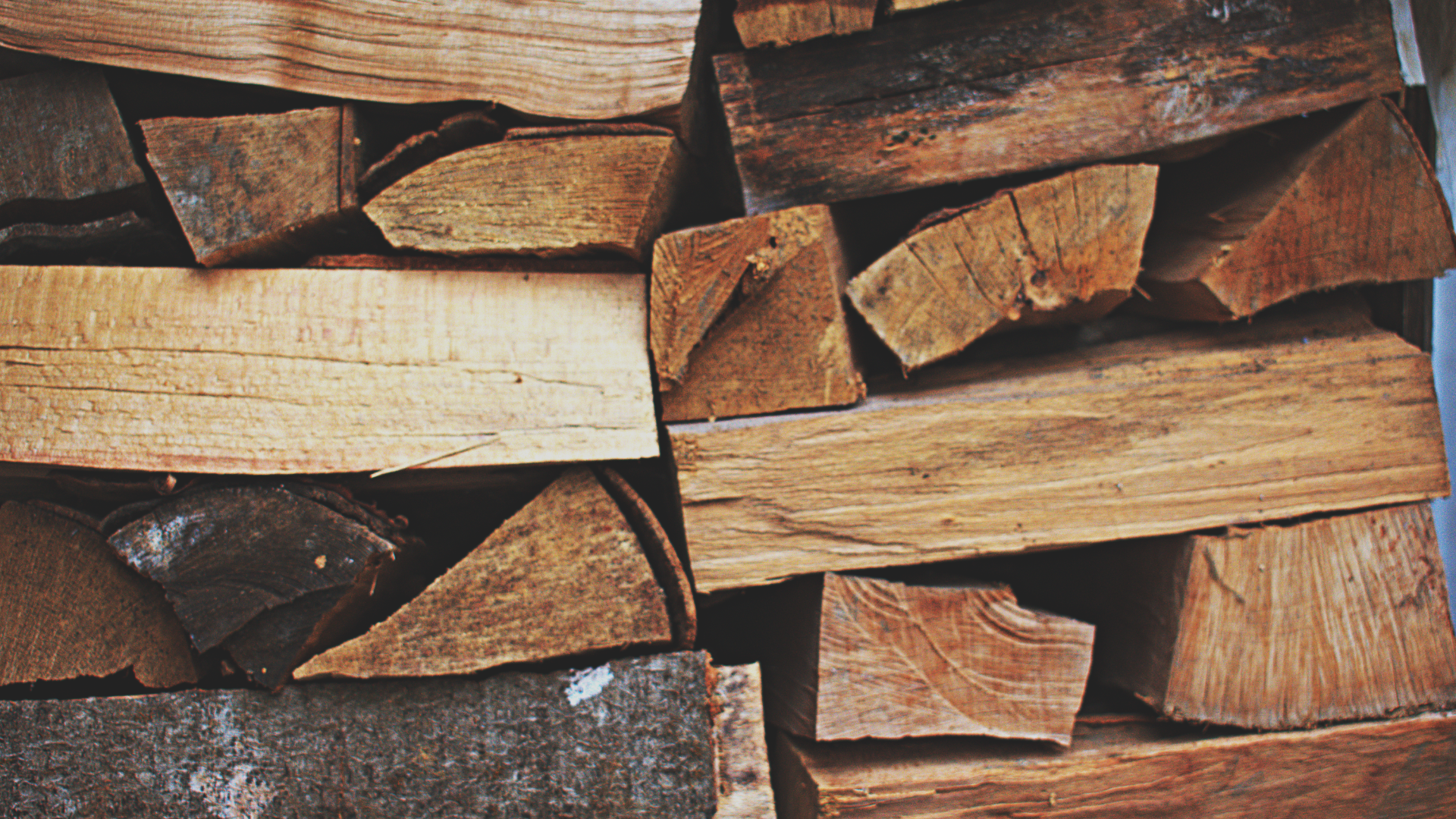
How Do You Know When Firewood Is Ready to Burn?
Looks can be deceiving.
Firewood can appear grey, weathered and dry on the outside while still holding considerable moisture inside.
A moisture meter is one of the simplest ways to get a better idea of what’s happening inside the wood.
For a useful reading, don’t just test the outside of a piece that has been sitting in the stack.
Take a representative piece, split it open and test the freshly exposed interior surface. Check several pieces from different parts of the stack rather than relying on a single reading.
You’re trying to understand the condition of the pile, not find the driest piece in it.
As a general target, look for readings around 20% or below before burning.
Where Should You Season Firewood?
If drying is the goal, think air before shelter.
A completely enclosed space may keep rain off your wood, but if it also prevents air from moving through the stack, you’ve solved one problem by creating another.
A good seasoning location should provide:
-
-
Airflow. Moving air carries moisture away from the surface of the wood.
-
Separation from the ground. Soil holds moisture. Elevating the bottom row on pallets, rails or another suitable base helps separate the stack from wet ground.
-
Some exposure. An open location generally allows better air movement than a stack tucked tightly against a building or surrounded by dense vegetation.
-
Protection from prolonged wetting. Keeping heavy rain and snow off the top helps prevent seasoned wood from continually being rewetted.
-
The goal isn’t to seal firewood away from the weather. It’s to create a place where moisture can escape.
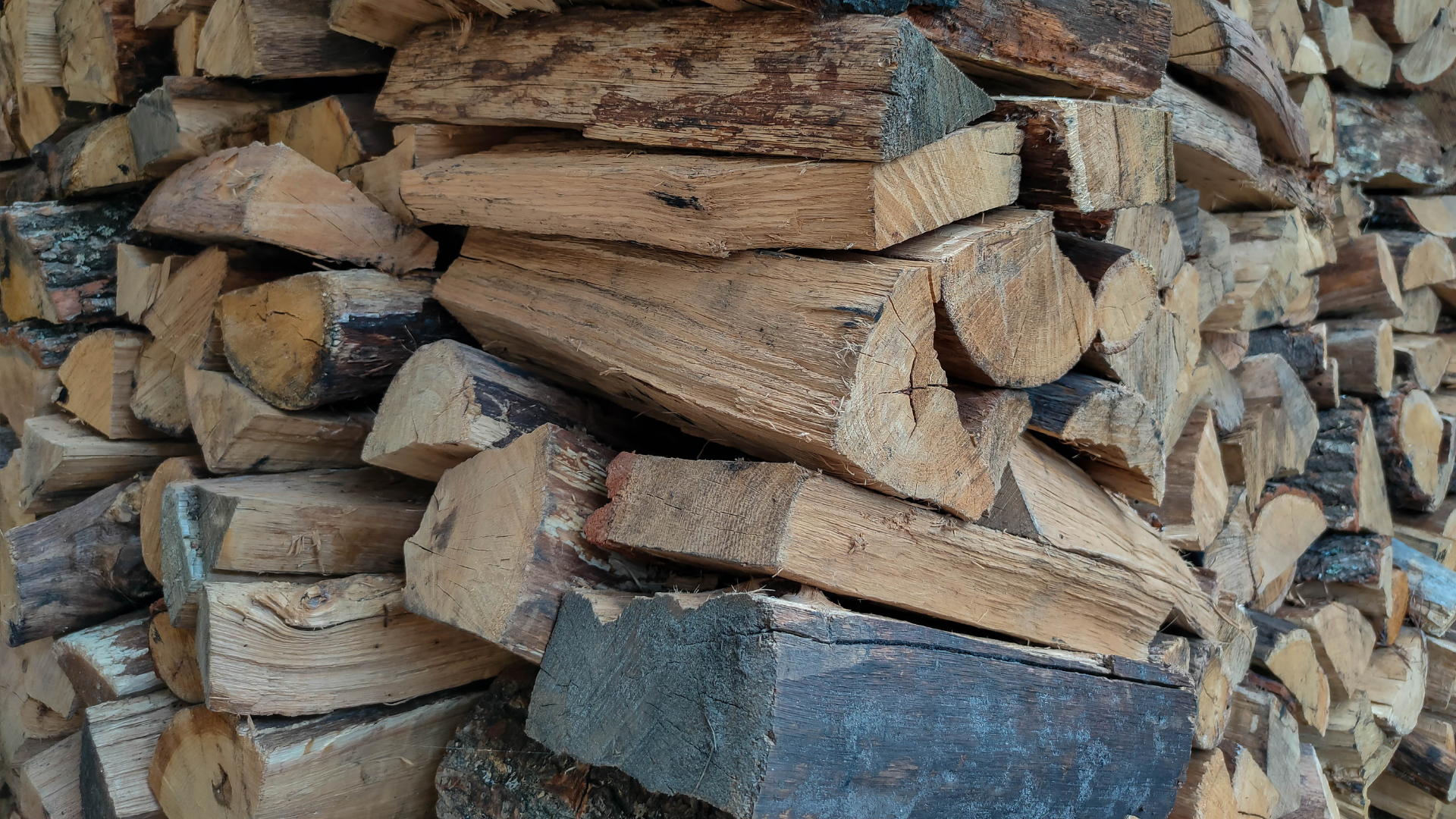
What’s the Best Way to Stack Firewood?
There are plenty of ways to stack firewood, and people can get surprisingly passionate about them.
Single rows. Criss-cross stacks. Traditional racks. Round Holz Hausen stacks. Woodsheds.
They can all work. Whatever style you choose, a few principles matter more than the pattern itself.
-
-
GET IT OFF THE GROUND: Use pallets, rails or another suitable base to separate the first row from wet soil.
-
GIVE IT ROOM TO BREATHE: Don’t pack pieces so tightly that you eliminate the spaces that allow air to move through the stack.
-
THINK ABOUT THE WIND: Where possible, orient your stack so prevailing winds can move through and around the wood.
-
BUILD IT TO STAY UP: Long freestanding rows need stable ends or supports. Criss-cross “log cabin” ends are a simple way of creating self-supporting pillars without a dedicated rack.
-
There’s no prize for having the fanciest firewood stack. The goal is a stable stack with good airflow that you don’t have to rebuild halfway through the season.
Should You Cover Firewood?
Yes, but how you cover it matters.
One of the easiest mistakes is wrapping an outdoor stack as tightly as possible to keep every drop of rain away. That can also trap humidity and restrict the airflow you’re relying on to season the wood.
A woodshed with a solid roof and open or slatted sides does this naturally.
For an outdoor stack, a properly secured top cover can provide protection from rain and snow while allowing the sides to remain exposed to moving air.
You’re trying to keep precipitation off without turning the woodpile into a sealed container.
Does the Type of Wood Matter?
Absolutely.
Wood species influence both how long the wood takes to season and how it ultimately burns.
Dense hardwoods such as oak, maple and hickory are popular heating woods, but that density can also mean longer seasoning times.
Many softwoods season more quickly.
That doesn’t make one universally “good” and another “bad.” What matters is understanding what you have and planning accordingly.
If you’ve got oak that you intend to heat with, think well ahead.
And if you’re processing several different species from your property, don’t assume they’ll all be ready at exactly the same time simply because you cut and stacked them together.
When Should You Start Processing Firewood for Winter?
Earlier than you think.
If you know you’ll need firewood for a future heating season, one of the most useful things you can do is get it bucked, split and properly stacked as early as practical.
Wood left at tree length isn’t getting the same drying opportunity as split firewood sitting in an airy stack.
That’s particularly important with slower-seasoning hardwoods.
There’s an old rhythm to putting up firewood: process it well before you need it and let time do the rest.
Modern equipment can make the processing considerably easier but it can't replace the time it takes to season it.
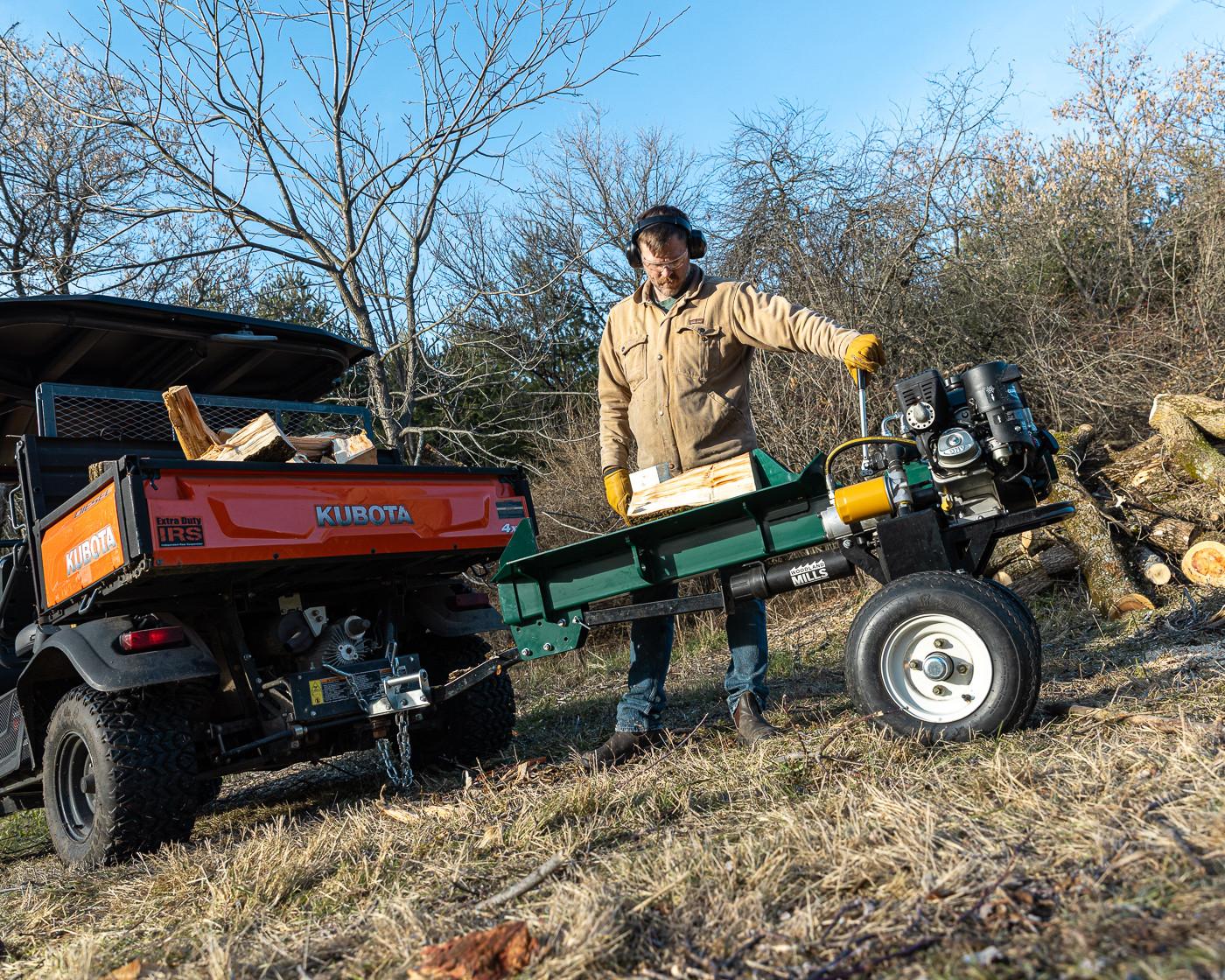
How Can Your Splitting Setup Reduce Handling?
There’s another part of processing firewood that’s easy to overlook.
Where does every piece go after you split it?
Split a round onto the ground, throw the pieces into a loose pile, pick them up again, load them into something, unload them and finally stack them, and you’ve handled the same wood over and over.
Multiply that by several cords.
Every extra pickup, carry or reposition adds labor without getting you any closer to having firewood ready to burn.
A better setup tries to move every piece toward its next destination as soon as it’s split.
Set up the splitter beside your final stack. Split directly into a vented bulk bag. Position a trailer where finished pieces can go straight into it.
Sometimes the easiest way to process firewood faster is simply to stop doing the same job twice.
What Does a Good Firewood Setup Look Like?
The best setup is the one that fits your property and the amount of wood you process. But we’d build around a few basic principles.
Process early.
Don’t leave logs sitting whole if you’re counting on them for an upcoming heating season.
Split to an appropriate size.
Smaller splits generally season faster.
Plan the workflow before you start.
Know where rounds are coming from and where finished splits are going.
Reduce unnecessary lifting and handling.
Bring the splitter close to the wood where practical and use mechanical help for large rounds.
Stack for airflow.
Get the wood off the ground and let air move around it.
Protect without sealing it up.
Keep precipitation off the top while maintaining airflow around the sides.
Check rather than guess.
Use a moisture meter to help determine when the wood is ready.
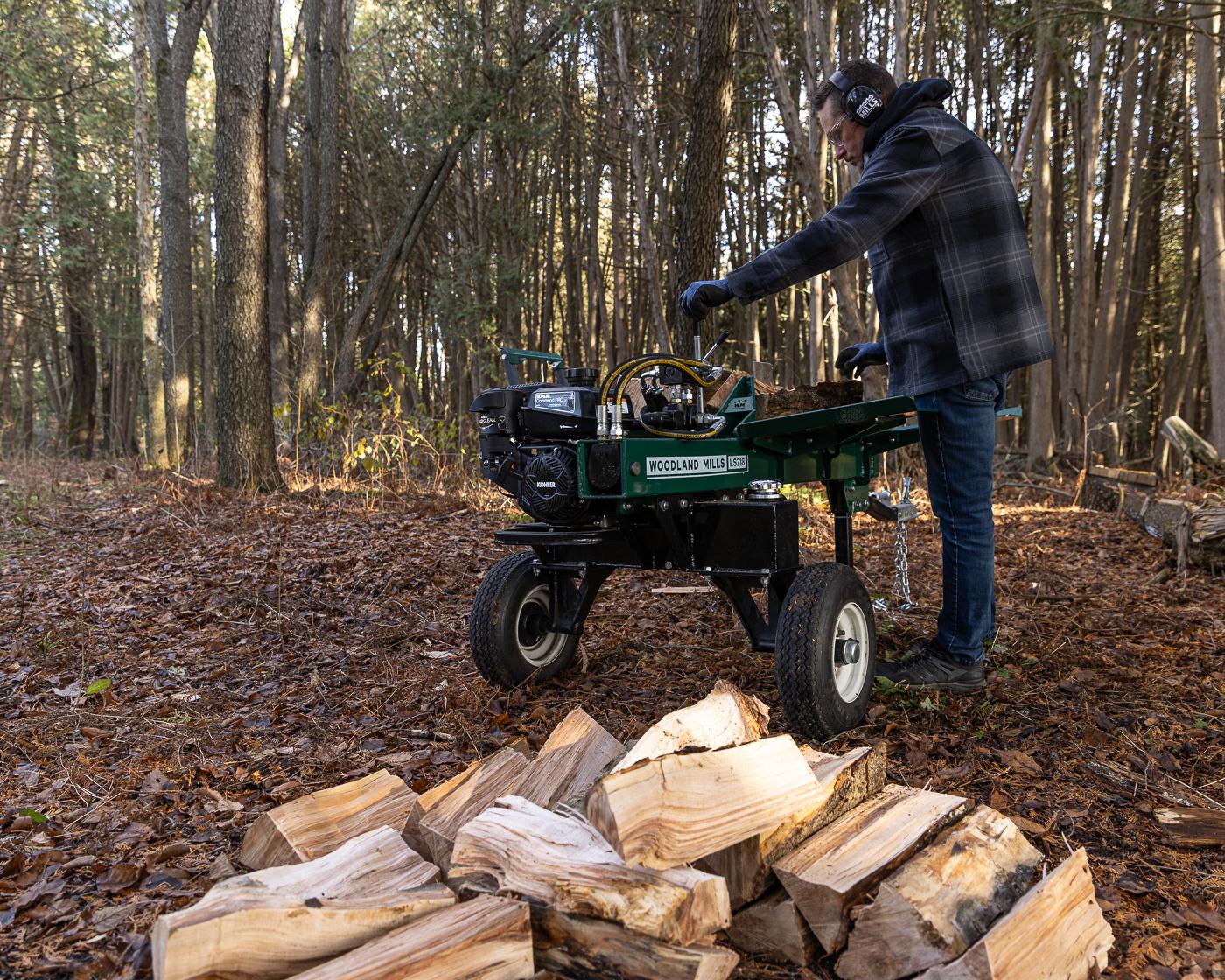
From Log to Firebox
Making good firewood isn’t complicated.
But it does reward planning.
Get the logs out of the woods. Buck them to length. Split them early. Handle them efficiently. Stack them somewhere with plenty of airflow and give them the time they need.
Then, when cold weather finally arrives, the hard work is already behind you. And there's something pretty satisfying about that.
Join the Woodland Mills Community Facebook group. Search advice and insights from over 65,000 knowledgeable, supportive members.
- Pre-purchase considerations
- Sawmill set-up support
- Project inspiration photos and videos
- Community troubleshooting support