



What is Dimensional Lumber? A Guide to Lumber Sizes
Understand nominal dimensions and the actual size of your lumber
Dimensional lumber is a key building block for many building projects, from decks and patios to home construction projects.
As an essential material for builders, dimensional lumber provides the standardized, versatile components needed for efficient and accurate construction. Dimensional lumber is typically made from softwoods such as pine, fir, and spruce, which are easier to work with and more affordable than hardwoods.
But there’s a lot to understand about dimensional lumber that may not be as straight forward as it appears, such as the difference between nominal dimensions vs actual dimensions. The construction of buildings today would be significantly more challenging without standardized materials like dimensional lumber. Understanding standard sizes is crucial for builders to ensure efficient and accurate construction.
So let’s get into common dimensional lumber sizes, how to understand them and how they’re used.
What is dimensional lumber?
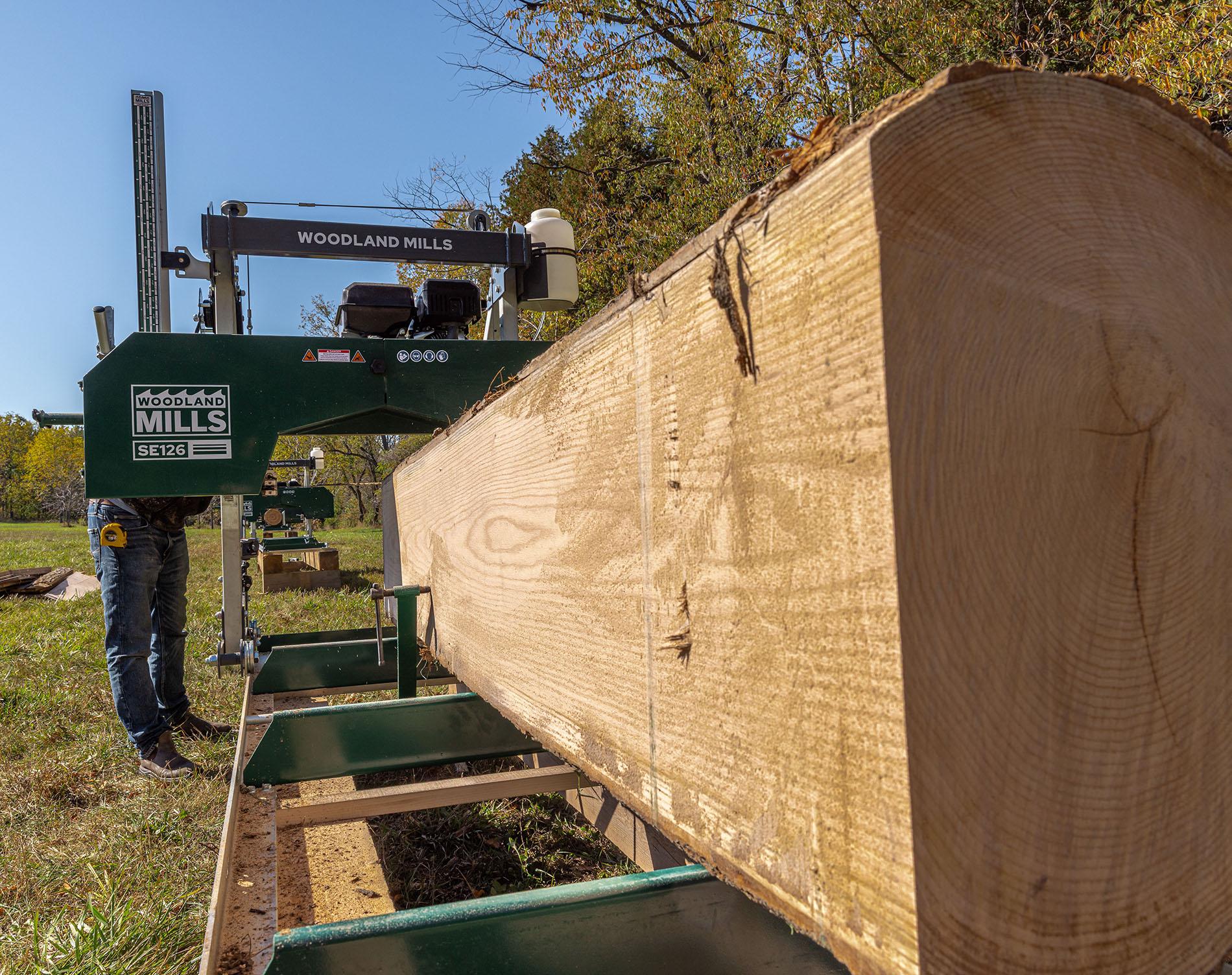
Dimensional lumber is wood that has been sawn or milled to standardized widths and depths specified in inches, primarily used in construction. This can be done commercially at a mass production sawmill or at home with a portable sawmill.
These lumber sizes are often used in building projects such as home construction or other “stick built” projects as well as fencing, siding and other DIY and commercial projects. Dimensional lumber is wood that has been cut and milled to a specific standasdized ize, then planed on all four sides to achieve smooth, uniform dimensions, for use in various applications. 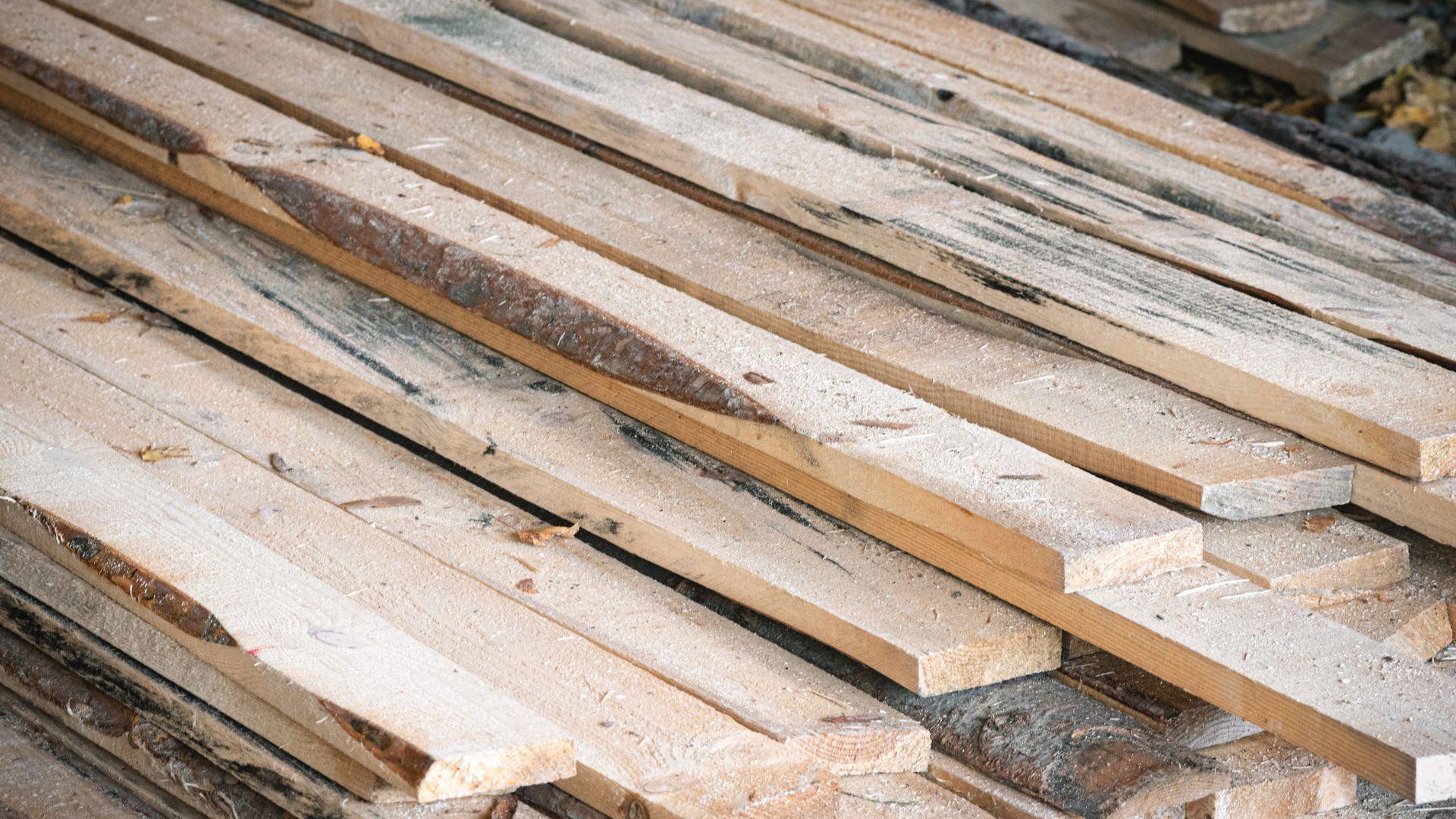
What wood species are used to make dimensional lumber?
Dimensional lumber can be made with any wood species, but is most often made with pine, spruce, Douglas fir, cedar, oak, maple, poplar, and other common types.
-
- Pine is a popular choice due to its lightweight nature and resistance to shrinking and swelling.
- Spruce is commonly used for construction purposes like wall studs and framing, though it is less resistant to decay.
- Douglas fir is known for its strength and durability, making it ideal for structural applications.
- Cedar is naturally resistant to rot and insects, making it perfect for outdoor uses such as decking and fences.
Hardwood dimensional lumber, such as oak, maple, and poplar, is commonly used for high-end furniture and detailed interior projects. Oak is strong and durable, often used in flooring, cabinetry, and furniture. Maple is valued for its smooth texture and light color, making it popular for cabinets and fine furniture. Poplar is an affordable hardwood known for its smooth texture and ease of painting, making it suitable for furniture and cabinetry.
What's the difference between nominal dimensions and actual dimensions?
Nominal dimensions are a shorthand term used to describe the rough dimensions of a piece of lumber, without taking into account material lost to the sawblade's kerf or through planing. Actual dimensions differ by taking into account those processes and how much material is lost.
For example:
-
-
A common 2" x 4" uses those specific dimensions as the nominal size
-
A 2x4's actual size is 1½" x 3½"
-
You'll find this with lumber sold at the hardware store or lumber yard. At home you can mill your lumber so the final dimensions are either true 2" x 4" or 1½" x 3½".
What are common sizes of dimensional lumber?
While there are a wide variety of projects you can make, common dimensions and standard sizes of dimensional lumber are often used even by sawyers milling their own lumber. The most common sizes include 2x4, 2x6, 4x4, and 6x6, but "dimensional lumber" can refer to a range of other standard sizes as well.
Here are some frequently used lumber dimensions, both nominal and actual sizes.
| Nominal Size | Actual Size (Inches) |
|---|---|
| 1x2 | 3/4 x 1 1/2 |
| 1x4 | 3/4 x 3 1/2 |
| 1x6 | 3/4 x 5 1/2 |
| 1x8 | 3/4 x 7 1/4 |
| 2x2 | 1 1/2 x 1 1/2 |
| 2x3 | 1 1/2 x 2 1/2 |
| 2x4 | 1 1/2 x 3 1/2 |
| 2x6 | 1 1/2 x 5 1/2 |
| 2x8 | 1 1/2 x 7 1/4 |
| 2x10 | 1 1/2 x 9 1/4 |
| 2x12 | 1 1/2 x 11 1/4 |
| 4x4 | 3 1/2 x 3 1/2 |
| 4x6 | 3 1/2 x 5 1/2 |
| 6x6 | 5 1/2 x 5 1/2 |
If I'm milling my own lumber should I mill to actual size?
A portable sawmill with a thin kerf blade is capable of milling lumber with minimal material loss. With that in mind, should sawyers at home mill to actual dimensions or mill to nominal sizes?
That's all a matter of preference. If you're building your own structures, it may be easier to build a plan using nominal size since it may be easier to design around true, round numbers like 2x4 or 4x4.
But if you're using a mix of homemade milled lumber and lumber from the hardware store then it may be easier to mill to actual size so everything matches.
How do I mill to common dimensional lumber sizes?
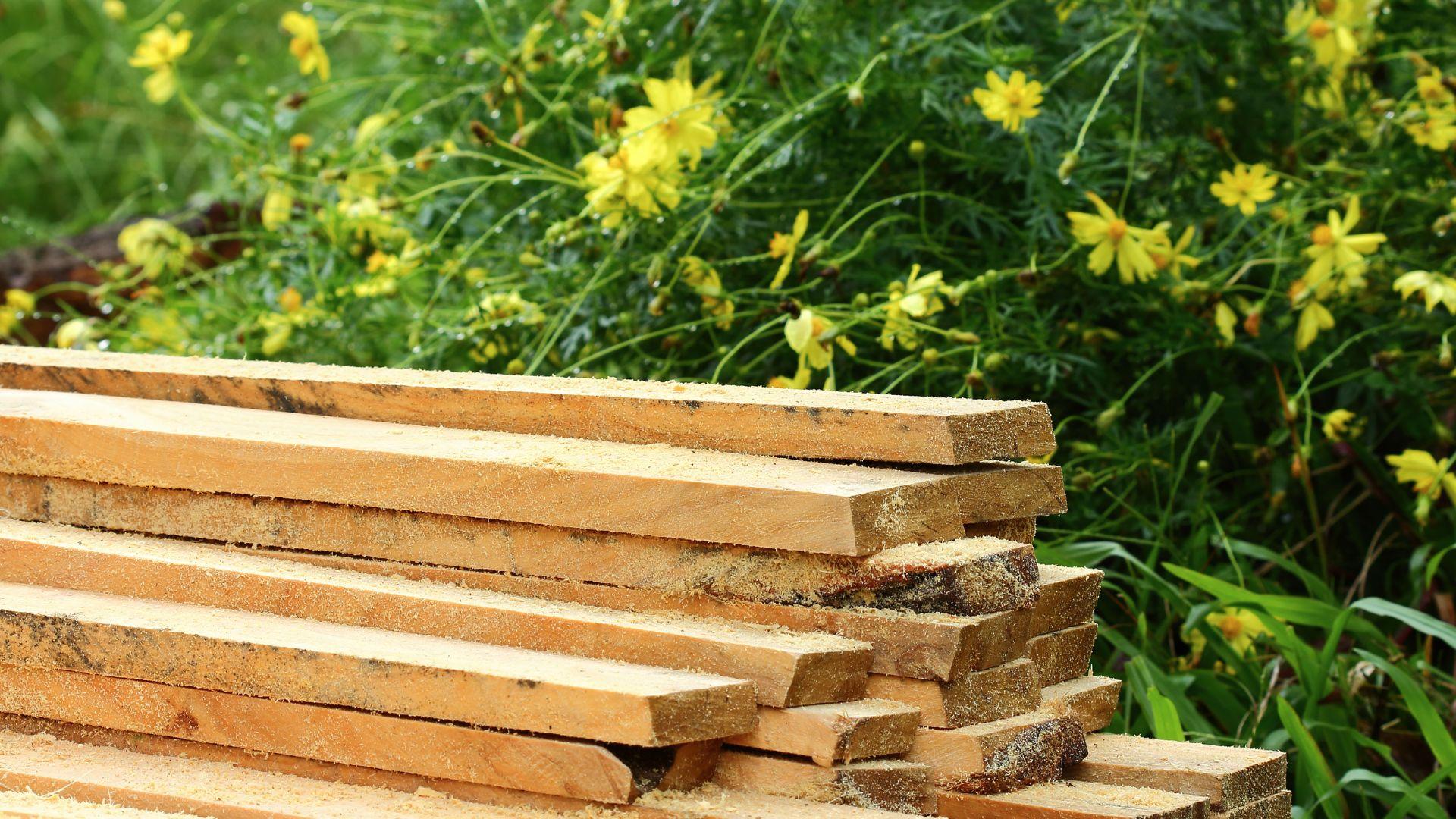
With a thin kerf bandsaw blade on a portable sawmill, you won’t be removing enough material to turn a 2x4 into a 1½” x 3½” board. Historically, large-scale lumber mills played a crucial role in producing boards cut to standardized sizes, helping to establish the uniformity needed for construction and woodworking.
If you want you can mill your logs right on the sawmill to get close to these common actual dimensions. On a Woodland Mills portable sawmill, the log scale takes into account material lost to the kerf, so you can mill to the exact dimensions you want.
You can also plane a board to remove up to 1/16” to a 1/4” with multiple passes.
If you’re furniture making or doing outdoor projects where nailing specific sizes is important for creating tight seamless fits, then double check your cuts as you’re milling. You can always take off more material after milling but you can never re-add lost material back to the board.
Tips for milling to nominal sizes of dimensional lumber
Want to mill to nominal sizes on your sawmill? Here are some useful tips:
-
-
Experiment and use lower grade lumber first
-
Test the fit of your boards and lumber after cutting to ensure strong structural integrity of your final product
-
Planing and sanding to produce finished lumber can help remove extra material to nail your final dimensions
-
Structural applications require more precision, especially if you're mixing milled lumber versus lumber bought at the hardware store
-
Measure carefully and use your sawmill's magnetic log scale to accurately refine your cuts
-
SHOP SAWMILLS
HM122
An entry-level sawmill packed with impressive features at a budget-friendly price. Designed for hobby sawyers or woodworkers looking for an economical solution to mill lumber.
HM126MAX
The original Woodland Mills portable sawmill. Trusted by hobbyists for years, now featuring a FULLCUT™ sawhead to maximize usable cut width.
HM130MAX®
A wide capacity sawmill that produces stunning high-value live-edge boards. Loaded with features including our FULLCUT™ sawhead, RapidChange® blade system, auto lube, and more.
HM136MAX™
The ultimate solution for cutting wide live edge slabs, perfect for tabletops, counters, benches, and more. Our unique FULLCUT™ sawhead design ensures your logs' widest assets are left intact.
Join the Woodland Mills Community Facebook group. Search advice and insights from over 65,000 knowledgeable, supportive members.
- Pre-purchase considerations
- Sawmill set-up support
- Project inspiration photos and videos
- Community troubleshooting support