



How to Calculate Board Feet and Price Your Work
How many board feet is in your lumber, and how much should you charge for it? Let's figure it out
Calculating the board footage of your lumber may seem challenging, but with a simple formula you can quickly calculate the volume of lumber you have and use that information as a starting point for determining its value.
While pricing of lumber varies over time, having a strong pricing strategy so you know the cost of your lumber can be invaluable, especially if you're milling for hire or selling your work. Equipped with a portable sawmill like the Woodland Mills HM130MAX or HM136MAX you have the potential to mill custom dimensions, mill hard-to-find species and cut slabs.
So how much does one board foot of black walnut sell for? How do you even know how many board feet you have?
What is a board foot?
A board foot is defined as a volume of wood that measures 1 foot long by 1 foot wide by 1 inch thick. A board foot is equivalent to 144 cubic inches. To make calculations easier, you can break down your lumber measurements into manageable sections before applying the board foot formula. Board-foot calculations may use nominal dimensions depending on how the lumber is being measured and sold, so it's important to understand whether you're working from rough, nominal or actual finished dimensions.
How is a board foot different from other measurements?
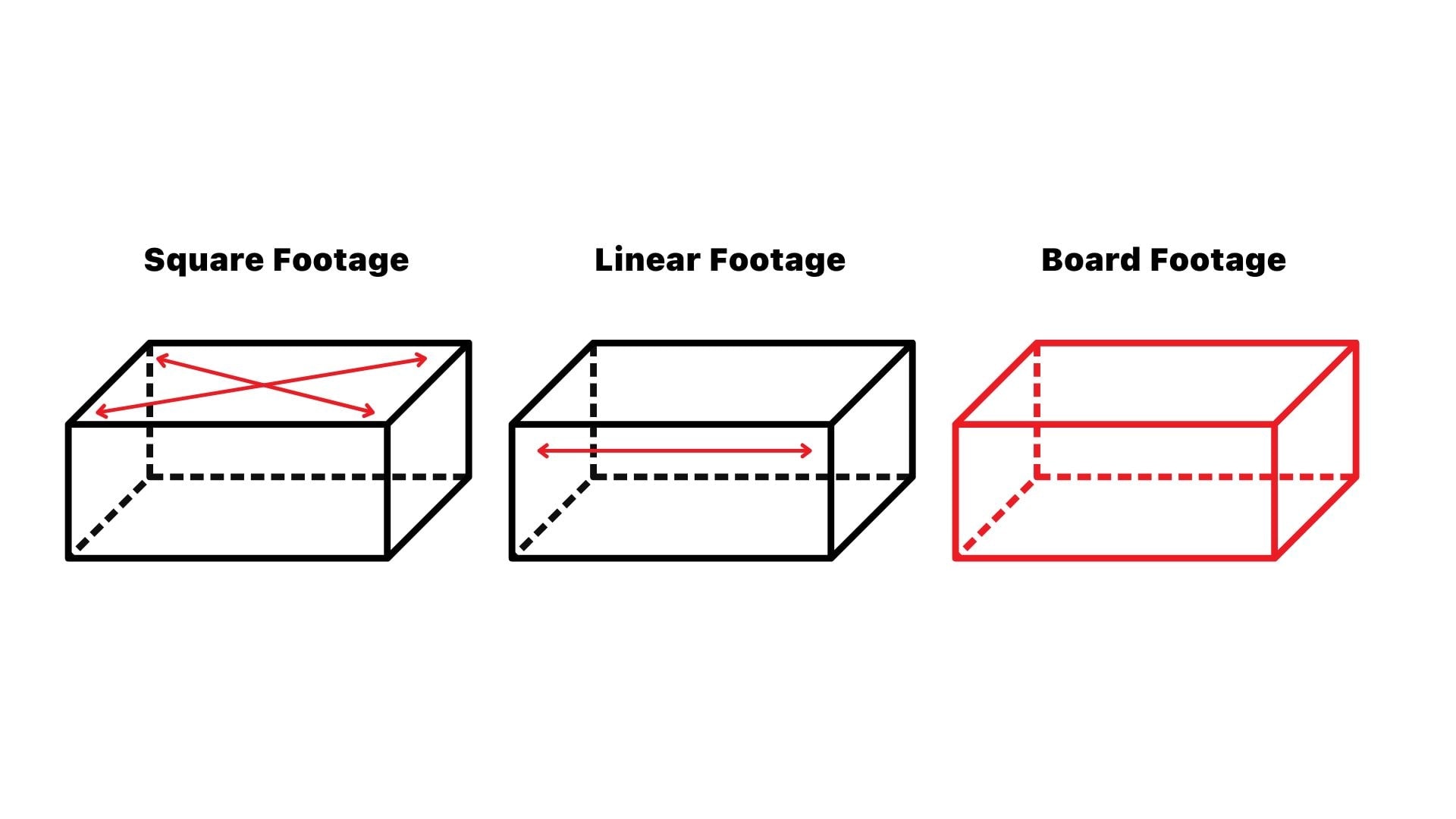
A board foot is used to measure lumber based not just on its length or width, but volume. For example, some different measurements used for wood include:
-
-
Square Feet: This measurement is used to find the surface area, and is calculated by measuring the length and width. One square foot would be 1' x 1'.
-
Linear Feet: This measurement applies to the length of an object. So something with a length of one linear foot is 12 inches long.
-
Board Feet: This measurement combines the width and length with the thickness of the lumber. That means it takes into account the volume of the board. One board foot is measured as 1' (length, measured in feet) x 1" (width, measured in inches) x 1" (thickness, measured in inches) and is abbreviated as either FBM (foot, board measure), BF (board foot) or sometimes as bd. ft.
-
You would use a board foot calculation to create a standardized measure of the volume of lumber you're producing, buying or selling. Because square feet and linear feet only factor the surface area and length, you're not including the thickness of the board.
How do you calculate board feet?
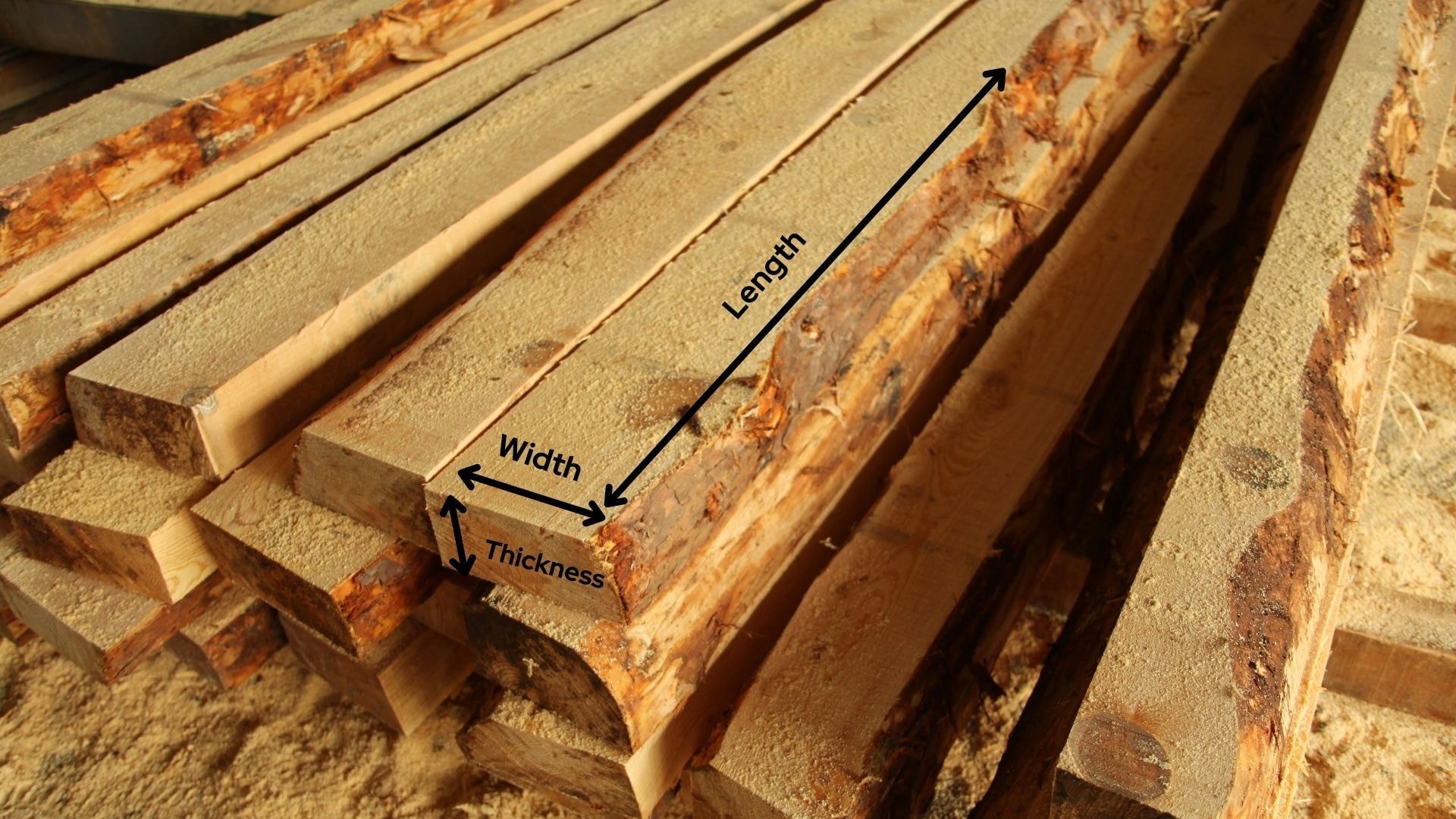
Board feet uses the length, width and thickness of the lumber to calculate total volume.
When calculating you would write it as: "(Length x Width X Thickness) ÷ 12 = Total Board Footage."
When length is measured in feet and width and thickness are measured in inches, the formula is:
(Length in feet × Width in inches × Thickness in inches) ÷ 12 = Total Board Feet
For a board that's 10' long, 10" wide and 4" thick, you would calculate it as: "(10 x 10 x 4) ÷ 12 = 33.33 FBM"
How do you price your lumber using board feet?
A common method for estimating the value of lumber is to calculate the total board feet needed and then apply relevant market price per board foot.
Once you have the total board feet of your lumber you can research comparable prices for that species in your local market.
For example, let’s say comparable kiln-dried cherry is selling locally for $9 per board foot. At that rate, 20 BF would have a reference value of $180. From there, the value may need to be adjusted based on factors such as grade, dimensions, moisture content, defects and local demand.
Look up what comparable lumber sells for in your area and adjust for other factors, such as whether the lumber is dry or green, its grade and condition, dimensions, defects and other characteristics that could affect its value.
If you're estimating how much lumber you'll need for a future project, remember that the board footage in the finished project won't necessarily equal the amount of rough lumber you'll need to start with. Allow additional material for saw kerf, defects, trimming, grain selection and mistakes. The appropriate waste allowance will depend on the material and the project.
Board footage is also only one part of pricing your work. A pricing strategy should include overhead costs, such as utilities and maintenance, in addition to labor and material costs. For some jobs, you might consider charging by the hour or using an hourly rate, especially when the project scope is uncertain or likely to change. The specific job or tasks required for a project will influence how you estimate time, costs and the most appropriate pricing method.
Depending on your lumber, such as unique cuts like burlwood slabs, exceptionally wide boards, unusual grain or other one-of-a-kind pieces, it may be better to charge a fixed price based on the estimated market value. In that case, board footage can provide a useful starting point, but it doesn't necessarily determine the final value.
What should I know if I plan on selling homemade lumber?
Equipped with a portable sawmill you have a great opportunity for milling locally sourced lumber and potentially generating additional income from your sawmill. But remember: you're not a lumber yard, and large-scale lumber producers can manufacture common dimensional lumber at volumes and costs that can be difficult for an independent sawyer to compete with.
-
-
Find the need in your local woodworking community and fill it: Look for builders, carpenters or hobbyists that want specific things like custom dimensions, slabs, exotic species or oddly shaped logs and fill those needs. Many sawyers-for-hire say they don't bother with pine because the price is so low, but species like cherry, walnut and mahogany are far more worthwhile and profitable.
-
When it comes to pricing your work, accurate measurement is just the starting point: A smart pricing strategy should factor in not only the lumber costs based on total board feet, but also overhead costs, your desired profit margin and the time spent on each project. For example, if you’re building a deck and your board foot calculator tells you you’ll need 100 board feet of lumber, you can quickly estimate your material cost by multiplying by the current price per board foot. But don’t forget to account for additional materials, labor, and any unique features that might affect the overall cost.
-
Your final price should accommodate more than just lumber costs: Look up board foot prices for the species you're milling but pay special attention to your own efforts and time spent milling. Factor your time and effort into the cost, especially if you're sourcing specific species or unique logs you can't find anywhere else.
-
Ultimately, board footage gives you an important baseline: it tells you how much lumber you're working with. From there, species, quality, local demand, processing, overhead and your own time all help determine what that lumber, and your work, may be worth.
SHOP SAWMILLS
HM122
An entry-level sawmill packed with impressive features at a budget-friendly price. Designed for hobby sawyers or woodworkers looking for an economical solution to mill lumber.
HM126MAX
The original Woodland Mills portable sawmill. Trusted by hobbyists for years, now featuring a FULLCUT™ sawhead to maximize usable cut width.
HM130MAX®
A wide capacity sawmill that produces stunning high-value live-edge boards. Loaded with features including our FULLCUT™ sawhead, RapidChange® blade system, auto lube, and more.
HM136MAX™
The ultimate solution for cutting wide live edge slabs, perfect for tabletops, counters, benches, and more. Our unique FULLCUT™ sawhead design ensures your logs' widest assets are left intact.
Join the Woodland Mills Community Facebook group. Search advice and insights from over 65,000 knowledgeable, supportive members.
- Pre-purchase considerations
- Sawmill set-up support
- Project inspiration photos and videos
- Community troubleshooting support