



3 Methods for How to Dry Firewood Quickly
How to transform your wet firewood to get it ready for the wood stove
Freshly cut wood has a lot of potential, but often needs time before it's ready.
That's true whether you've milled lumber using your portable sawmill or cut firewood using your own LS218 2-Way Log Splitter or other device.
But wouldn't it be easier if your wood could dry faster so you can put it to use more quickly? Thankfully, there are a few simple ways to help green firewood season faster.
Here are the basics of drying wood and how to get your wet wood dry more quickly.
Why does firewood take so long to dry?
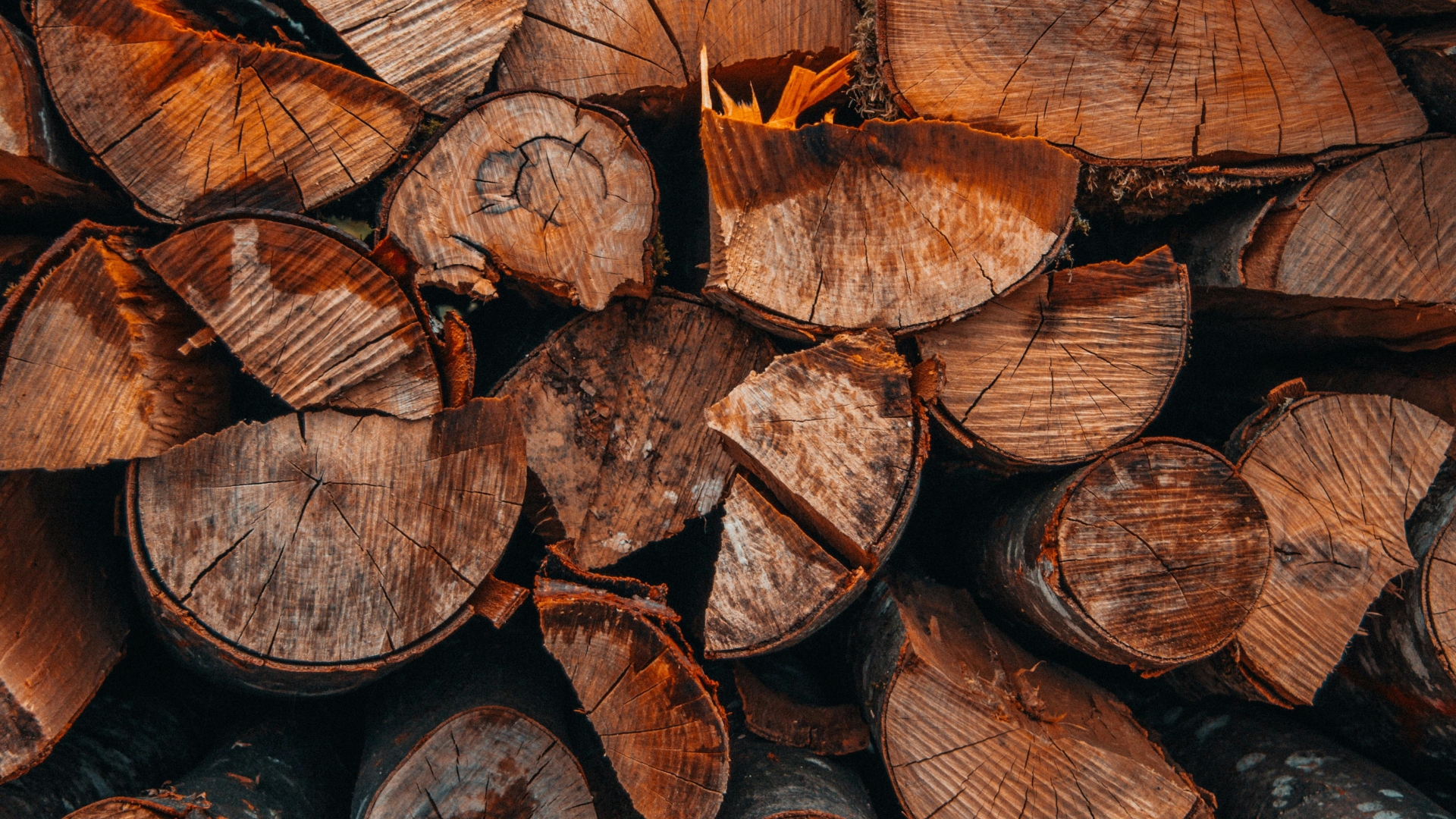
Like any type of wood, firewood begins to dry immediately after it's been cut down. While you can burn wet wood, it is harder to ignite, produces less usable heat and can create more smoke than properly seasoned firewood.
While firewood may seem dry on the outside, it retains moisture content on the inside. Large, unsplit rounds retain that moisture longer because less of the wood's interior is exposed to moving air.
One of the best ways to speed up drying is to split your firewood soon after bucking it into rounds. Smaller pieces provide more exposed surface area, allowing moisture to escape more quickly.
What are ways to speed up drying my firewood?
So you are looking for ways to turn your fresh green logs into seasoned wood for burning? For most landowners, you don't need a specialized kiln or drying system. How you split, stack and protect your firewood can make a significant difference in how quickly it seasons.
1. Split Your Firewood Into Smaller Pieces
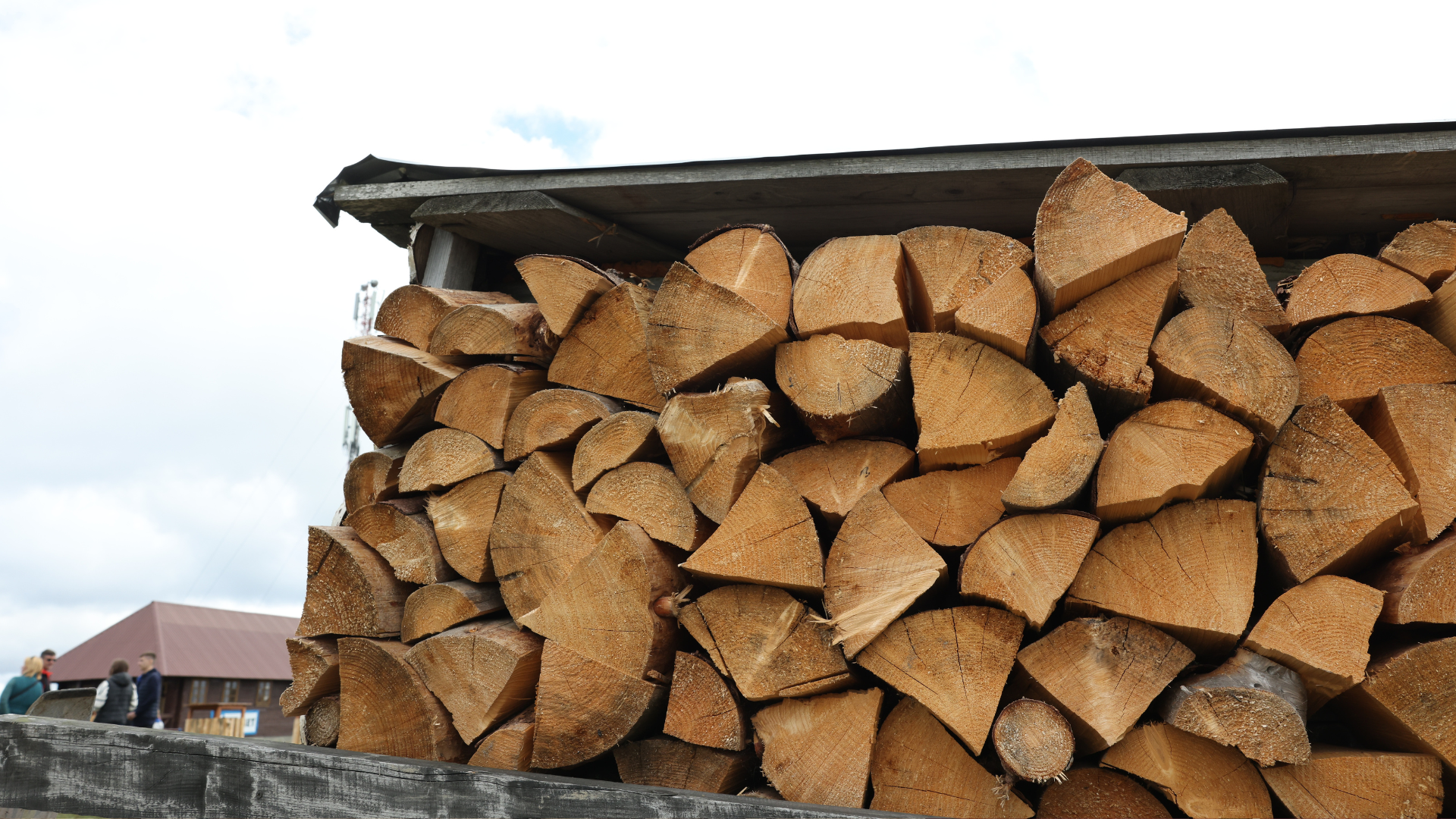
If you want your firewood to dry faster, start by splitting your rounds. A whole round can hold moisture for considerably longer than split firewood because much of the interior wood remains protected by bark.
Splitting exposes more of the wood to air and gives moisture more opportunity to escape. Larger rounds can also be split into smaller pieces to increase exposed surface area and help speed up the seasoning process.
This is where an efficient log splitter can make a big difference. Instead of leaving rounds sitting in a pile waiting to be split, you can process them shortly after bucking and get the drying process started sooner.
2. Maximize Airflow Around Your Firewood
Most landowners store their firewood outdoors or in small wood sheds. Where and how you build that stack plays a major role in how quickly your firewood dries.
Stacked wood, especially if it's tightly packed, doesn't have a lot of room to breathe. Densely packed firewood in a wood shed or outdoor pile can have poor air circulation, extending the drying period.
Choose an open location that receives natural airflow and, where possible, sunlight. Keep your firewood elevated off damp ground and avoid packing the pieces so tightly that air can't move through the stack.
You can also cross-stack the ends or alternate the direction of some pieces to create additional air space and help stabilize the pile.
3. Keep Rain and Snow Off Without Trapping Moisture
Drying firewood doesn't mean sealing it away from the weather. Your stack needs protection from repeated rain and snow while still allowing moisture inside the wood to escape.
A woodshed or simple roof is ideal because it protects the top of the stack while leaving the sides open to moving air. If you're using a tarp, cover the top rather than wrapping the entire pile. Completely enclosing green firewood can trap humidity and slow the drying process.
The goal is simple: keep precipitation off while allowing as much natural airflow through the stack as possible.
Can you kiln-dry firewood?
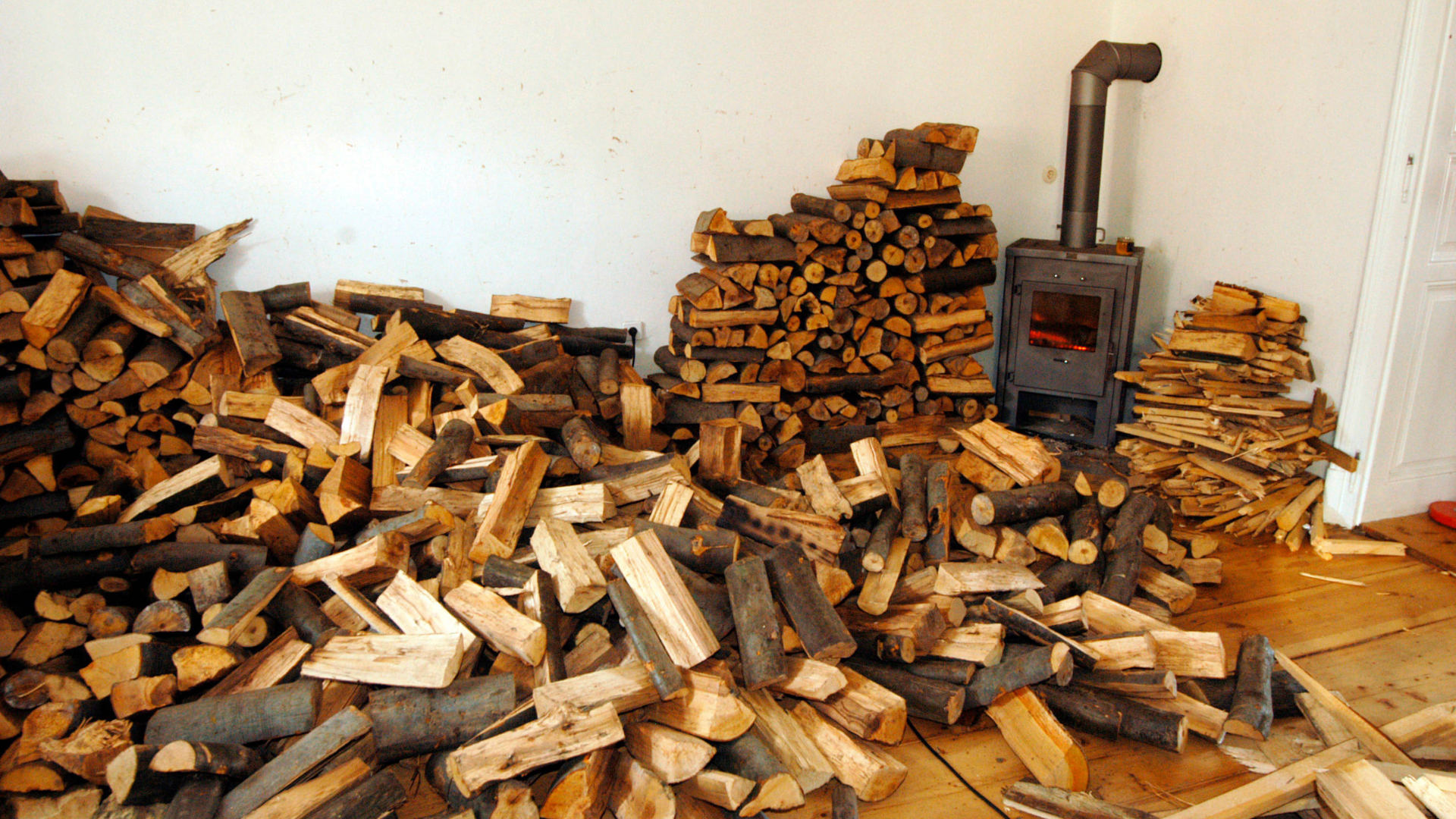
Yes. Commercial firewood producers sometimes use purpose-built kilns to accelerate drying by controlling heat, humidity and airflow. Kiln drying can reduce the amount of time required to reach a suitable moisture content, but most landowners making firewood for their own property don't need a dedicated firewood kiln.
For most people, splitting firewood early, maximizing airflow and protecting the stack from precipitation is the simplest and most practical approach.
Steps for turning trees into firewood
So how does a standing tree eventually become a stack of usable firewood? Let's explore these steps to prepare you for your firewood making journey:
Step 1 - Tree Harvesting: Firewood production can be a useful way to make use of trees and woody material that aren't suitable for milling, including smaller-diameter trees, damaged trees and other usable material produced through responsible woodlot management.
If the tree is located in brush or difficult terrain, you may need to utilize a log arch like the Loglander 28 or a forestry winch like the FW88 to pull it to your staging area.
Step 2 - Bucking the Rounds: The next step is to cut the log into firewood-length rounds, typically with a chainsaw. Cut your rounds to a length that fits the wood stove, fireplace or firepit where you intend to burn them.
Step 3 - Splitting: Utilize your firewood splitter to convert each round into pieces of firewood. Smaller rounds can be cut into quarters, while larger ones may need to be cut into even smaller pieces. Splitting soon after bucking also gets the seasoning process underway sooner.
Once your firewood has been cut, stack it in a firewood shed or area where it can dry. If you're storing your firewood outdoors, a roof or covering is a wise idea. If you use a tarp, cover only the top of the pile and leave the sides exposed so moisture can escape.
How to make firewood that dries fast
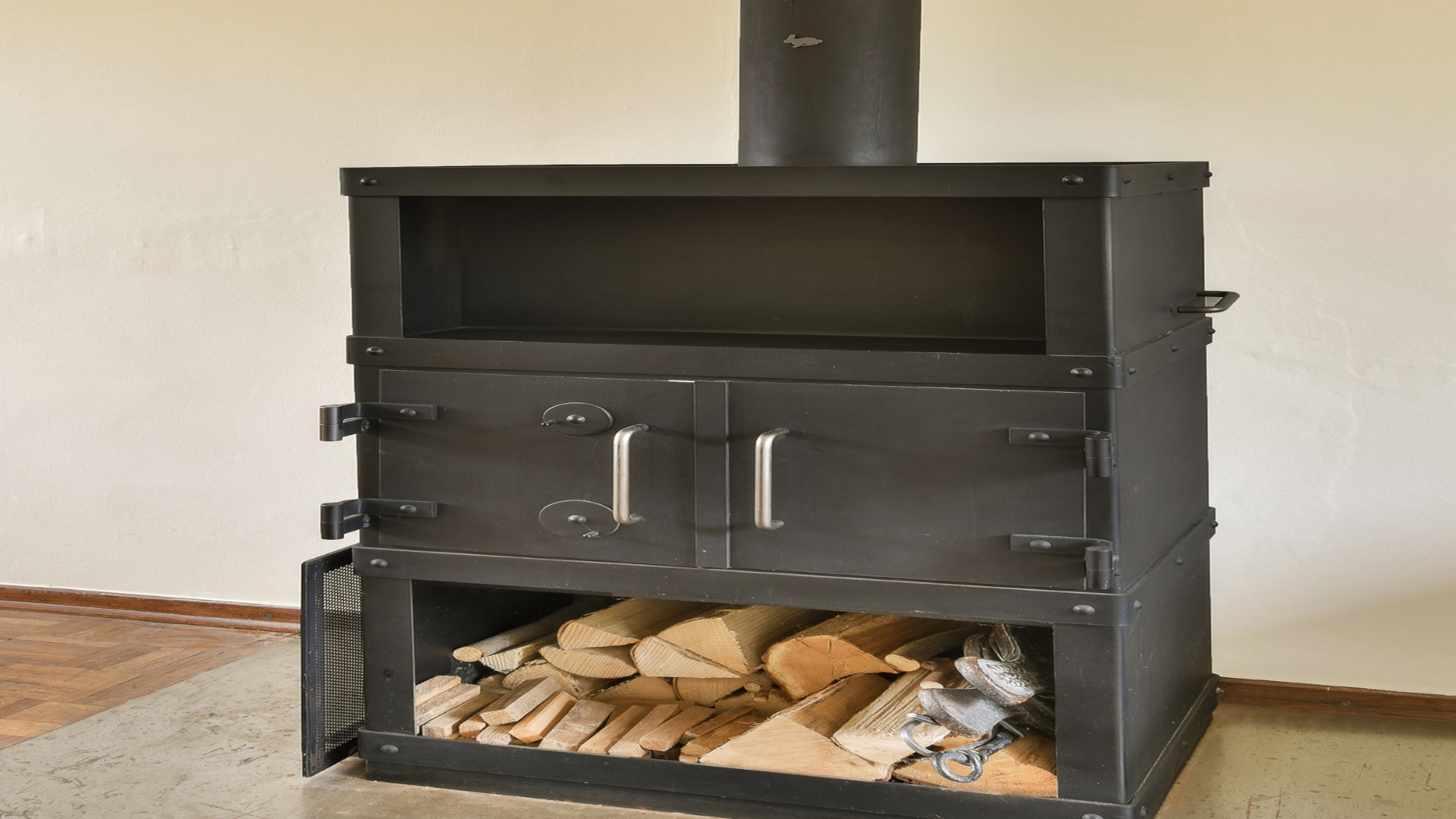
What are some best practices for turning green wood into seasoned firewood quickly? Here are some tips that can help you quickly do that:
-
-
Smaller Pieces: Utilize the 2-way splitting feature on the LS218 Log Splitter to quickly turn rounds into smaller pieces. Smaller pieces of firewood have more exposed surface area and generally dry faster, so larger rounds may benefit from being split into more than just quarters.
-
Room to Breathe: A tightly packed stack of firewood may look nice, but if there's no way for air to get between the pieces then it will take longer to dry. Ensure there's some space between your firewood, or stack them criss-crossed to encourage airflow. A mesh firewood bag also allows air to move around the pieces.
-
Location Matters: Position your firewood where it can benefit from natural airflow and sunlight while remaining protected from repeated rain and snow. Keep the bottom of the stack off damp soil where possible.
-
Check Moisture, Not Just Time: Drying time is only a guideline. A moisture meter gives you a much better indication of whether your firewood is actually ready to burn.
How long does it take for firewood to dry?
This will vary depending on the species, split size, climate, airflow, humidity, time of year and how the firewood is stacked, but here's a quick guide to give you a rough idea of how long it takes for firewood to fully dry:
-
-
Softwood Firewood: As a general planning guideline, many split softwoods such as pine and spruce can season in approximately six months under favourable drying conditions. Larger pieces or wood stored in cool, humid or poorly ventilated conditions can take considerably longer.
-
Hardwood Firewood: Dense hardwood species such as oak and maple may require 12 months or longer to season properly. Again, split size, species and drying conditions can significantly change that timeline.
-
A moisture content of 20% or less is a common target for properly seasoned firewood. Rather than relying entirely on the number of months your wood has been stacked, use a moisture meter to check several freshly split pieces from different areas of the pile.
Maximizing airflow, sun exposure and protection from precipitation are some of the most practical ways to help your firewood reach that target sooner.
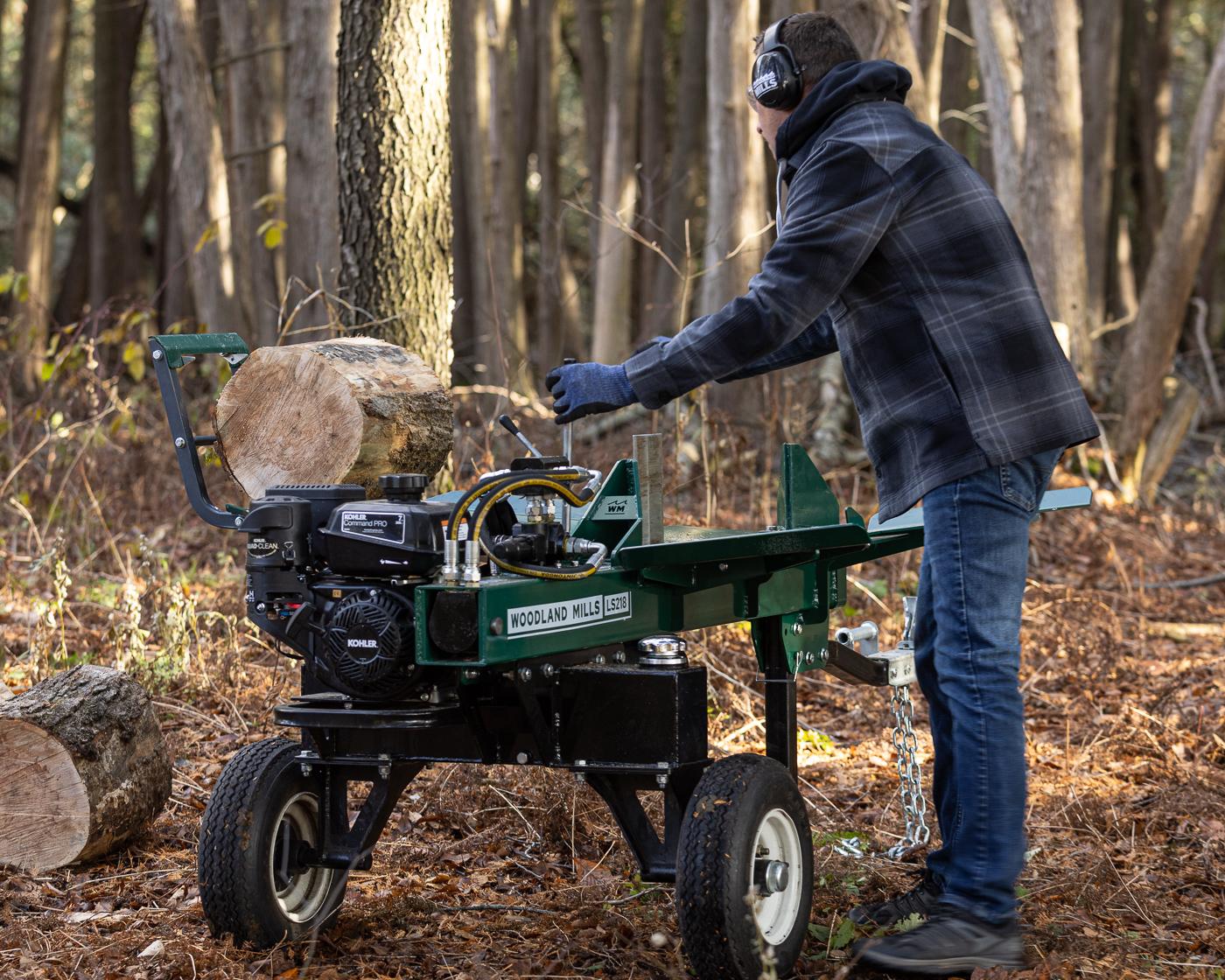
How a 2-way log splitter helps you make firewood quickly
Splitting your firewood soon after bucking exposes more surface area and helps the wood begin seasoning sooner. An efficient splitter can make it much easier to process a large quantity of rounds before they sit around waiting to be split.
Capable of splitting a face cord in less than 20 minutes, the LS218 splits on both the wedge's forward and return action, ensuring no movement goes to waste. In just a few hours you can build up your stack of firewood for the winter, or build up your stockpile to sell or use year-round.
It's also mobile, capable of being towed behind an ATV or truck to reach remote cabins or off-grid properties. For landowners who process their own firewood every year, that mobility lets you bring the splitter closer to where the wood is being processed rather than moving every unsplit round to the machine.
How to extract logs from densely forested areas
Sometimes you'll be harvesting logs from easy-to-access areas, while others you may need to harvest logs from dense brush with thick foliage.
In these cases there are a few techniques you can use to draw your logs out to your tree line or trail:
-
-
ATV Hauling: If you can get an ATV to your log, you can utilize a log arch like the Loglander 28 to pull logs out from the brush. By lifting the leading end of the log, a log arch can reduce the amount of the log dragging across the ground. If protecting the trailing end of the log or reducing ground contact further is important, a log dolly like the LD20 can also help.
-
Cable and Winch: A cable attached to a winch, like the one used in the Multilander ATV Trailer, can be used to recover logs in areas where you can drive it. This is a great setup if you want to transport a stack of logs, since the Multilander also comes with a side-loading ramp for easy log loading.
-
Forestry Winch: A winch like the FW88 can be used to pull logs from the brush using its 164' cable and up to 8,800 lb of pulling capacity. This can be especially useful when the tractor can remain on a trail or accessible area while the cable reaches logs farther into the woodlot.
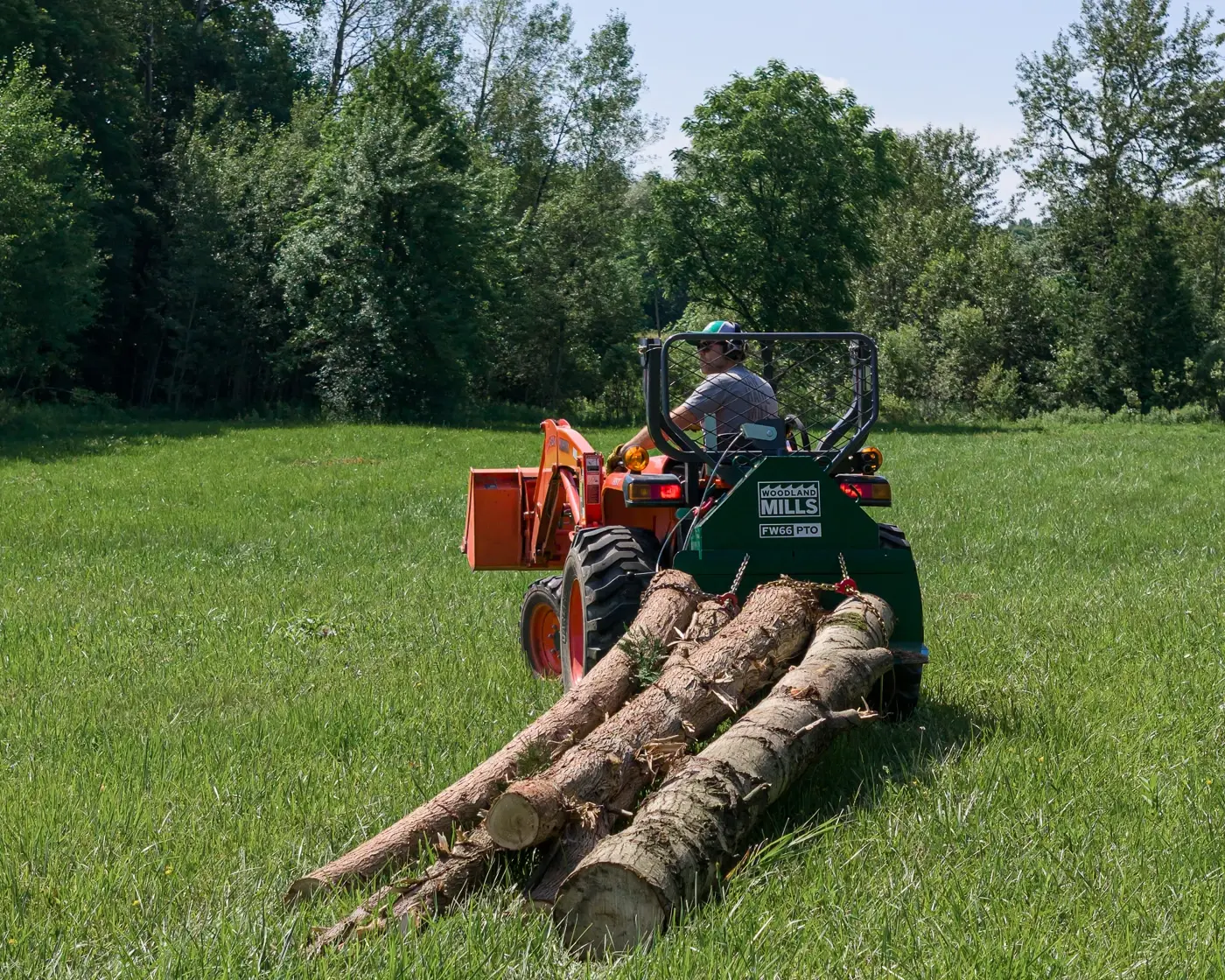
-
Comparing Ways to Move Logs
| Method | Ground/Soil Impact | Log-End Damage | Effort and Control | Best Fit |
| Cable / Chain Behind Tow Vehicle | Highest – the full length drags flat, gouging ruts and tearing up turf or trail | High – the leading end plows through dirt, rocks, and roots | Simple control – easy to snag on stumps, no mechanical advantage | Short, flat pulls, single logs across terrain traversable by ATV |
| Forestry Winch | Moderate – log still drags its full length, but pull is controlled and steady | Moderate – still dragging, but a controlled line reduces snagging and sudden jerks | High mechanical advantage – can move large, heavy logs a tractor could never pull by hitch alone | Pulling heavy or long logs from dense wooded areas over moderate distances |
| Log Arch | Lowest – lifting the front end largely eliminates the plow effect and ground gouging | Lowest – the suspended end never contacts the ground; only the tail lightly drags | Best control – balanced, steerable, and easiest on the towing machine and operator | Repeated trips over the same trail, sensitive ground, or when protecting log quality matters |
What do landowners look for in firewood and forestry equipment?
For landowners processing their own firewood, productivity is only part of the equation. Equipment also needs to be dependable, straightforward to use and supported after the purchase.
Woodland Mills LS218 owners frequently mention the splitter's build quality, two-way splitting action and optional hydraulic lift in their reviews. Owners also regularly comment on the ordering, assembly and support experience.
Terry W. gave his LS218 Log Splitter 5 stars and says it's a "Great machine" and "a huge step up from you average splitter!"
Meanwhile Brad S. says "I couldn't be more satisfied with Woodland Mills new log splitter. From its introduction, ordering, delivery and setup, it’s been a very enjoyable experience. The instructions are incredibly detailed and extremely easy to follow. The splitter is so well built and engineered. The lift is a must and allows you ample room to work."
That owner feedback is also useful when deciding what equipment makes sense for your own property. Consider not just how quickly a machine can complete one task, but how it fits into the way you harvest, move, process and store firewood throughout the year.
What other tips should I follow for producing firewood quickly?
In general when making firewood you should always follow best practices:
-
-
Start the drying process soon after your timber has been felled and bucked.
-
Split wood will dry faster, since you're cutting the round into smaller pieces that won't take as long to dry. That's why even if you have a large wood stove, it's wise to split your rounds anyway.
-
Use a moisture meter to check whether your firewood is actually ready to burn rather than relying only on how long it has been stacked. Test several pieces from different parts of the pile for a better indication of overall moisture content.
-
Take advantage of sun and natural airflow when choosing where to locate your firewood stack.
-
Wood stacked tightly won't dry as quickly, so leave some gaps between rounds to let air flow through. Consider stacking your rounds in one direction, then put the next layer on top facing perpendicular to maintain air circulation between tiers.
-
FAQs: Frequently Asked Questions
Q: What is the difference between dry and seasoned firewood?
A: Seasoned firewood is wood that has been allowed to dry naturally over time until it reaches a suitable moisture content for burning. “Dry firewood” is a broader description and may refer to naturally seasoned or kiln-dried wood. For most firewood, a moisture content of 20% or less is a useful target.
Q: I don't have a moisture content meter, how do I know when my firewood is dry?
A: Properly seasoned wood may develop visible cracks at the ends, feel lighter than green wood and produce a sharper sound when two pieces are knocked together.
These are useful indicators, but they don't reliably tell you the actual moisture content inside the wood. A moisture meter is the best way to know whether your firewood is ready. For the most useful reading, split a piece and test the freshly exposed interior rather than only measuring the outside surface.
Q: Should I cover my firewood with a tarp to protect it from the rain?
A: You should be cautious about covering your firewood too much. If you do cover it with a tarp, cover the top of the stack while leaving the sides exposed to moving air.
You want natural airflow between the pieces of firewood to speed up the drying process, and covering the stack completely could trap moisture inside. This could cause the firewood to dry more slowly and increase the likelihood of mold developing.
Join the Woodland Mills Community Facebook group. Search advice and insights from over 65,000 knowledgeable, supportive members.
- Pre-purchase considerations
- Sawmill set-up support
- Project inspiration photos and videos
- Community troubleshooting support