



A Portable Sawmill Comparison for Finding the Best Sawmill Equipment
Consider price, capacity, features and customizability to find the best portable sawmill for your property
The best portable sawmill is this: the one that best fits the logs you have, the lumber you want to produce and how often you plan to mill as well as your budget.
Whether you're a landowner making boards for occasional property projects, you're producing live-edge slabs or running a mobile milling business making dimensional lumber, factors like log diameter, cutting width, horsepower, portability and available accessories can all affect which sawmill makes the most sense for you.
Woodland Mills offers portable sawmills for first-time operators, homesteaders and experienced sawyers. In this guide we will consider the current sawmill lineup, which accessories can help you build a more efficient setup and which sawmill is best for your needs.
What are the basics of portable sawmills?
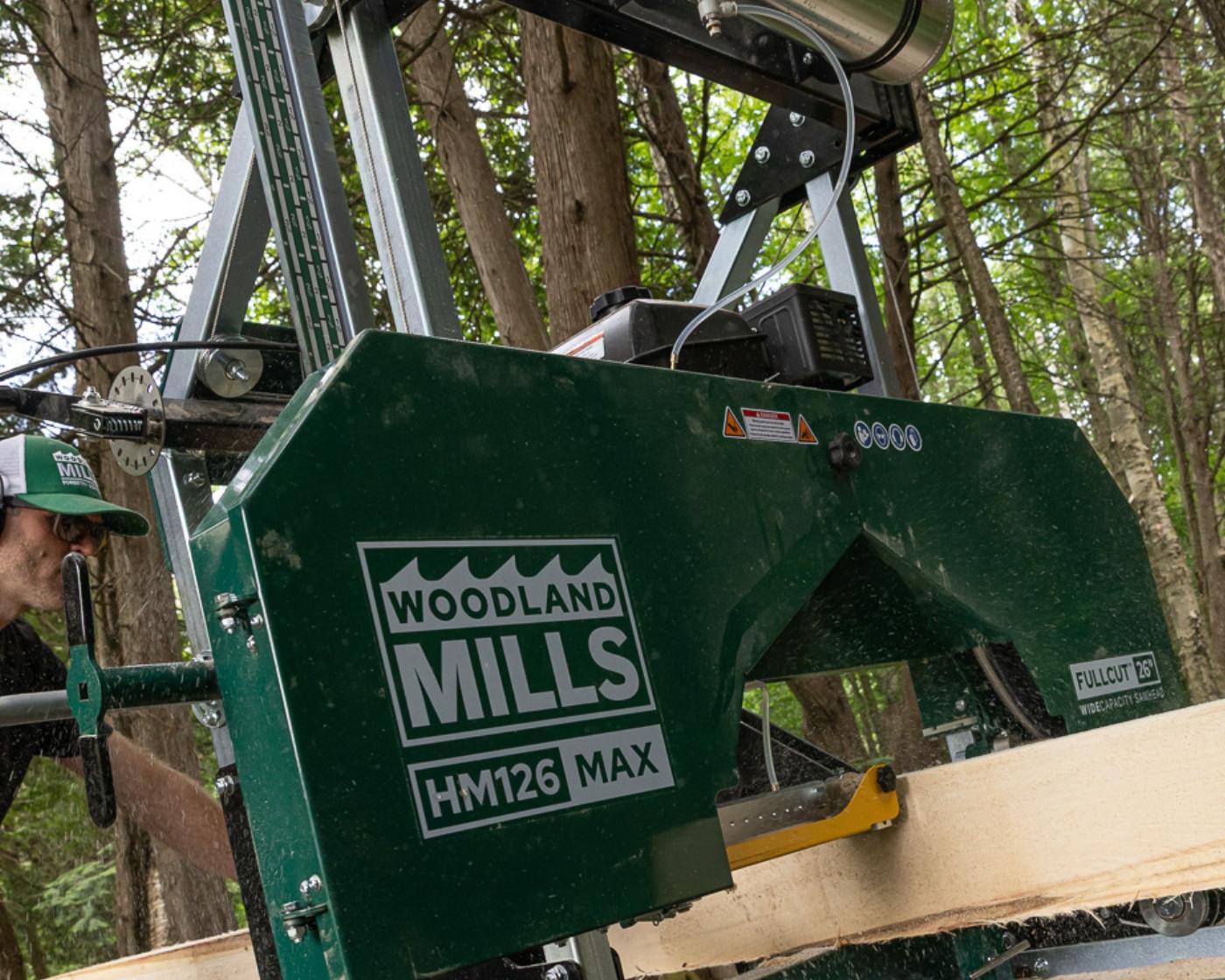
Portable sawmills, also known as portable bandsaw mills, utilize a thin kerf blade running between two bandwheels inside a sawhead. The sawhead is pushed manually down a track, cutting into the log as it moves.
Thin kerf sawblades reduces the amount of wood wasted during cuts, and manual operation reduces fuel costs over expensive, hydraulic mill setups. There are also many different portable sawmill models of various sizes and feature sets, ensuring there's something for every landowner. Sawmill equipment is also often affordable to maintain, since the main maintenance elements are the engine and replacing/sharpening blades.
Many landowners, including homesteaders, off-gridders and farm operators, utilize portable sawmills for milling their own lumber for making barns, sheds, custom projects or to sell boards and materials for profit.
What should I consider when comparing portable sawmills?
Before choosing a portable sawmill consider your average log diameter, the largest log you may encounter, the lumber you want to produce and whether the mill will remain in one location or travel between jobs.
Consider the following:
-
-
Size: Cutting capacity should be your first consideration because it cannot be added later. A practical approach is to choose a mill with roughly 20% more capacity than the largest logs you regularly expect to cut. Extra room makes positioning logs easier and gives you flexibility when an unusually large log arrives in your log pile.
-
Engine Power: Horsepower affects how quickly a mill can cut, but it does not increase the physical size of the logs it can accept. Convenience features and accessories can also save considerable time for anyone who mills frequently.
-
Price: Woodland Mills offers various different sizes and models of portable sawmills to ensure there's a product for everyone regardless of their budget. While chainsaw mills offer a great entry level for portable milling, smaller sawmill models can still offer consistent performance and significant time savings over doing it manually.
-
Portable sawmills are great for mobile milling setups, and Woodland Mills specializes in engineering heavy duty products great for frequent milling.
What is the difference between Woodland Mills SE and HM sawmills?
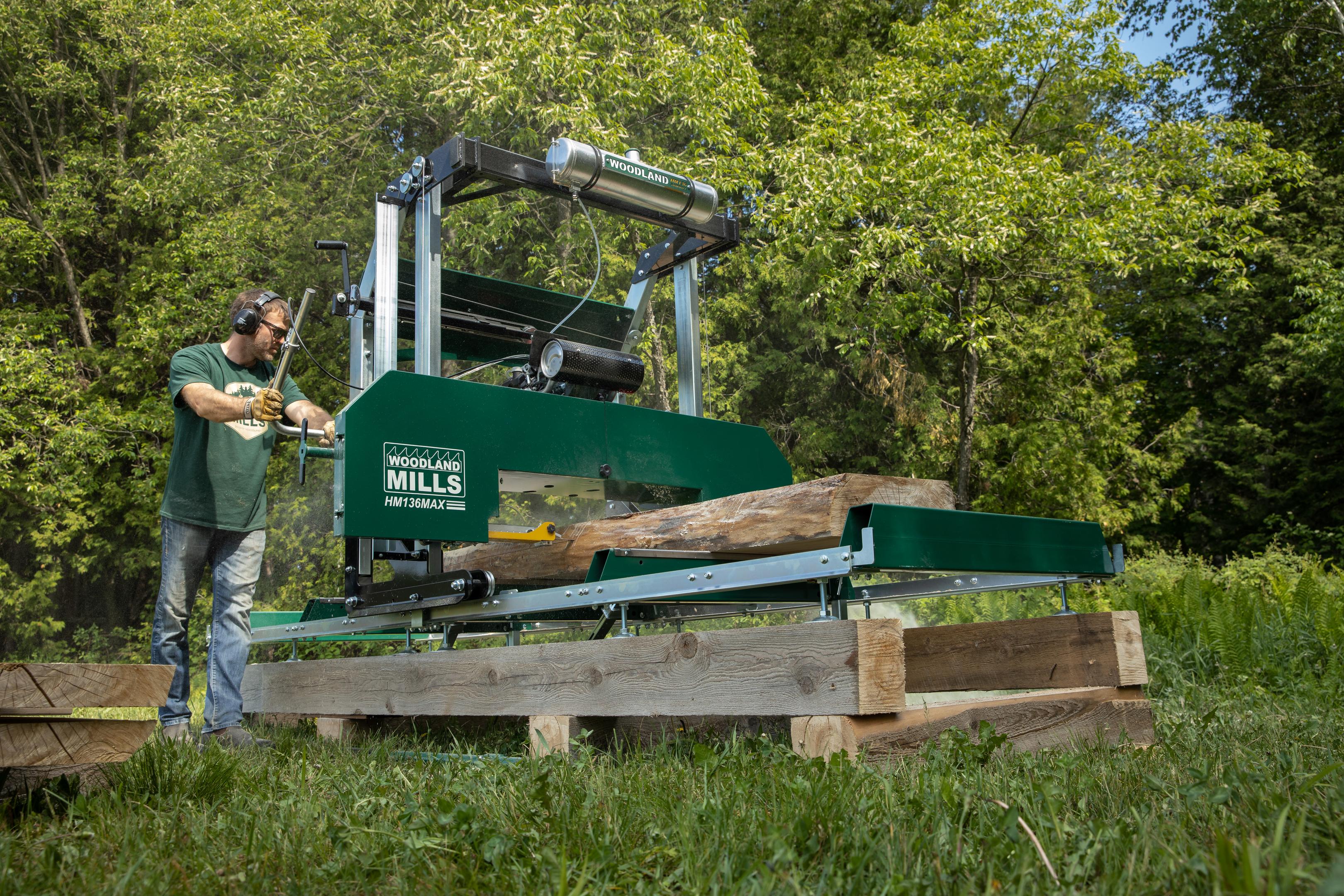
The Woodland Mills portable sawmill lineup is divided into the streamlined SE Series and the more upgradeable HM Series.
-
-
SE Series sawmills focus on the essential features required to produce accurate lumber. They are ground-mounted and offer an affordable, straightforward way to begin milling.
-
HM Series sawmills add convenience and performance features such as Gas & Go Auto Lube, Quick Lock log clamps, adjustable blade guides and levelling feet. HM sawmills also offer more accessory options and can be paired with a trailer for mobile milling.
-
Both series help landowners turn logs into usable lumber. The difference is how much capacity, convenience and room to grow you need.
Comparing portable sawmill model specs
Want a quick reference guide for which portable sawmill is best for making your own lumber? This table can let you know the size and cutting speed of each model so you can make your own decision.
| Model | Max Cut Width | Max Log Diameter | Engine Power | Electric Start Option | Trailer Compatibility |
|---|---|---|---|---|---|
| SE118 | 16" | 18" | 7 HP | No | No |
| SE122 | 20" | 22" | 8.5 HP | No | No |
| SE126 | 24" | 26" | 13.5 HP | No | No |
| HM122 | 20" | 22" | 7-9.5 HP | No | Yes |
| HM126MAX | 26" | 26" | 14 HP | Yes | Yes |
| HM130MAX | 30" | 30" | 14 HP | Yes | Yes |
| HM136MAX | 36" | 36" | 21 HP | Yes | Yes |
Which Woodland Mills sawmill is best for beginners?
The SE Series provides three starting points for new sawyers.
-
-
The SE118 Portable Sawmill handles 18-inch logs, produces cuts up to 16 inches wide and uses a 7 HP engine. It is a practical choice for smaller logs and hobby projects.
-
The SE122 Portable Sawmill increases log capacity to 22 inches, cutting width to 20 inches and engine power to 8.5 HP, making it suitable for boards, siding and small beams.
-
The SE126 Portable Sawmill handles 26-inch logs, cuts up to 24 inches wide and uses a 13.5 HP engine. It offers the greatest capacity in the SE lineup while keeping the setup simple.
-
Choose an SE mill when affordability and straightforward operation are the priorities. If trailer mobility or future powered upgrades are important, consider moving into the HM Series.
Which HM portable sawmill offers the best value?
The HM series sawmills offer a robust range of capacities, prices and customizability.
-
-
The HM122 Portable Sawmill accepts 22-inch logs, provides a 20-inch maximum cut width and is available with 7 or 9.5 HP. It can also be configured on a trailer, giving owners the ability to add mobility based on the kind of job or property setup.
-
The HM126MAX Portable Sawmill is a strong all-around choice. Its 14 HP engine is paired with a 26-inch log diameter and 26-inch maximum cut width. The FULLCUT sawhead preserves the widest parts of a log, while electric-start availability and powered upgrades improve convenience for owners who want a more reliable mill as their needs grow.
-
What is the best portable sawmill for wide slabs, large logs, and commercial purposes?
Serious sawyers producing live-edge slabs, wide boards, posts or beams should begin by considering the diameter of the trees they plan to mill. Buying additional capacity can make sense when large logs are common. Smaller logs can always be milled on a larger machine, while an oversized log may require extra trimming or may not fit on a smaller mill at all, especially when wide slabs are intended for tables, countertops, mantels or benches.
-
-
The HM130MAX Portable Sawmill handles 30-inch logs and provides a 30-inch maximum cut width. Its 14 HP engine and FULLCUT sawhead suit serious hobbyists, custom woodworkers, homestead businesses and other small milling operations.
-
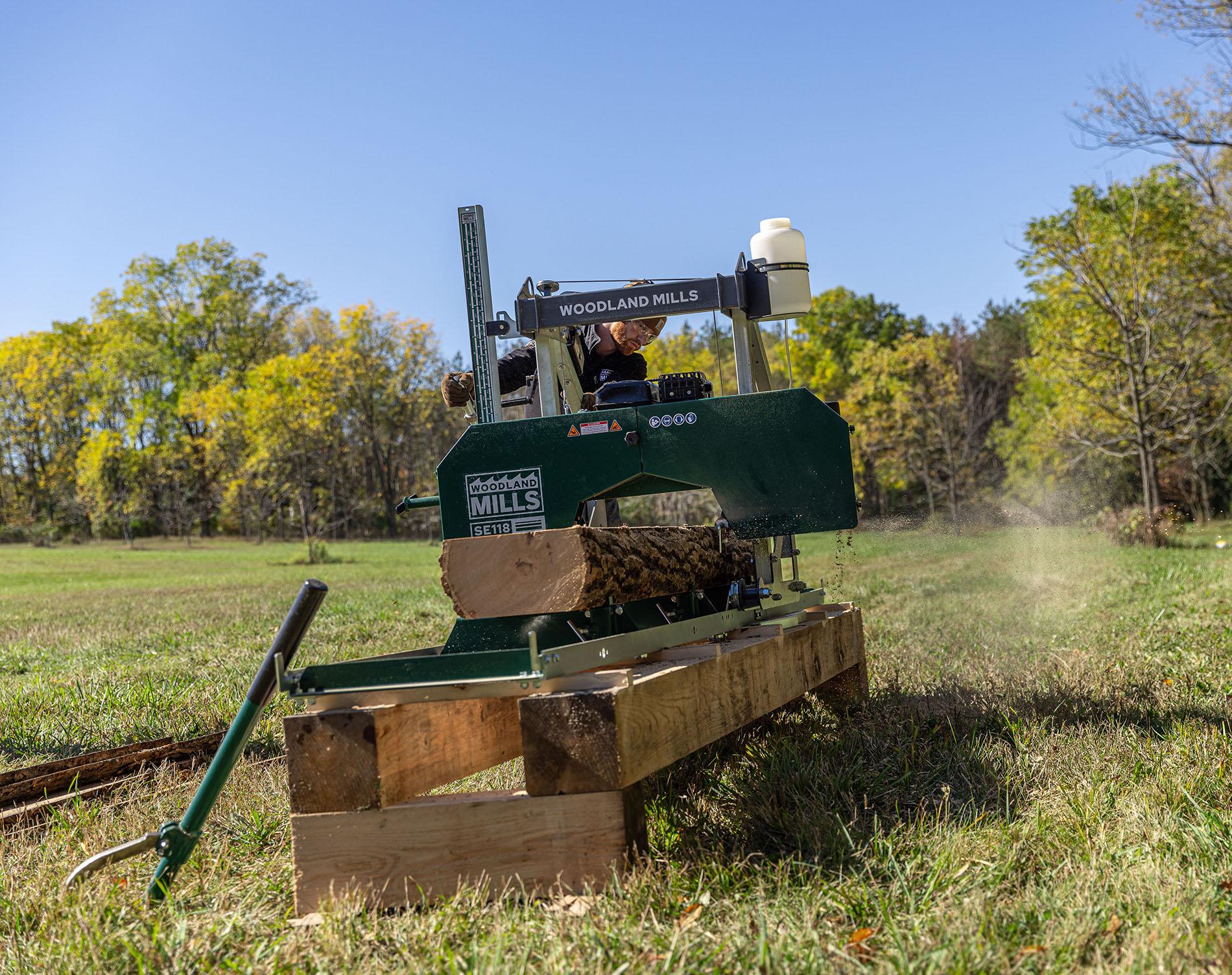
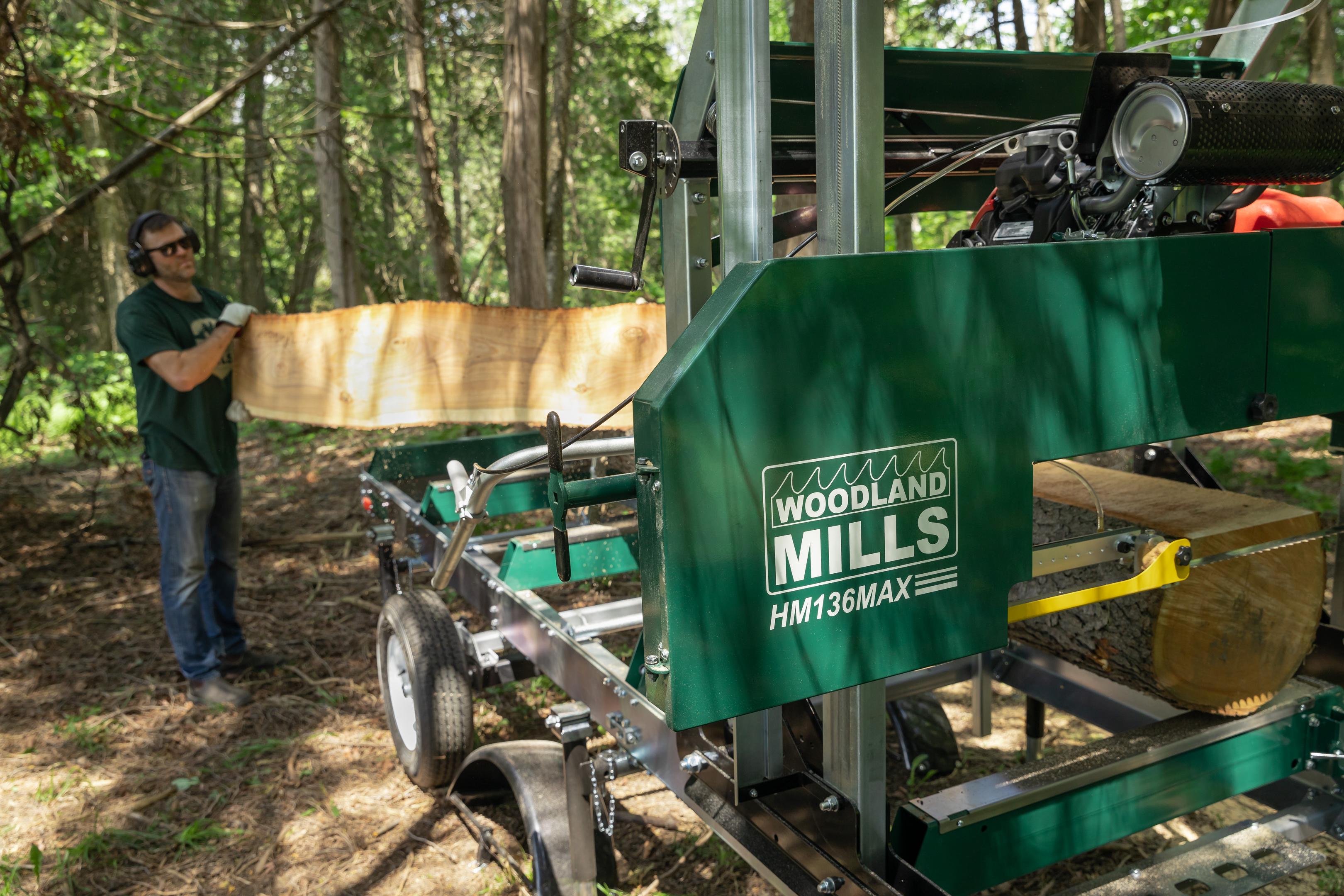
The HM136MAX Portable Sawmill is the highest-capacity Woodland Mills model. It accepts 36-inch logs, cuts up to 36 inches wide and uses a 21 HP Honda engine, making it suited to large timber, wide slabs and demanding projects.
-
Many sawyers who mill for commercial purposes use these high capacity sawmills for transforming their wood into profit, letting them make custom dimensions for their customers or for woodworking projects. Strong frame construction ensures these higher-capacity mills are built for demanding work and supports high output consistency.
Should I choose a ground-mounted or trailer-mounted sawmill?
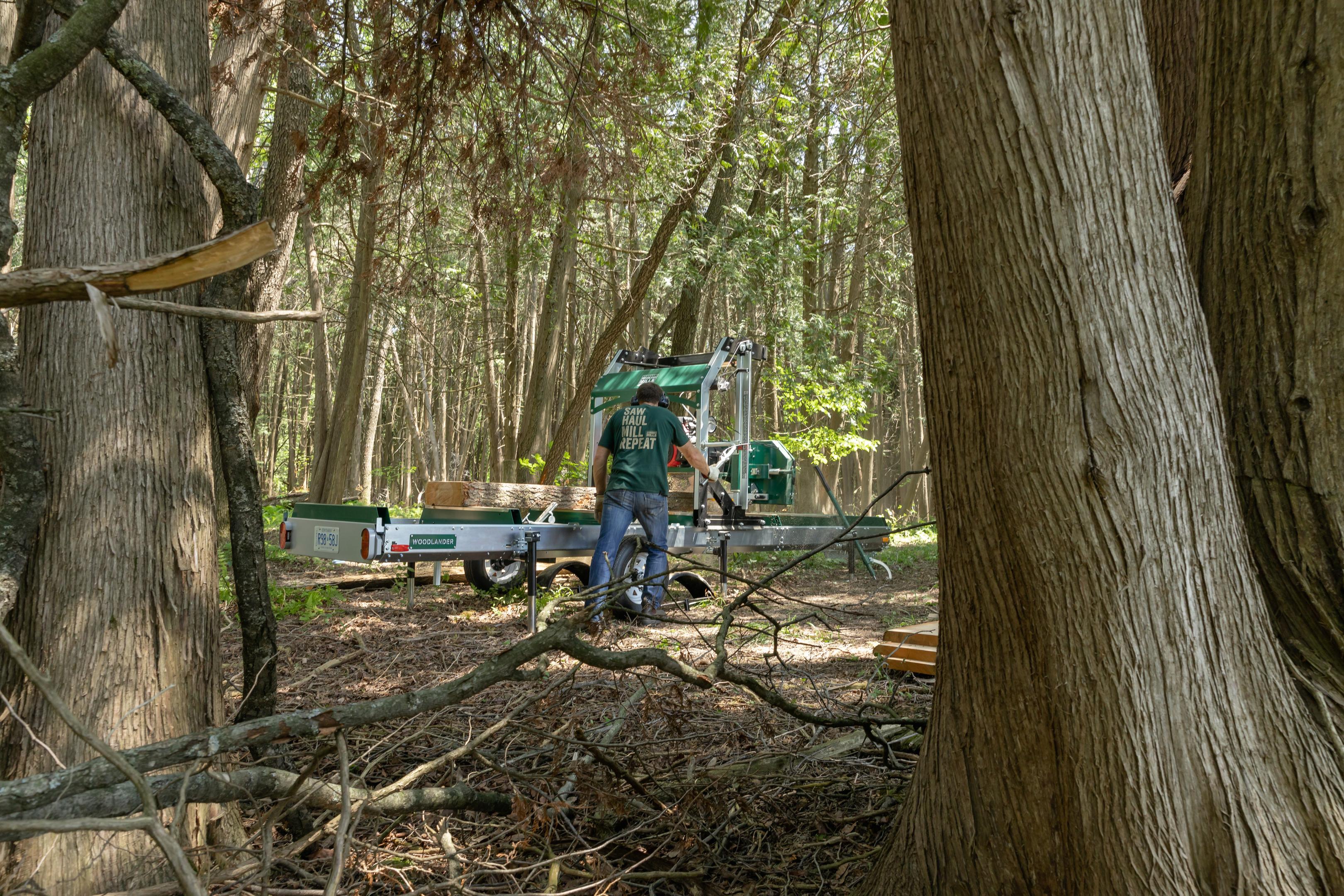
A ground-mounted sawmill works well when logs can be brought to one established milling area. A Woodlander trailer-mounted HM sawmill lets you take the mill closer to the logs or travel between properties. A trailer setup can improve access to logs in remote spots and reduce unnecessary handling.
It also raises the mill to a comfortable working height and simplifies storage or repositioning.
Which sawmill accessories are worth considering?
The most useful accessories solve a recurring problem in your workflow, and the best choices depends on how you work, the available tools, and the mill’s feature set.
-
- Track extensions increase the maximum milling length for long beams, structural timbers and logs that exceed the standard track
- The Woodlander Log Loading Ramp and Winch Kit helps operators roll heavy logs onto a trailer-mounted mill without relying on a loader
- The Power Head 80 replaces manual sawhead height adjustment with push-button control on compatible mills, reducing repetitive hand cranking
- Fresh sawmill blades are essential for accurate cutting. The RS15 Bandsaw Blade Sharpener automatically restores blade teeth, while higher-volume sawyers may benefit from the faster RS30 PRO
Spare blades, a cant hook and a compatible maintenance kit can also keep simple maintenance needs from interrupting a milling day.
Why do landowners choose Woodland Mills sawmills?
Woodland Mills sawmills are designed for landowners who want equipment they can operate, maintain and expand themselves. Partially assembled sawheads and detailed manuals simplify setup, while direct support helps owners choose compatible products.
A great resource for landowners interested in a portable sawmill is the Woodland Mills Product Owners and Community Facebook group, which gives sawyers a place to share setup advice, milling techniques and completed projects. Check out the page and see why real sawyers love their Woodland Mills sawmills.
FAQ: Frequently Asked Questions
Q: What is an affordable alternative to owning a portable sawmill?
A: A popular option for milling your own lumber is a chainsaw mill, which involves attaching a chainsaw to a jig, or rig, for milling logs into slabs.
This method is cost effective, since it utilizes equipment you may already own. Unlike portable bandsaw mills, chainsaw mills usually require more physical effort and produce lower output. Many sawyers who utilize this method quickly upgrade to portable sawmills, saying that chainsaw milling often involves back breaking effort compared to the seamlessness of pushing a sawmill down a track.
Q: What is the best Woodland Mills sawmill for live-edge slabs?
A: The HM130MAX and HM136MAX are the strongest choices for wide live-edge slabs. Their FULLCUT sawheads provide maximum cut widths of 30 and 36 inches respectively, helping preserve the widest parts of large logs. Buyers considering a portable bandsaw mill for slab work should also consider blade life, especially when cutting mixed species or dirty logs.
Q: Do I need a blade sharpener when buying a sawmill?
A: You can begin with spare blades and have dull blades professionally sharpened. A Woodland Mills blade sharpener becomes more valuable when you mill frequently, want to reduce sharpening costs and prefer to keep blade maintenance under your own control.
SHOP SAWMILLS
HM122
An entry-level sawmill packed with impressive features at a budget-friendly price. Designed for hobby sawyers or woodworkers looking for an economical solution to mill lumber.
HM126MAX
The original Woodland Mills portable sawmill. Trusted by hobbyists for years, now featuring a FULLCUT™ sawhead to maximize usable cut width.
HM130MAX®
A wide capacity sawmill that produces stunning high-value live-edge boards. Loaded with features including our FULLCUT™ sawhead, RapidChange® blade system, auto lube, and more.
HM136MAX™
The ultimate solution for cutting wide live edge slabs, perfect for tabletops, counters, benches, and more. Our unique FULLCUT™ sawhead design ensures your logs' widest assets are left intact.
Join the Woodland Mills Community Facebook group. Search advice and insights from over 65,000 knowledgeable, supportive members.
- Pre-purchase considerations
- Sawmill set-up support
- Project inspiration photos and videos
- Community troubleshooting support