



Logging Arches: How to Step Up Your Skidding Game
Chapter 2 of the Woodland Mills Log Extraction Guide
Direct log skidding is inexpensive, but as mentioned in chapter 1, that method can be prone to snagging and damaging the log. Once landowners begin moving larger logs, traveling longer distances, or looking for a more efficient extraction system, the next logical step is often a logging arch.
Logging arches utilizing a ball hitch Loglander 20 or Loglander 28, or ones that utilize a 3-point hitch like the TA24 or TA30 can be used behind:
-
-
Garden tractors
-
ATVs
-
UTVs
-
Pickup trucks
-
Compact tractors
-
Larger utility tractors
-
Tractor-mounted logging arches can also attach directly to a tractor’s three-point hitch.
Rather than dragging the entire log across the ground, the arch lifts the leading end into the air. This simple change addresses several of the biggest challenges associated with direct skidding.
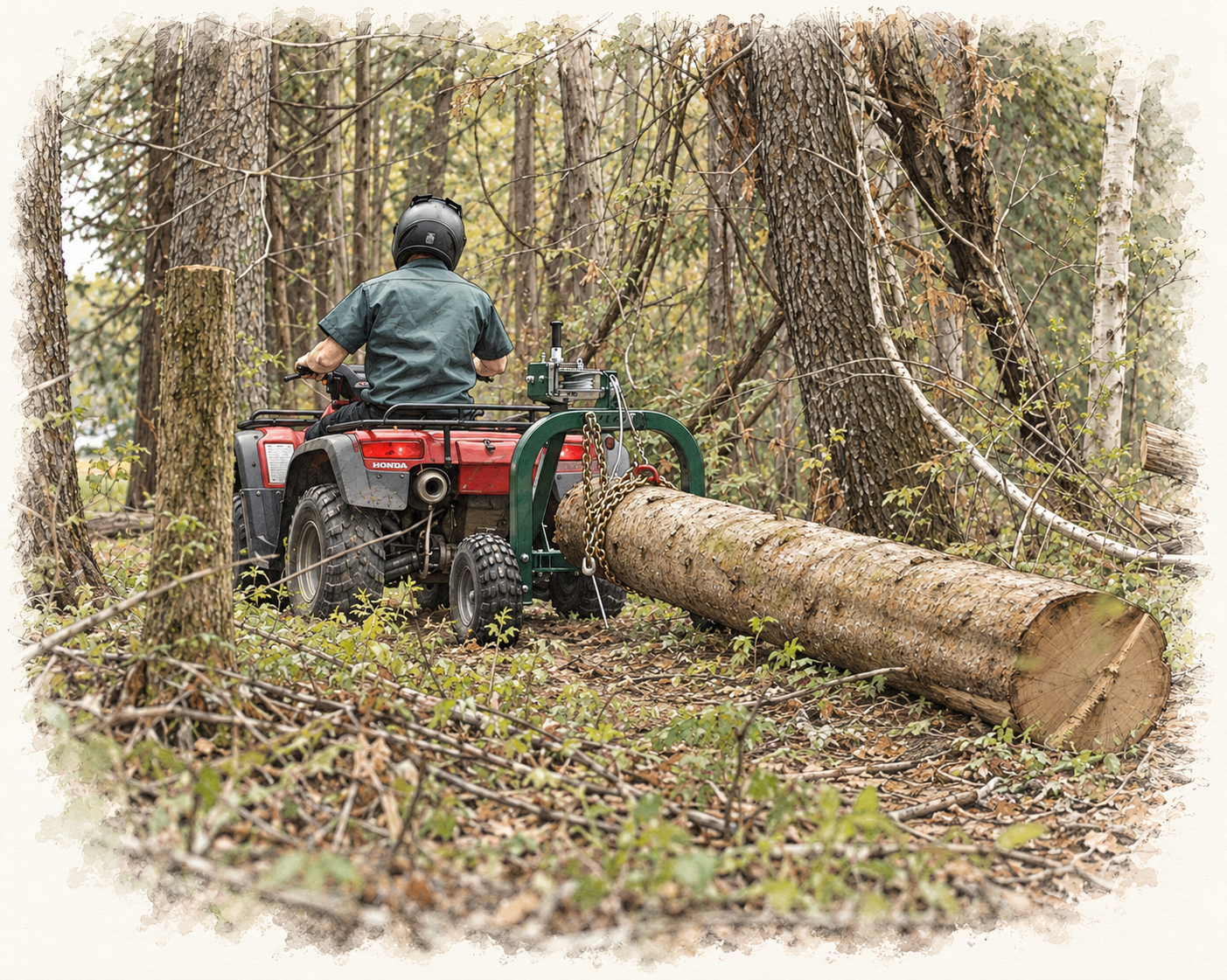
Benefits of Log Arches: The Log Follows the Tow Vehicle
With direct skidding, the log is free to roll, pivot and wander across the trail. A logging arch like the Loglander changes that.
Because the leading end of the log is suspended beneath the arch, it follows the path of the tow vehicle more consistently. The result is a smoother, more predictable pull with less side-to-side movement.
1. Far Fewer Snags
Raising the leading end allows the log to pass over roots, rocks, and small obstacles that might otherwise stop a directly skidded log.
This helps reduce:
-
-
Snagging
-
Shock loads
-
Strain on the tow vehicle and rigging
-
Operator frustration
-
The arch effectively lifts the most vulnerable part of the log out of harm’s way.
2. Reduced Rolling and Better Control
Because the leading end is supported beneath the arch, the log is less likely to roll or rotate unexpectedly when it encounters uneven terrain.
The extraction process becomes more controlled and consistent, while the choker connection still allows the log to adjust beneath the arch as the tow vehicle changes direction.
3. Keep More of the Log’s Surface Off the Ground
One of the biggest advantages of a logging arch is how much of the log it lifts clear of the trail.
With direct skidding, the entire log drags across the ground from start to finish. Every foot traveled creates friction, resistance, and another opportunity for the log to catch on an obstacle.
A logging arch changes that completely. On many logs, a logging arch keeps most of the log’s surface from dragging along the ground as it travels down the trail.
The benefits are immediately noticeable:
-
-
Dramatically less pulling resistance
-
Cleaner logs
-
Less bark damage
-
Reduced wear on equipment
-
Smaller tow vehicles can move larger logs
-
Less chance of snagging
-
Reduced soil disturbance
-
For firewood, a cleaner log means less mess.
For sawmill owners, cleaner logs mean less dirt, grit, and contamination reaching the blade. The difference between dragging a log through mud and carrying most of it above the trail can have a significant impact on blade life and milling efficiency.
Many landowners notice the reduction in pulling effort almost immediately. When most of the log is no longer dragging across the ground, the entire extraction process becomes smoother, easier, and more efficient.
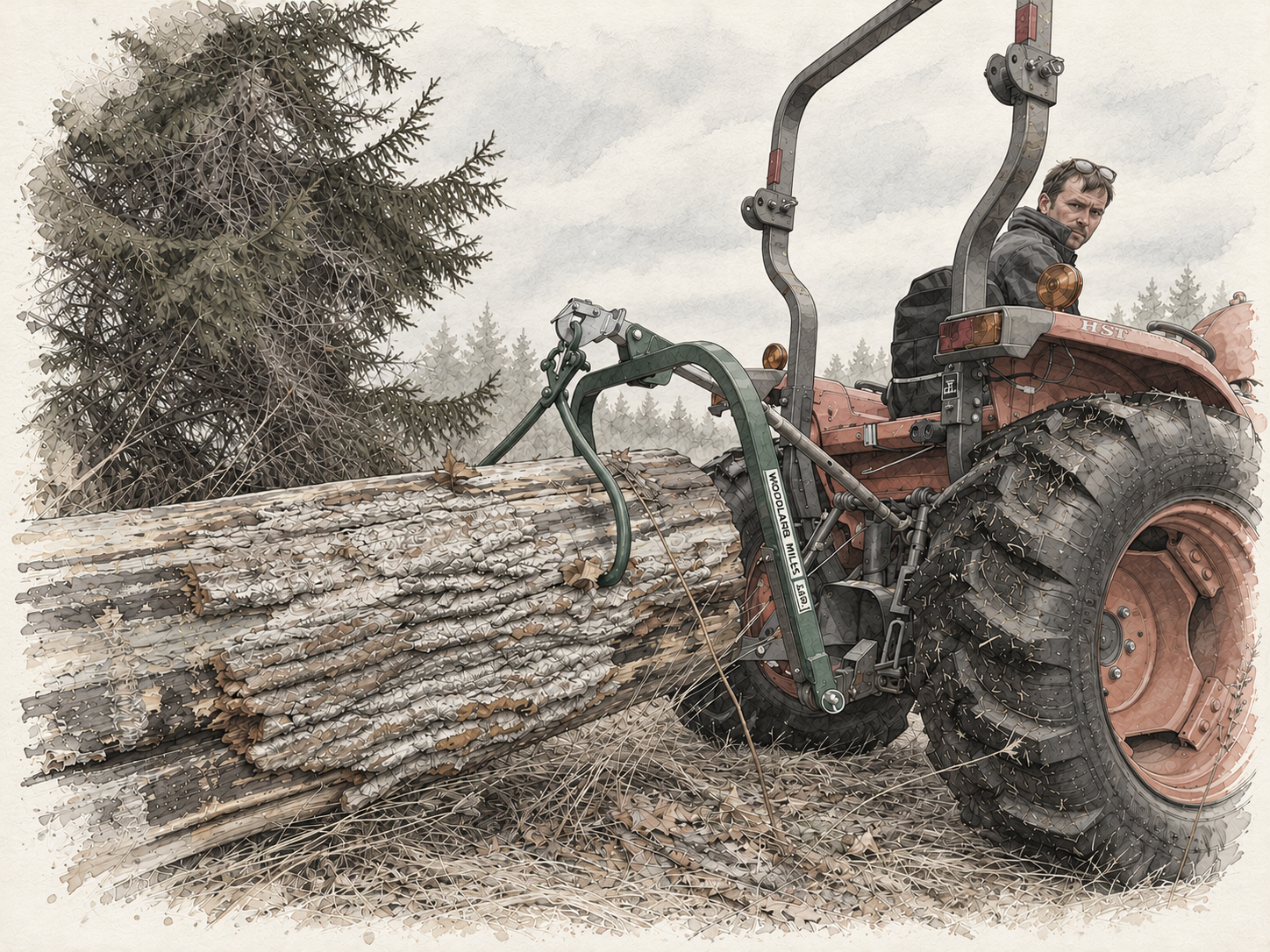
Surprisingly Agile on Tight Trails
At first glance, many people assume a logging arch would be harder to maneuver through the woods.
In many situations, the opposite is true. Although the leading end is suspended beneath the arch, the log remains connected by a choker chain and can rotate beneath the lifting point. As the tow vehicle weaves between trees, the trailing end of the log can slide sideways and adjust its position.
This allows the log to navigate surprisingly tight woodland trails while remaining more controlled than a directly skidded log.
The result is a system that is:
-
-
More predictable
-
Easier to control
-
Less prone to snagging
-
Well suited to established woodland trails
-
Better for Your Trails
-
Logging arches can also reduce damage to soil and established forest trails. Compared with dragging the entire log across the ground, lifting the leading end reduces the amount of timber scraping, digging, and pushing material along the trail.
This can mean:
-
-
Less rutting
-
Less surface disturbance
-
Less soil displacement
-
Less damage to frequently used trails
-
For sensitive woodlots and established trail networks, this can be a significant advantage.
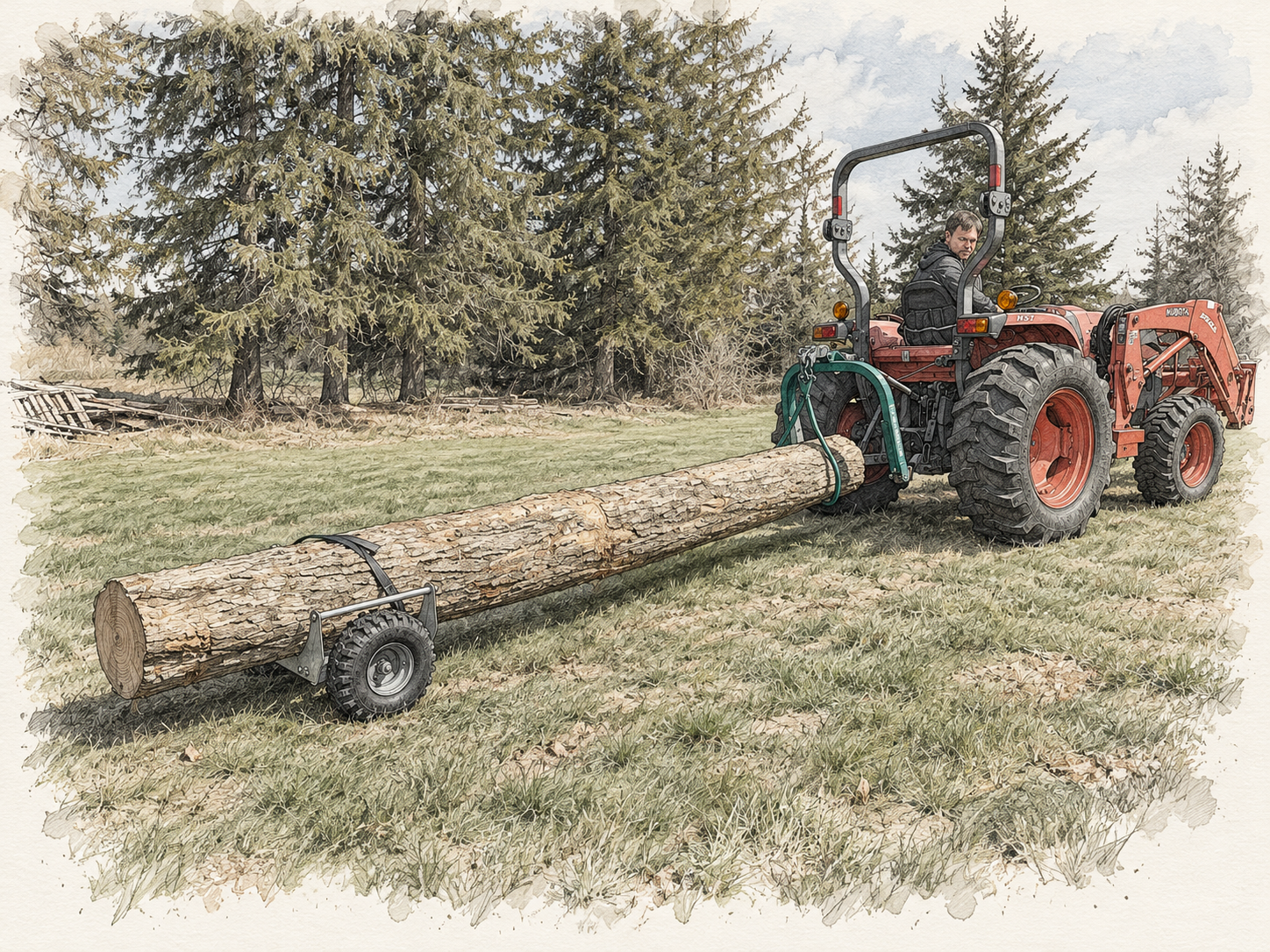
Want the Entire Log Off the Ground?
For landowners looking to eliminate almost all ground contact, a log dolly can be placed beneath the trailing end of the log.
Woodland Mills offers the LD20 Log Dolly, which works together with the logging arch which supports the leading end and the log dolly supports the trailing end, so the entire log is carried on wheels rather than dragged.
Benefits
-
- • Virtually eliminates ground contact
- • Keeps logs cleaner
- • Minimizes trail impact
- • Further reduces pulling effort
- • Allows smaller tow vehicles to move larger logs
The Trade-Off
A log dolly adds an extra setup step.
The trailing end must be raised and secured before transport can begin, which takes additional time.
A dolly can also reduce maneuverability on tight woodland trails. When a log is supported on wheels, the trailing end cannot slide sideways around a corner as freely as it can when skidding behind an arch alone. In dense forests, this can make sharp turns more difficult.
One Important Limitation
One important requirement with logging arches is access.
Whether you are using:
-
-
A tow-behind logging arch
-
A tractor-mounted logging arch
-
A logging arch paired with a log dolly
-
The tow vehicle still needs to reach the log.
That means you need:
-
-
An access trail
-
Space to maneuver
-
A practical route from the trail to the log
-
If a tree is located deep within standing timber, the logging arch still needs a way to reach it.
For many landowners, this is not a problem. For others, building a trail to every log can be time-consuming, expensive, or undesirable.
Key Takeaway
A logging arch that attaches to your ATV or tractor addresses many of the major limitations of direct skidding.
It:
-
-
Reduces snagging
-
Improves tracking
-
Reduces unwanted rolling
-
Lowers pulling effort
-
Keeps logs cleaner
-
Protects trails and soil
-
Allows smaller tow vehicles to move larger logs
-
Adding a log dolly can take the concept one step further by placing the entire log on wheels, although the additional setup and reduced maneuverability may not suit every trail.
For many landowners, a logging arch is the first upgrade that transforms log extraction from a difficult pull into a controlled, repeatable process. The logging arch makes the log easier to move. The remaining question is how to reach logs that are beyond the trail
Want to learn more about the next step in log extraction: forestry winches? Read Chapter 3 to dive further into the topic.
The Woodland Mills Log Extraction Guide: Learn more about every step, piece of equipment and stage of log maneuvering, from low-cost skidding to more specialized equipment and knowledge.
Chapter 1: Direct Log Skidding
Chapter 2: Log Arches
Chapter 3: Forestry Winches
Chapter 4: Utility Trailers
Join the Woodland Mills Community Facebook group. Search advice and insights from over 65,000 knowledgeable, supportive members.
- Pre-purchase considerations
- Sawmill set-up support
- Project inspiration photos and videos
- Community troubleshooting support