



Utility Trailers & Logging Trailers: Step up to new heights with advanced log and cargo hauling
Chapter 4 of the Woodland Mills Log Extraction Guide
Retrieving a log to the trail is only part of the job. Once several logs are gathered, the next decision is how to move that wood efficiently to the place where it will be milled, split, stacked, or stored. That is where trailers begin to solve a different problem than skidding, arches, or winches.
Off-road utility trailers come in multiple types, from multi-purpose dump trailers like the Multilander to purpose-built specialty trailers like the Multilogger, designed specifically for log hauling. This equipment category can be useful in companion with forestry winches for extraction, or in place of log arches for hauling multiple logs in specific circumstances.
When It Makes Sense to Haul Logs Instead of Drag Them
At this stage, the focus shifts from retrieving logs to transporting them efficiently. Trailers do not replace skidding, arches, or winches; they solve the next problem by carrying wood to wherever it will be processed, stacked, or stored.
For most landowners, that destination is usually one of four places:
-
-
A sawmill
-
A firewood processing area
-
A landing
-
A storage pile
-
As transport distances increase, moving wood from the trail to its final destination can become one of the largest parts of the entire extraction process.
Many landowners naturally begin looking at trailers as a way to move larger loads while reducing:
-
-
Ground friction
-
Bark damage
-
Log contamination
-
Trail disturbance
-
Overall transport effort
-
The idea sounds simple: Why not just load the logs onto a trailer and haul them out? In many cases, that
works. But not all trailers are created equal.
Can You Use Any Trailer?
Yes. In fact, many landowners start by using whatever trailer they already have available.
-
-
Utility trailers
-
Landscape trailers
-
ATV trailers
-
Box trailers
-
Farm wagons
-
For shorter distances and easier terrain, these solutions can work surprisingly well. The challenge comes when those trailers are asked to travel through actual forest trails.
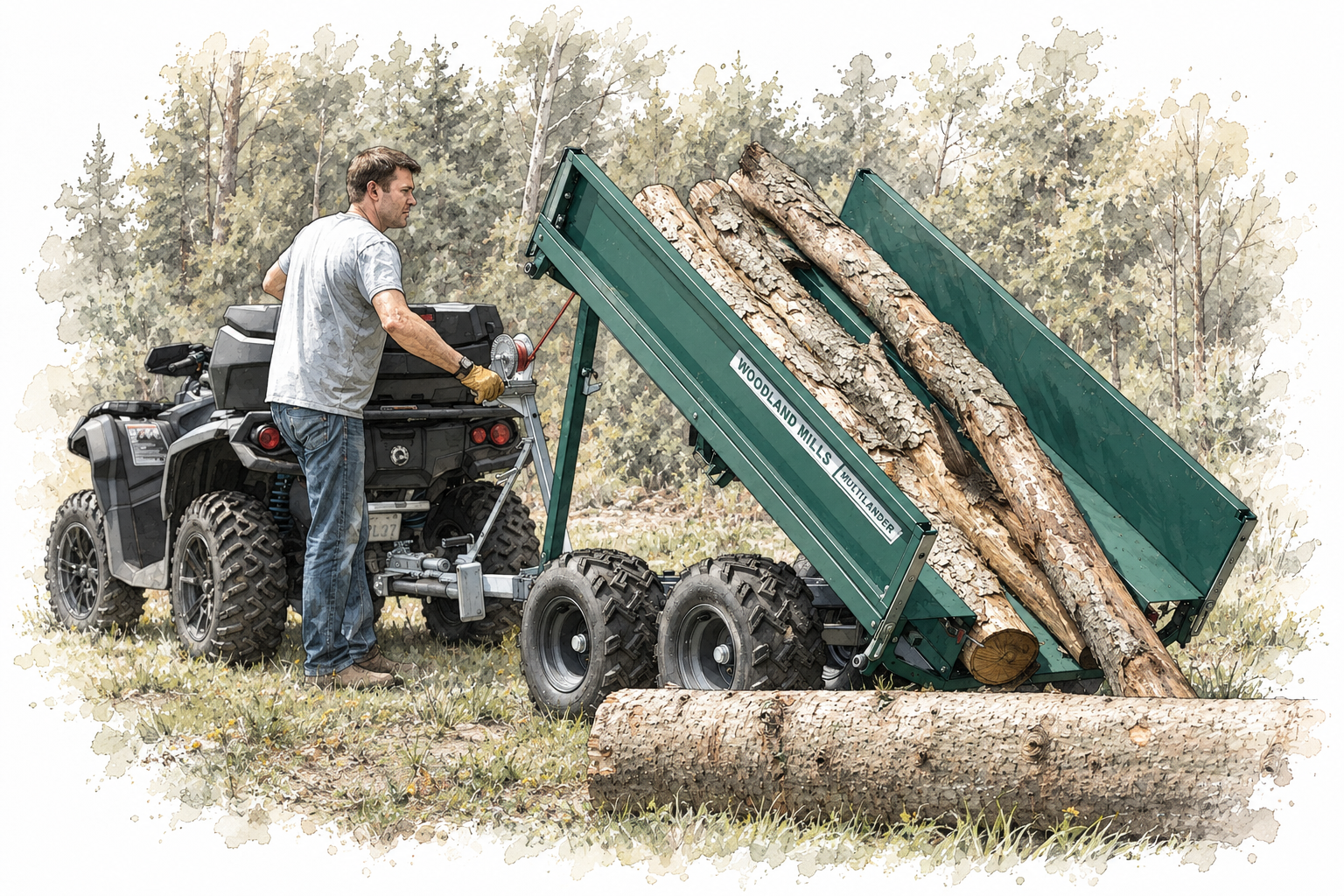
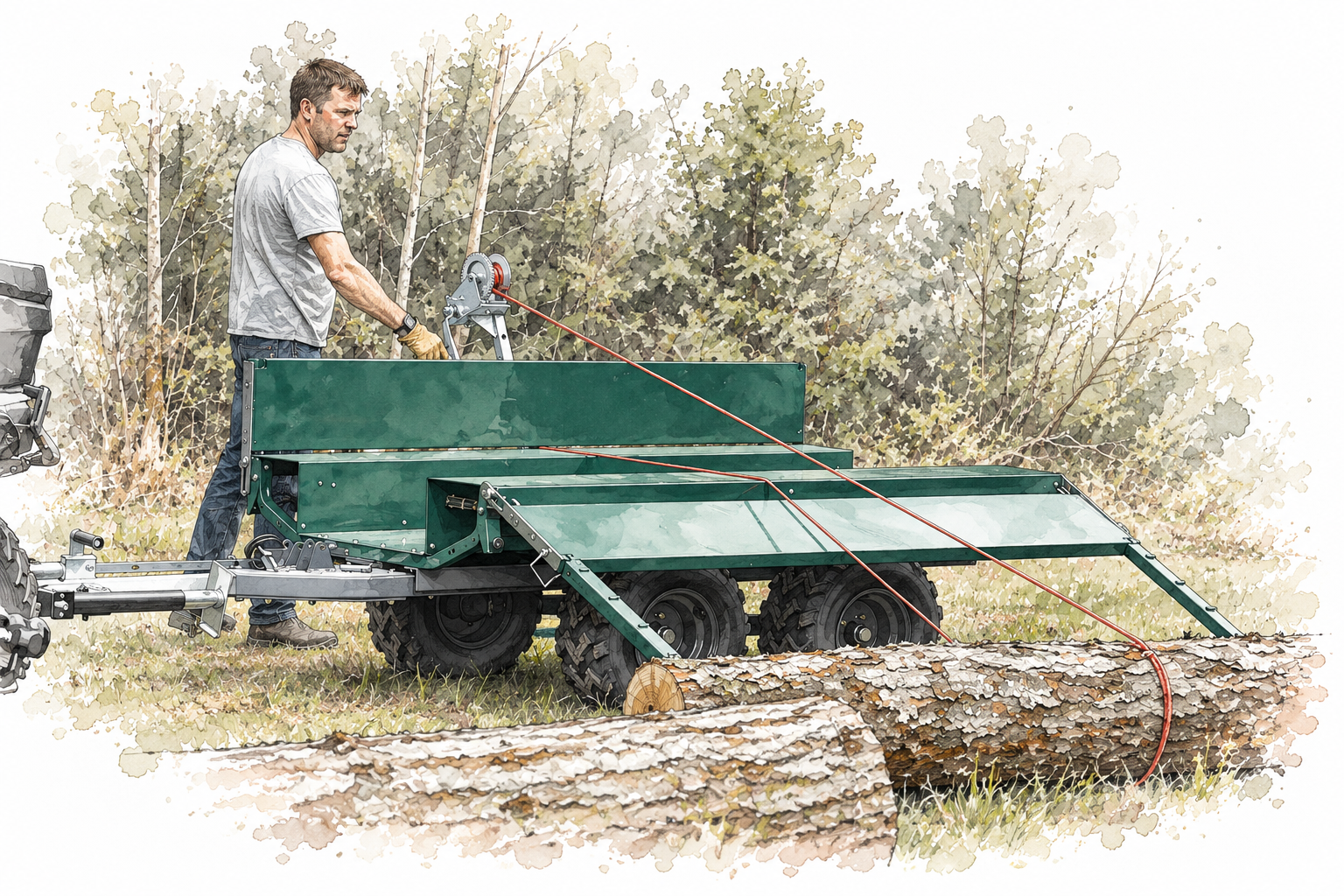
Woodland Mills manufactures purpose-build ATV trailers designed for hauling logs, soil, wood chips and other debris. If you're interested in doing log hauling, the Multilander ATV Trailer comes with a winch and log loading ramps for easy loading, while the Multilogger is a streamlined, purpose-built trailer designed specifically for log hauling.
Factors Influencing Logging Trailers
What are the most important factors that impact a logging trailer, and whether it's the right tool for the job? Let's get into it.
1. Weight Changes Everything
Logs are heavy. Much heavier than many people initially expect. A trailer that performs perfectly on a driveway or pasture may struggle once it enters the woods carrying several large hardwood logs.
Not only must the trailer support the weight of the logs, but it must also travel over roots, rocks, ruts, soft ground, uneven terrain, and tight corners. At that point, the trailer becomes just as important as the tow vehicle.
2. Tire Selection Matters
Ground pressure is often more important than load capacity. Wider flotation-style tires spread the load over a larger area.
This can help with:
-
-
Less soil disturbance
-
Improved flotation
-
Reduced rutting
-
Better performance in soft conditions
-
3. Width Matters Too
A trailer may fit down a farm lane and still be completely unsuitable for woodland trails. The tighter the trail, the more important trailer design becomes.
4. Walking Beam Suspension
Walking beam suspension, found on Woodland Mills ATV trailers, helps the trailer walk over roots, rocks, stumps, and ruts while maintaining better ground contact.
Why Dedicated Logging Trailers Are Different
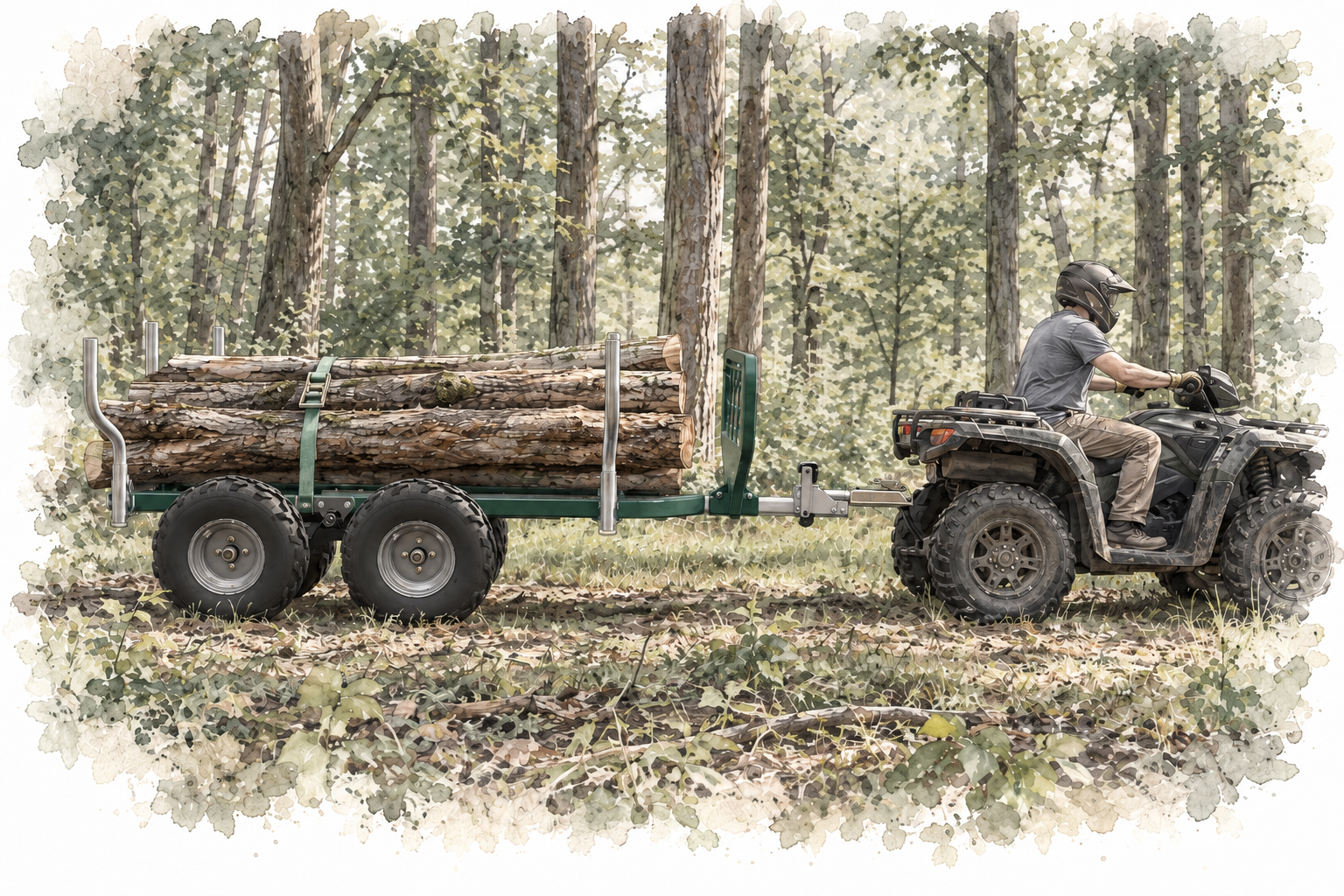
Purpose-built logging trailers are designed specifically for moving timber through woodland environments.
Features Commonly Found on Logging Trailers
-
-
Wide flotation tires
-
Multiple wheels to reduce ground pressure
-
Walking beam suspension systems
-
High ground clearance
-
Lightweight log bunk construction
-
Designs optimized for carrying logs rather than general cargo
-
The Loading Challenge
One of the biggest differences between skidding and hauling is that the logs must first be loaded onto the trailer.
With direct skidding, a chain or choker can be attached and the extraction process begins immediately. With a trailer, the logs must first be lifted, rolled, winched or otherwise positioned onto the trailer before transport can begin.
Common Loading Methods
Manual Loading
-
-
Lifted and loaded by hand
-
Rolled into position
-
Levered into place with a cant hook
-
Pushed up ramps
-
These methods require little investment and can be surprisingly effective for smaller firewood bolts, fence posts, and short sawlogs.
Mechanical Advantage
-
-
Manual winches
-
Electric winches
-
Block and tackle systems anchored to a tree
-
Trailer-mounted winch kits
-
Dedicated loading ramps
-
Some trailers are specifically designed to work with loading ramps and winch systems, such as the Multilander, making it possible to pull logs onto the trailer without requiring a tractor loader or other dedicated lifting equipment.
Equipment-Based Loading
-
-
Front-end loaders
-
Pallet forks
-
Grapples
-
Hydraulic cranes
-
A trailer may be capable of transporting a substantial payload, but that payload still has to be loaded efficiently before transport can begin.
Where Trailers Really Shine
Logging arches and forestry winches excel at reaching and retrieving logs from locations that may otherwise be difficult to access.
Once those logs reach the trail, however, they still need to be transported to wherever they will ultimately be processed.
By carrying the logs rather than dragging them, trailers can greatly reduce ground friction, bark damage, and contamination during transport.
They also help landowners:
-
Reduce repeated trips
-
Transport larger payloads efficiently
The Efficiency Advantage
A logging arch or forestry winch may retrieve logs effectively, but eventually payload capacity becomes the limiting factor. A trailer allows significantly more material to be carried in a single trip.
Payload only becomes an advantage when the hauling distance is great enough to justify the extra loading effort. For a nearby landing or a single large log, a logging arch may still be the simpler and more efficient solution.
Matching the Tool to the Material
Large individual logs are often best suited to a logging arch, tractor-mounted arch, or logging arch paired with a log dolly. Higher payloads over longer distances are usually better suited to utility trailers, multi-purpose forestry trailers, or dedicated logging trailers.
Key Takeaway
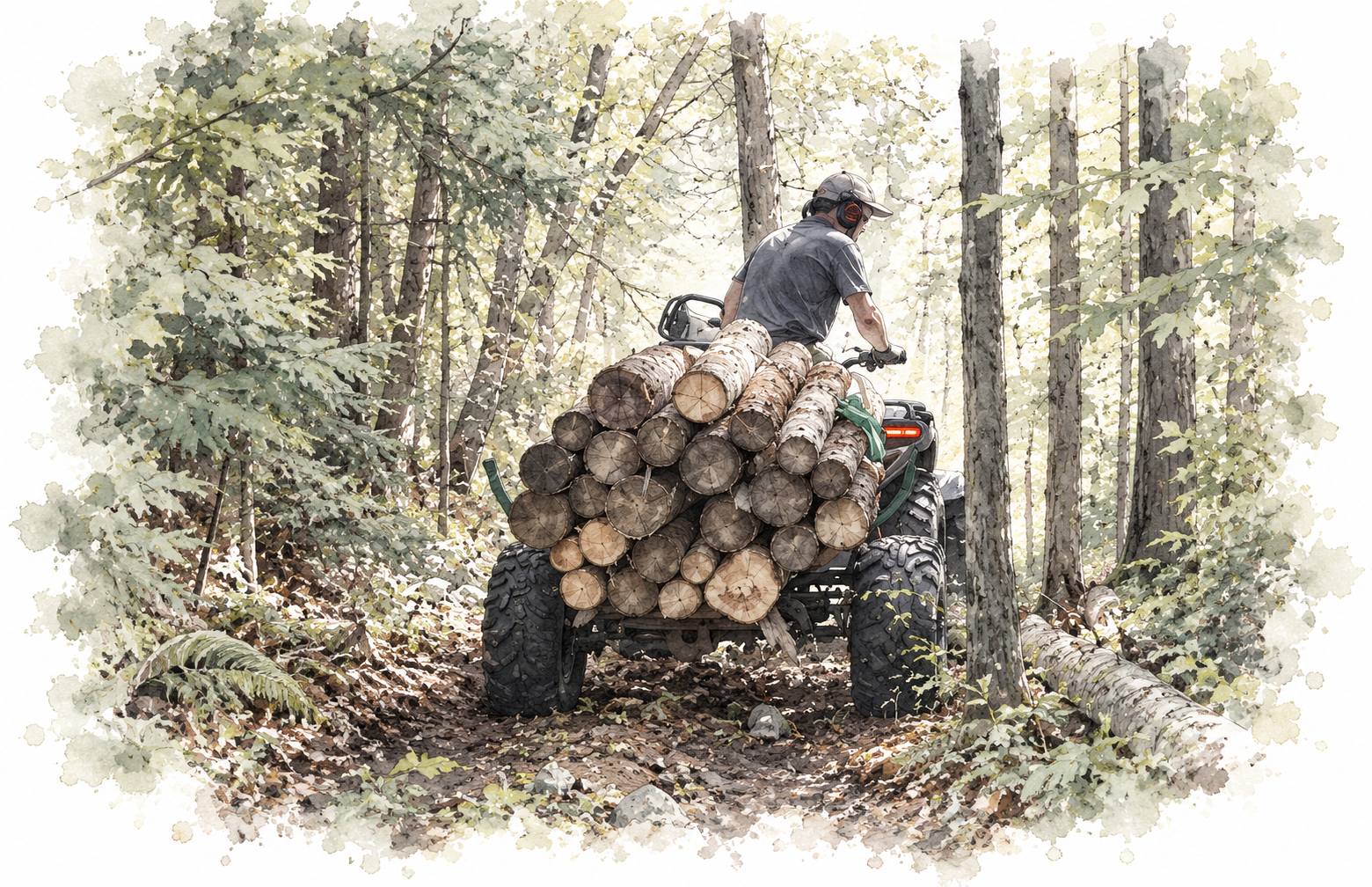
Trailers do not replace direct skidding, logging arches, or forestry winches. They solve a different problem.
The first challenge is getting logs out of difficult places. The second challenge is getting them where they actually need to go.
Direct skidding, logging arches, and forestry winches focus on retrieving and extracting logs. Trailers focus on transporting that wood efficiently to the landing, sawmill, firewood processor, or storage area.
As extraction distances increase, payload efficiency becomes increasingly important. Payload only becomes valuable if it can be loaded efficiently.
The Woodland Mills Log Extraction Guide: Learn more about every step, piece of equipment and stage of log maneuvering, from low-cost skidding to more specialized equipment and knowledge.
Chapter 1: Direct Log Skidding
Chapter 2: Log Arches
Chapter 3: Forestry Winches
Chapter 4: Utility Trailers
Join the Woodland Mills Community Facebook group. Search advice and insights from over 65,000 knowledgeable, supportive members.
- Pre-purchase considerations
- Sawmill set-up support
- Project inspiration photos and videos
- Community troubleshooting support