



Do's and Don'ts: A Guide for Topping Pine Trees
Tree topping disrupts a tree's natural shape but may be necessary for the wellbeing of the tree or its surroundings
Care should be taken when considering topping a pine tree.
Topping can be a controversial topic with some arborists, given how it can cause damage to the entire tree and can potentially turn healthy trees into weaker ones. However in some cases it may be required to support the tree or prevent damage to nearby infrastructure.
Do most pine trees need topping? Can you just trim pine trees instead? What happens if your topped tree dies? Let's get into these questions and more as we discuss the topic of tree topping.

What is tree topping?
Tree topping is the process of removing the top part of the tree's trunk. This is often done if the tree is getting too tall and could potentially interfere with utility lines, if the tree is interfering with the property owners' sightlines or if the tree could potentially cause damage in the event of a storm or strong winds. It could also be unsafe if there are neighboring trees close by, because if the tree falls down it could potentially cause a larger blowdown.
The process of topping pine trees dates back centuries though it's also not good for the health of the tree. It causes new branches to become brittle and opens it up to potential disease.

Why Is It Important to Manage Your Own Pine Trees?
Managing the trees on your property gives you a better understanding of how your forest, woodlot or residential landscape is changing.
Routine inspections can help you identify dead branches, storm damage, insect activity and signs of disease before a problem becomes more difficult to address. Tree thinning can also reduce competition for sunlight, water and nutrients, helping the trees you retain develop healthier crowns and stronger growth.
For forest and woodlot owners, tree management may include:
-
-
Monitoring tree health and removing hazardous material that could affect the remaining stand
-
Pruning young trees to encourage better form
-
Thinning crowded areas according to a forest-management plan
-
Reusing suitable logs, branches and wood chips around the property
-
Managing your own trees does not mean every job should be completed without professional assistance. A forester or qualified arborist can help assess mature trees, meanwhile smaller jobs that are more manageable and within your skill level can be capably handled on your own.
Can I Top Pine Trees on My Own?
You can, but should you?
Depending on the size of the tree, topping a smaller pine tree on your own can be a manageable task, but larger trees may require professional arborist assistance. So while you can handle these tasks on your own, you should weight the risks to the tree and your forest's health.
Removing the central leader disrupts the pine tree’s natural form and creates a large wound. It may also encourage weak replacement growth, introduce decay and leave the remaining tree more vulnerable to future failure.
Contact a qualified arborist when:
-
-
Work must be completed above ground level
-
The tree is near a building, road or utility line
-
Large branches or part of the main trunk must be removed
-
The tree is leaning, damaged, diseased or structurally unstable
-
Never attempt to prune or top a tree near energized utility lines. Contact the utility provider or a properly qualified tree-care professional.
If a pine has outgrown its location or presents an unacceptable risk, complete removal and replacement with a more suitable species may be safer than topping it and managing the resulting structural problems.
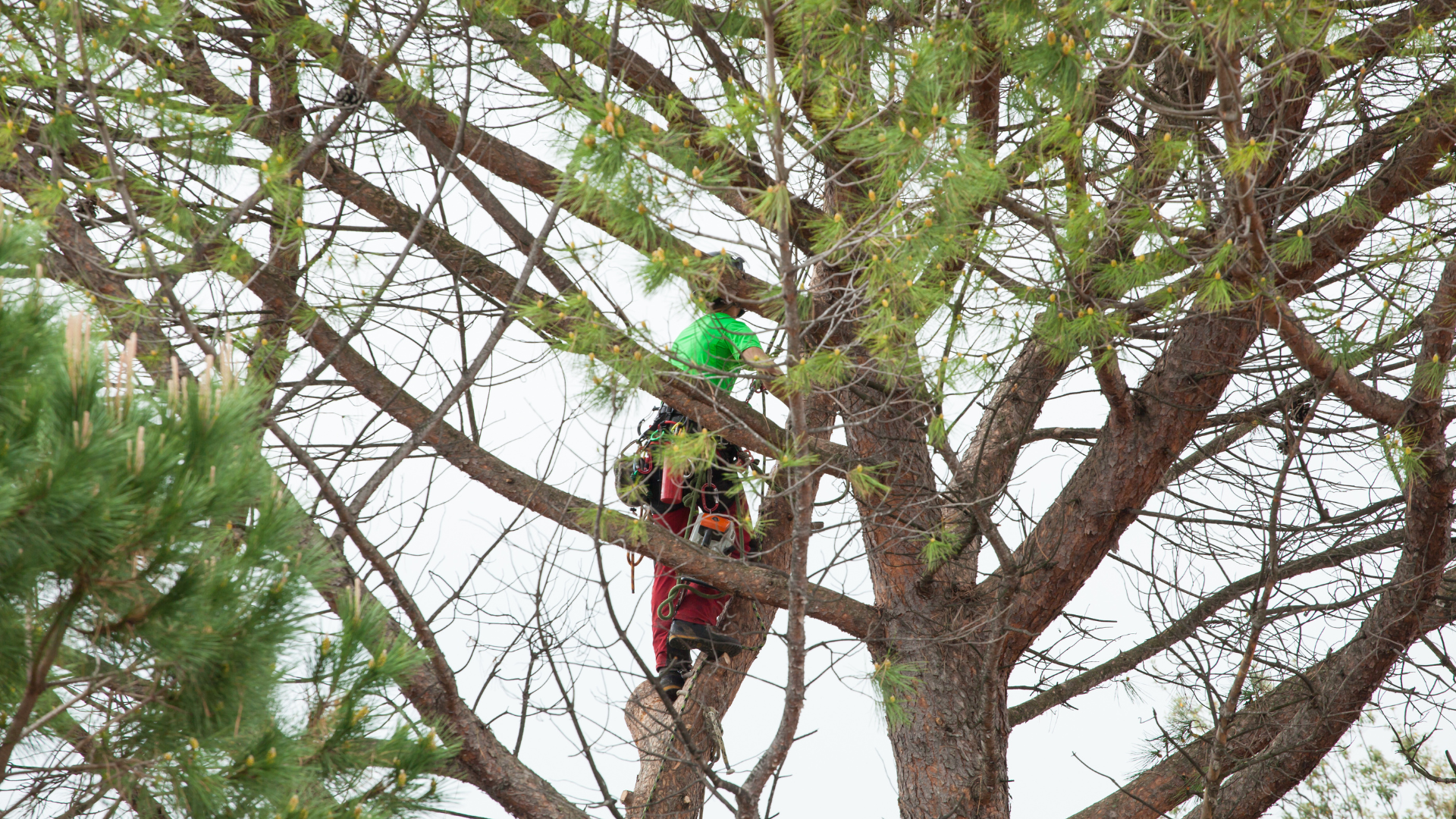
Why shouldn't I top a pine tree?
Topping a pine tree is often considered as a last resort. Because it can greatly affect the health of the tree, alternatives are often considered first. Proper pruning may help to reduce the tree's volume if sightlines are a problem. Trimming dead branches will also support new growth which is healthier.
However if a tree could potentially fall and cause property damage or would interfere with nearby utility lines it's safer to top the tree and prepare to maintain its recovery. While you may stress the tree it could potentially be unavoidable.
What Are the Advantages and Disadvantages of Topping Pine Trees?
Topping is not a recommended form of routine pine tree maintenance. Any immediate benefit should be compared with its long-term effects on tree health and structure.
Advantages
-
-
Reduces the tree’s height immediately
-
Creates temporary clearance from an obstacle
-
Removes a damaged upper section in limited circumstances
-
Produces woody material that may be reused if suitable
-
Disadvantages
-
-
Creates a major wound that exposes the tree to decay
-
Damages the pine tree’s natural form and central leader
-
Can produce weak or irregular replacement growth
-
May increase future maintenance and tree-removal costs
-
Topping one pine tree also does not necessarily improve the health of a forest stand. Maintaining a woodlot typically involves evaluating tree density, species composition, regeneration, insects, disease and the quality of the trees being retained.
When a pine is badly damaged, poorly positioned or competing with healthier trees, removing it may support the rest of the stand more effectively than topping it. A forester can help determine whether selective thinning, pruning or removal is appropriate for your long-term goals.
Can I prune a pine tree instead of topping it?
Severe pruning can be an alternative to topping. Pruning dead, dying or damaged branches will support new growth at the top and support the tree's health.
If a tree is wildly overgrown arborists may recommend topping and pruning a few branches but listen to their advice because they'll have a better perspective on the whole tree's health.
Remember to have a plan for removing your pine tree waste when trimming or managing your pine trees, including a capable wood chipper, chainsaw and other forestry equipment.
How much of the tree should be topped?
That will depend on the height of the tree and how much of it is causing problems. Ideally you should cut down as little as possible. The large tree that could potentially fall and cause severe damage may need to have more removed.
A young tree's trunk will regrow but it won't be as straight as it was before and could potentially branch out.
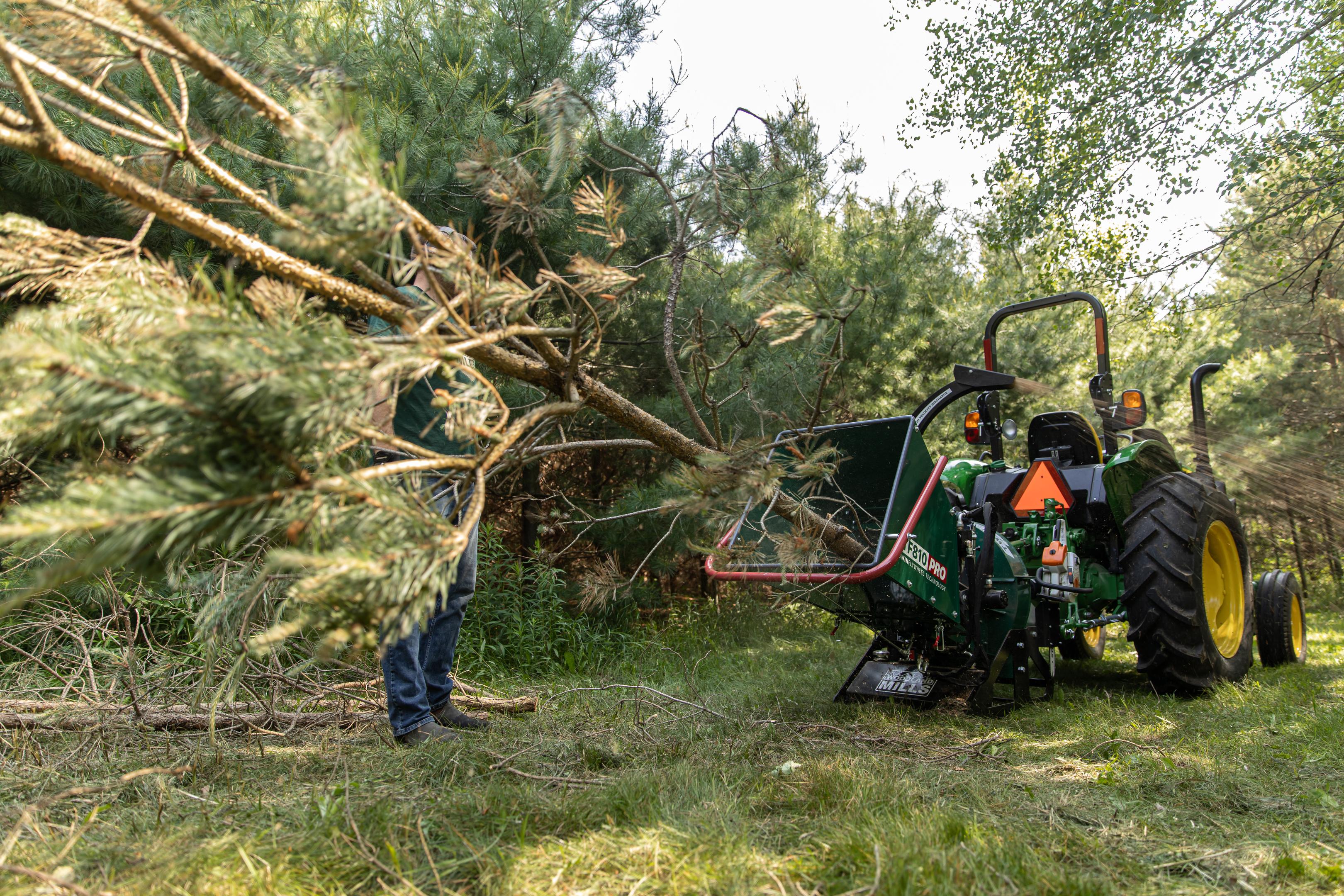
What Forestry Equipment Should I Own for Pine Tree Management?
The equipment you need depends on whether you are pruning small branches, removing trees, extracting logs or processing leftover material.
Useful Woodland Mills forestry tools include:
-
-
Off-Road ATV Trailer: A multi-purpose, high capacity trailer allows you to roll, load and unload pine tree logs easily
-
Chainsaw: An essential tool for easily removing limbs or trimming stems
-
Forestry Choker Chain: Wraps around a log to create a secure connection for winching, skidding or loading
-
Skidding Tongs: Help grip and drag logs or rounds while reducing the need to reach underneath them
-
Log Arch: Lifts the leading end of a log to reduce dragging and make it easier to tow behind a compatible ATV, UTV or tractor
-
What Are the Costs Associated With Topping and Maintaining Pine Trees?
The cost of pine tree maintenance depends on the tree’s size, condition, location and accessibility.
Hiring a qualified arborist may cost anywhere from several hundred to several thousand dollars. If you go down that route, ensure your contractor is qualified and you have the proper permits before work begins.
Common cost categories include:
-
-
Professional services: Tree assessment, pruning, removal, rigging and stump grinding
-
Personal Cleanup: Chipping branches, cutting firewood and hauling away debris
-
Equipment: Log-handling tools, trailers, wood chippers and protective equipment
-
Long-term maintenance: Follow-up inspections, corrective pruning or eventual removal
-
For a single tree, hiring a professional or renting cleanup equipment may be more practical. For a forested acreage producing branches and logs every year, owning the appropriate equipment can provide more control over when the work is completed.
What Wood Chipper Is Best for Pine Tree Material?
The best Woodland Mills wood chipper depends on your tractor, the diameter of the branches and the amount of leafy or lightweight material you regularly process.
Consider these Woodland Mills options:
-
-
TF46 PRO: Compact 4-inch PTO wood chippers for compatible subcompact and compact tractors
-
TFG55 PTO: A 5-inch Twin Flywheel chipper for compatible tractors with 12 to 30 horsepower at the PTO
-
TF68 PRO: Higher-capacity 6-inch PTO models for landowners processing larger branches
-
TF810 PRO: An 8-inch Twin Flywheel model for compatible higher-horsepower tractors and demanding cleanup work
-
Pine branches can be light, flexible and covered with needles. Woodland Mills PRO Series chippers use Twin Flywheel Technology, with a second flywheel dedicated to increasing airflow through the housing. This can help move leafy coniferous material through the chip stream.
The size of PTO wood chipper you choose will depend on the size and horsepower output of your tractor, so larger tractors can attach larger models of chippers. It's generally recommended you select the largest model your tractor can operate, as this gives you the largest opening to feed in wider branches with less prepwork.
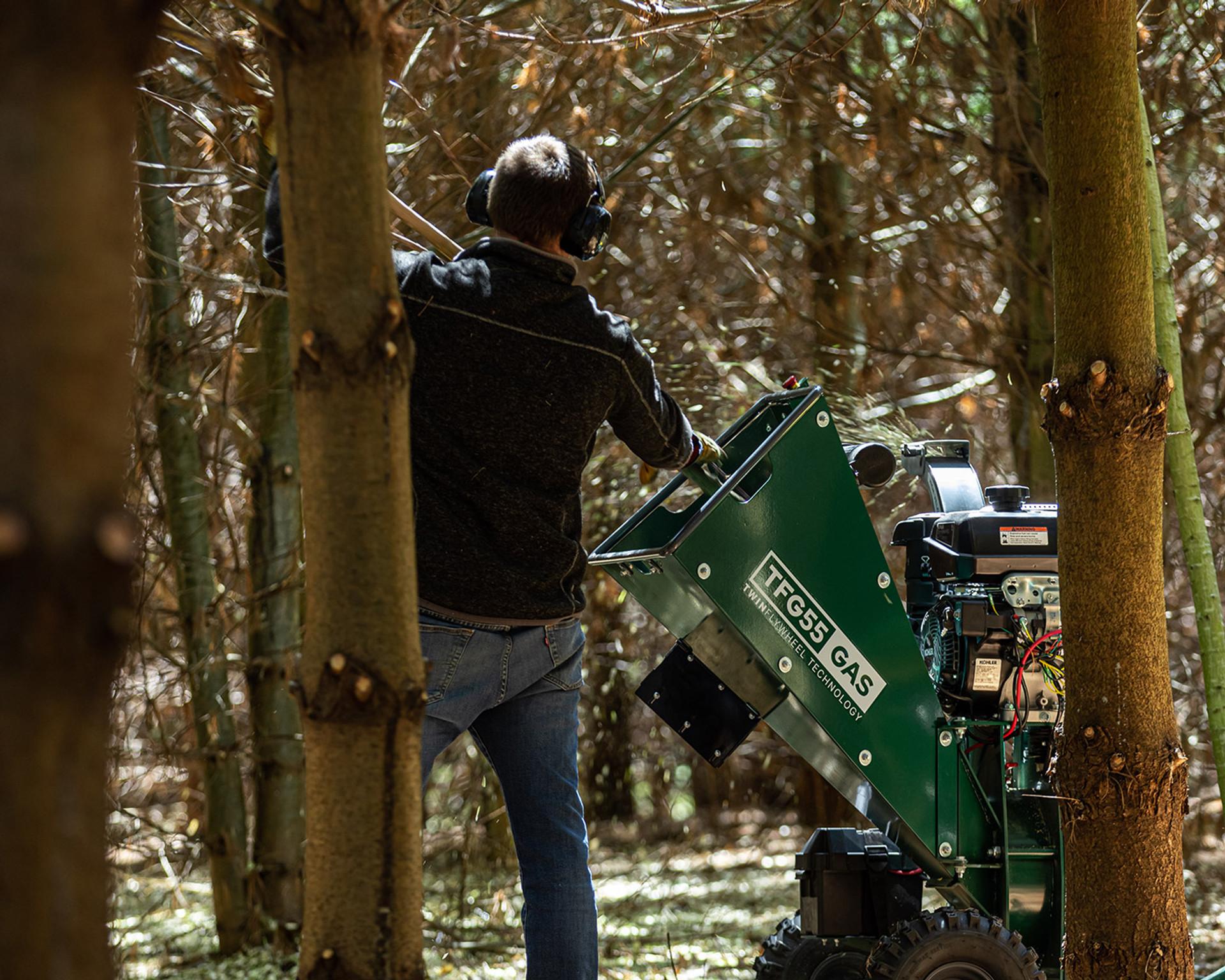
If you do not own a compatible tractor, the TFG55 GAS provides a gas-powered 5-inch option. Its independent engine and towable design can suit landowners who want to move a chipper around their property without connecting it to a tractor PTO.
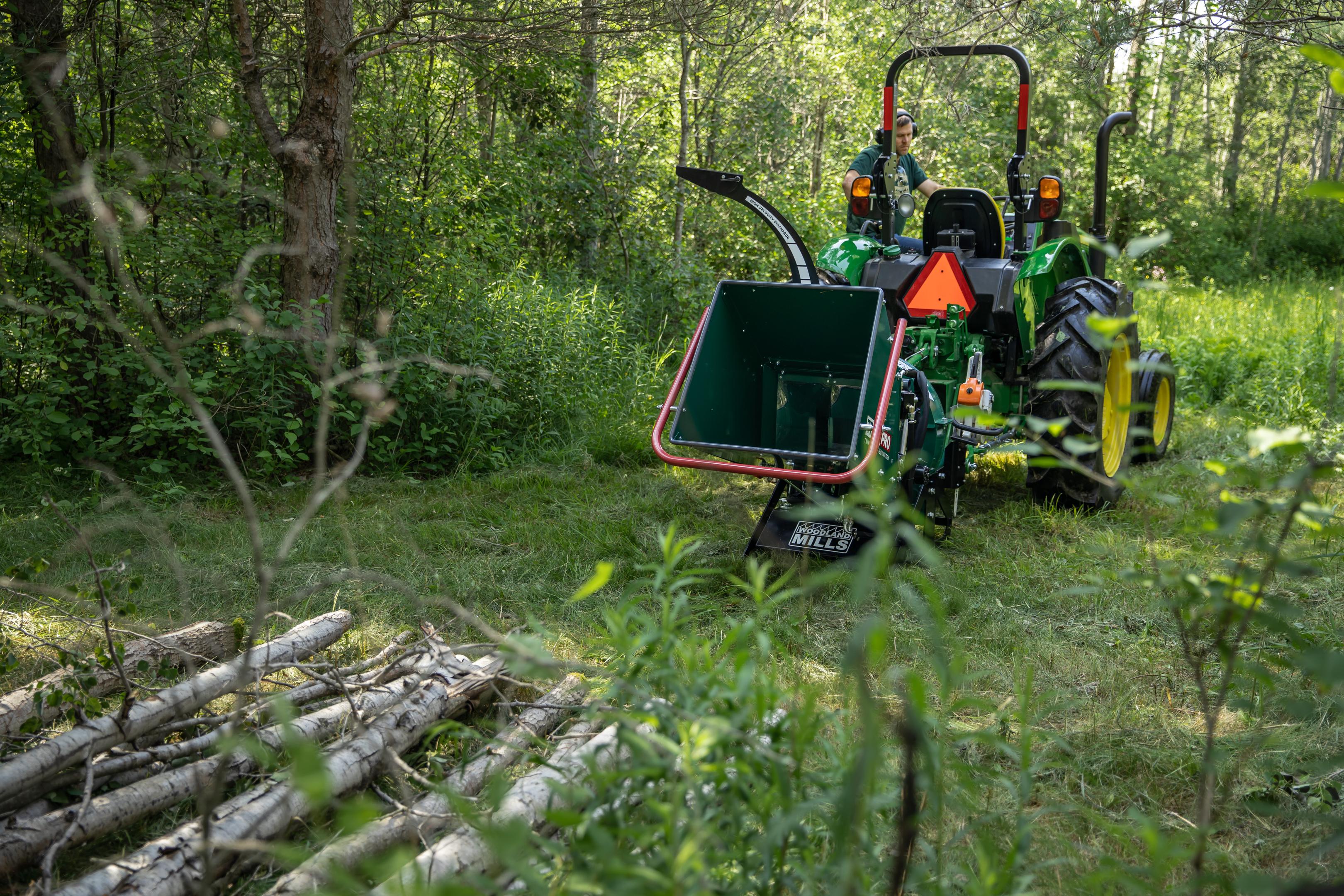
Do I Need a Wood Chipper for Pine Tree Maintenance?
Not necessarily.
If you only prune a few small branches each year, you may be able to cut the material for disposal, transport it to an approved collection site or hire a contractor when larger cleanup is required.
A wood chipper becomes more useful when woody debris is produced regularly. Instead of maintaining large brush piles or paying to haul branches away, you can reduce their volume and reuse the chips around the property.
Wood chipper ownership may make sense if you regularly:
-
-
Maintain a forested acreage or long trail network
-
Clean up branches after storms
-
Thin trees or remove overgrown brush
-
Use wood chips for mulch, paths or landscaping
-
What happens if my topped pine tree dies?
That's unfortunate but a realistic possibility. Because pine trees are sensitive to wounds and disease it may not be possible for a topped pine tree to recover.
All you can do now is cut it down, use a stump grinder like the Woodland Mills WG28 PRO to remove the stump and roots and attempt to plant a new one. Thankfully though if you own a portable sawmill like the HM130MAX you may be able to make use of the lumber.
What Are the Uses for Pine Wood Chips?
Pine branches do not automatically need to become waste. A wood chipper can turn suitable material into a resource for landscaping and property maintenance.
Pine wood chips can be used for:
-
-
Mulching: Spread chips around established trees, shrubs and perennial beds to conserve moisture and suppress weeds
-
Pathways: Use them to cover garden paths, woodland trails and other lightly travelled areas
-
Composting: Allow chips to age or combine limited quantities with nitrogen-rich organic material
-
Property maintenance: Apply chips to muddy areas or use them as a temporary surface around outdoor work zones
-
Fresh wood chips are generally better used on top of the soil than mixed directly into a garden bed. Surface-applied chips break down gradually and contribute organic matter over time without disrupting the soil as much as incorporated woody material can.
Why Do Landowners Trust Woodland Mills Forestry Equipment?
Woodland Mills designs forestry equipment for landowners who want to manage more of their tree cleanup, log handling and property-maintenance work themselves.
Customers regularly highlight the high quality construction, smart engineering and dependable everyday performance of Woodland Mills wood chippers, log arches and forestry tools. Core products are also supported by Woodland Mills’ three-year warranty, providing added confidence for landowners investing in equipment for recurring work.
Excellent customer service is available when help is needed with product questions, tractor compatibility, assembly, replacement parts or maintenance. Owners can also find equipment experience, project ideas and practical advice through customer reviews and the Woodland Mills Product Owners and Community Facebook Group.
"Perfect chipper for woodlot management," says TF68 PRO Wood Chipper owner Mike F. "I'm impressed as to how this unit is built and ease of operation. Also, unit was well packaged for shipping and simple to assemble using enclosed detailed instructions. Bravo Zulu to Woodland Mills and their customer service."
FAQs: Topping and Maintaining Pine Trees
Q: Will a pine tree grow a new top after being topped?
A pine may produce new shoots near the cut, but they may not recreate the tree’s original central leader or structural form. Replacement growth can be irregular or weakly attached, which may create additional maintenance concerns.
One of the risks involved in topping is that it disrupts a tree's natural growth and can lead to death. It's advised to remove no more than 20-30% of the tree's branches at once. Do this and you can give your tree the best chance to recover.
Q: Is pruning a pine tree the same as topping it?
No. Proper pruning selectively removes individual branches back to an appropriate branch union while preserving the tree’s natural form. Topping removes the upper trunk or major branches indiscriminately and leaves large wounds or stubs.
Q: Can I put pine wood chips around other trees?
Yes. Pine chips can be used as surface mulch around many established trees and shrubs. Spread them evenly and keep the chips away from direct contact with trunks. Do not assume chips from a diseased or insect-infested tree are safe to transport or reuse without local guidance.
Q: Should I buy a PTO or gas-powered wood chipper?
Choose a PTO chipper if you already own a compatible tractor and want to use its power for recurring forestry work. A gas-powered model such as the TFG55 GAS may be more suitable if you do not own a compatible tractor or want an independently powered chipper. Compare branch diameter, material type, property access and expected workload before choosing.
SHOP SAWMILLS
HM122
An entry-level sawmill packed with impressive features at a budget-friendly price. Designed for hobby sawyers or woodworkers looking for an economical solution to mill lumber.
HM126MAX
The original Woodland Mills portable sawmill. Trusted by hobbyists for years, now featuring a FULLCUT® sawhead to maximize usable cut width.
HM130MAX®
A wide capacity sawmill that produces stunning high-value live-edge boards. Loaded with features including our FULLCUT® sawhead, RapidChange® blade system, auto lube, and more.
HM136MAX™
The ultimate solution for cutting wide live edge slabs, perfect for tabletops, counters, benches, and more. Our unique FULLCUT® sawhead design ensures your logs' widest assets are left intact.
Join the Woodland Mills Community Facebook group. Search advice and insights from over 65,000 knowledgeable, supportive members.
- Pre-purchase considerations
- Sawmill set-up support
- Project inspiration photos and videos
- Community troubleshooting support