



Low Cost Log Splitter: A Buyer's Guide
Looking for an affordable log splitter? Here is how to compare cost, performance and long-term value
A low cost log splitter should do more than have an affordable purchase price. It should also process firewood efficiently, remain dependable through repeated use and fit the way you work.
Buying the least expensive machine available may save money upfront, but slow cycle times, limited splitting force or an awkward working position can make every cord of firewood more difficult to produce. A capable splitter can provide better long-term value by helping you process more wood in less time, saving you money with every action.
The Woodland Mills LS218 2-Way Log Splitter combines 18 tons of splitting force with a two-way splitting design and 7 to 8 second cycle time. It can also be purchased on its own or configured with accessories according to your workload and budget.
So what should you look for in an affordable log splitter, and which accessories are worth adding? Let’s compare the most important considerations to find which is the right log splitter for you.
What Should You Look for in a Log Splitter?
Purchase price is important, but it should not be the only factor guiding your decision. Whether you're producing firewood at a commercial scale or for personal use, a log splitter that processes wood slowly or requires excessive lifting may cost you more in time and effort over its working life.
Consider these four features when comparing log splitters:
-
-
Splitting force: The machine needs enough force to handle the wood species, round diameter and knots you regularly encounter
-
Cycle time: A shorter cycle keeps material moving and reduces the time required to process a large firewood pile
-
Working position: A stable work platform designed for optimal workflow that's customizable with table extensions to provide extra room for rounds and keep split pieces clear of the splitting zone
-
Mobility: A towable machine can be moved closer to the woodpile, landing or location where trees are being processed
-
Construction also matters. Look at the frame, splitting wedge, hydraulic components, work platform and engine rather than concentrating only on tonnage. Long term durability is a major consideration. A well-designed, heavy duty hydraulic system on a wood splitter can make better use of available splitting force and produce a more predictable workflow.
Most rural homeowners process one to two cords of firewood a year with log splitters, so it makes sense to get a unit that works for your needs.
Is the Woodland Mills LS218 the Right Size for Personal Use?
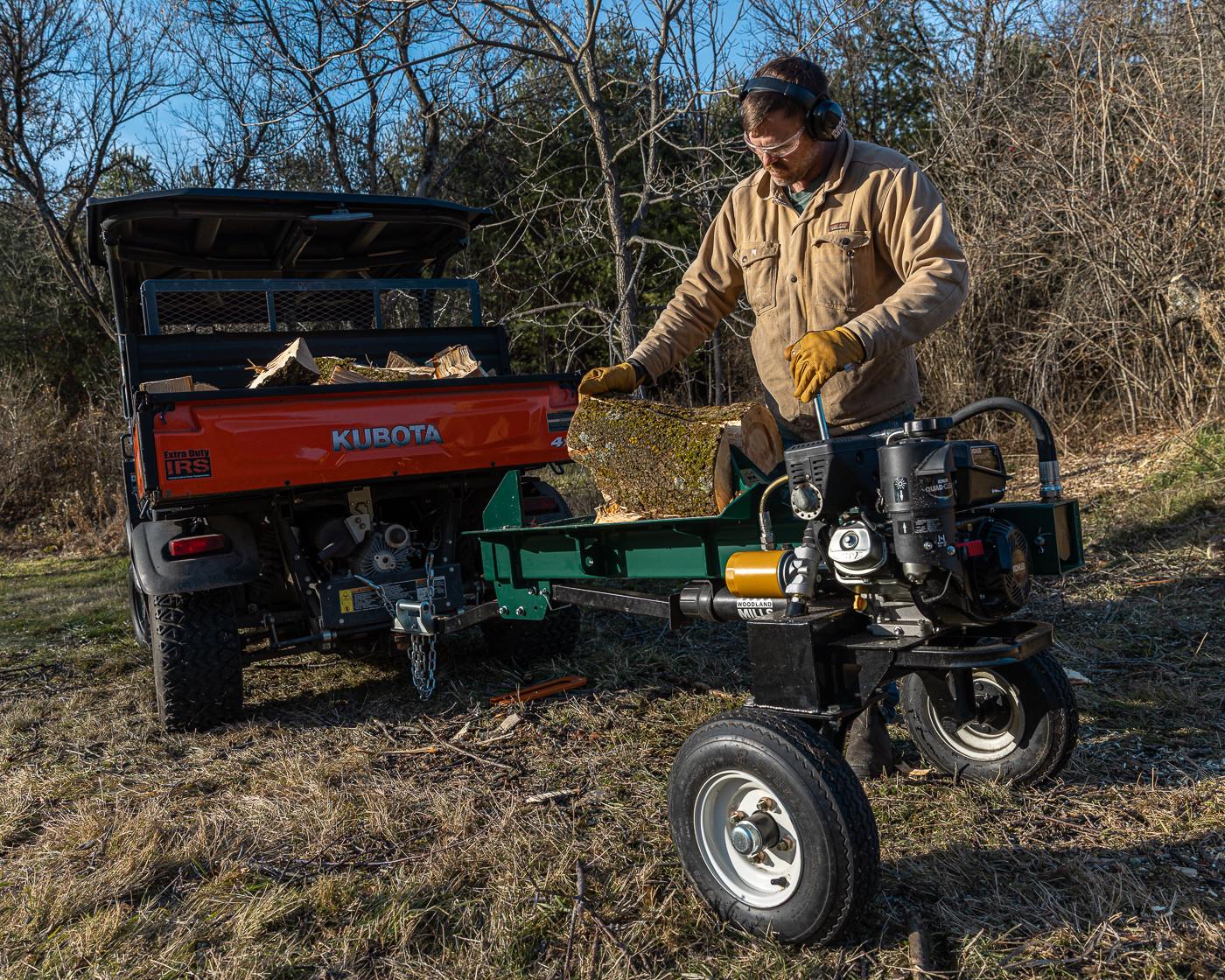
The LS218 is designed for landowners and firewood producers who want a mobile splitter for recurring firewood work.
Its 18-ton hydraulic system and 24-inch stroke length provide the capacity to efficiently process many common firewood rounds. A 7 HP Kohler engine supplies independent power, so the machine does not require a tractor or external hydraulic system.
The two-way wedge splits wood on both the forward and return stroke. Instead of waiting for the wedge to reset before starting the next split, you can place another round into position and continue working. Its fast cycle time (7-8 seconds) helps maintain a consistent pace during larger splitting sessions.
Consider the LS218 if you:
-
-
Produce firewood every year rather than completing a one-time cleanup
-
Want to split on both directions of wedge travel
-
Need a towable splitter that can be moved around a rural property
-
Regularly process rounds that fit within its 24-inch stroke length
-
Consider the largest rounds and most difficult wood you normally process, not one unusually large tree. Oversized or heavily forked rounds can often be trimmed or cut into more manageable pieces before splitting.
How Can You Bring Down the Cost of a Log Splitter?
One of the most efficient ways to control your cost is to purchase the machine around the work you currently perform.
The stock standard LS218 unit includes the core equipment needed to begin splitting wood. If you process manageable rounds and do not require a larger staging area, purchasing the splitter on its own keeps the initial investment lower.
You can then decide whether accessories would provide enough value to justify their additional cost.
LS218 Table Extensions
The LS218 Table Extensions create more space for staging incoming rounds and holding split pieces. This can reduce how often wood falls to the ground or has to be repositioned during splitting, and gives you a larger, more accessible work area.
The extensions are most useful for people who process larger quantities of firewood and want a more organized workflow. They can be removed when the additional work area is not needed, reducing the splitter’s width for storage or transport, ideal for landowners who to customize their setup for each splitting job.
LS218 Hydraulic Lifting Table
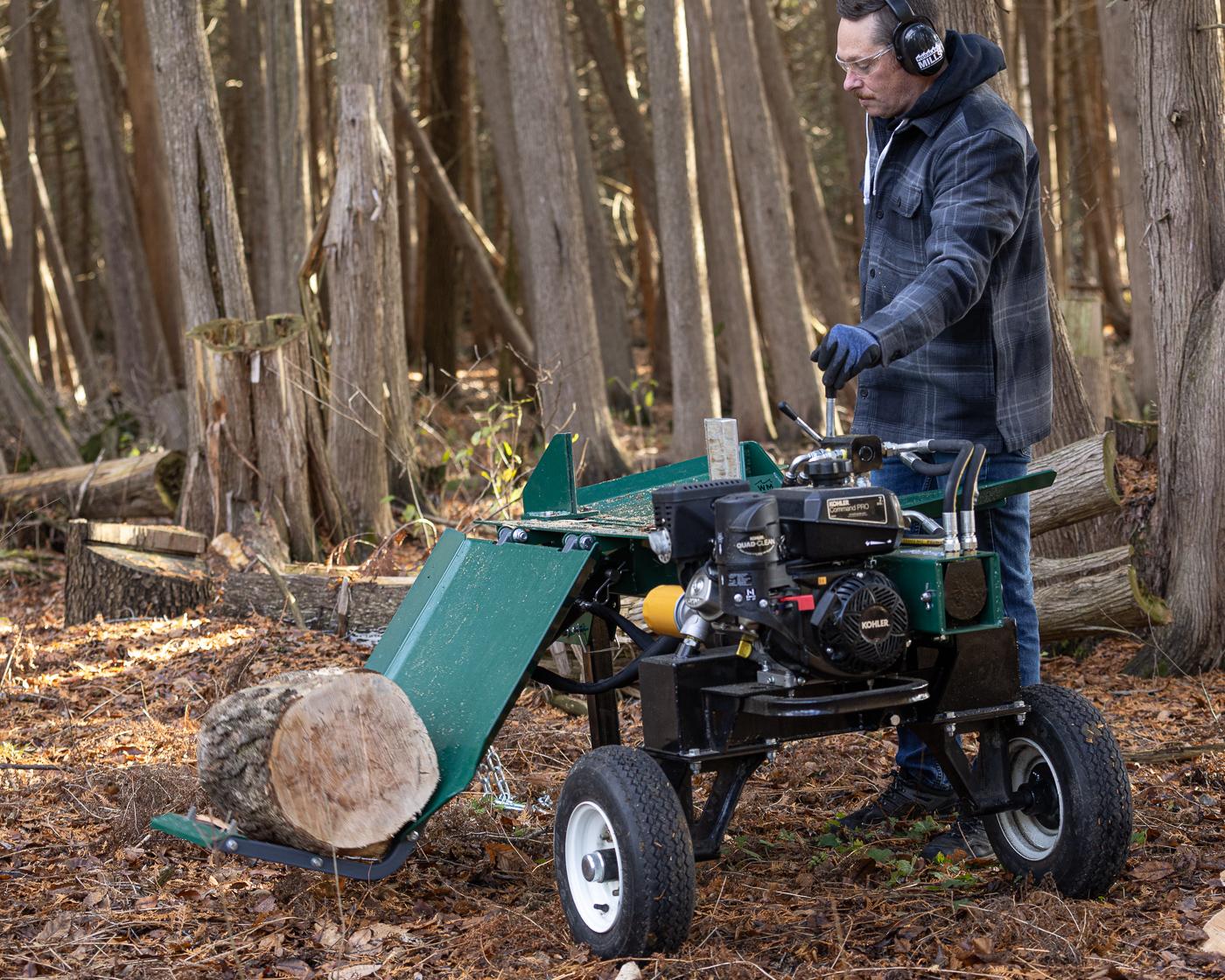
The LS218 Hydraulic Lifting Table connects to the splitter’s secondary hydraulic line and can lift rounds weighing up to 250 lb.
This accessory requires a larger upfront investment, but it can substantially reduce manual lifting. It may be particularly valuable if you regularly work with large rounds, split wood frequently or want to reduce strain during long processing sessions. Users may want to consider this upgrade if reducing repeated bending or manual lifting is a concern.
Should You Buy Accessories Immediately?
Buying the base splitter first can make sense when keeping the initial cost as low as possible is your priority. Once you have used the machine, you will have a better understanding of where delays or unnecessary effort occur.
Buying the splitter and accessories together may make more sense when you already know that large rounds or high-volume production are part of your workflow. The right accessory can reduce handling time during every splitting session, providing more value than its purchase price alone suggests.
Choose accessories according to recurring needs and improve the ergonomics of your work area. An accessory that saves time every week can be a worthwhile investment, while one intended for an occasional situation may be easier to add later.
How Can Splitting Your Own Firewood Save Money?
Purchasing split, seasoned firewood is convenient, but delivery and processing costs are included in the price. Producing your own firewood allows you to replace some of that expense with your time, equipment and access to suitable timber.
Potential sources of firewood include:
-
-
Trees removed during trail maintenance or outdoor land clearing
-
Fallen timber and storm-damaged trees from your property
-
Logs that are unsuitable for portable sawmilling
-
Usable rounds provided by neighbors or local tree services
-
Owning a splitter also gives you control over the size of your firewood. You can produce smaller pieces for faster seasoning, larger pieces for longer burns or dimensions that fit your particular wood stove.
The amount you save depends on local firewood prices, how much wood you burn and whether you already own a chainsaw, trailer and other equipment. Remember to include fuel, maintenance, storage and the value of your time when comparing home-produced firewood with delivered wood.
Can You Sell Firewood to Recoup Your Investment?
Selling excess firewood can help offset the cost of a log splitter, but it should be treated like a small business rather than free money. Large-scale firewood processing operations utilize much mor expensive industrial equipment than a regular landowner would use.
Start by researching how firewood is sold in your area. Customers may purchase it by the cord, face cord, bulk bag or smaller bundle.
Your selling price should account for:
-
-
The cost of logs, fuel and equipment maintenance
-
Time spent bucking, splitting, stacking and loading
-
Storage space and the time needed for seasoning
-
Packaging, delivery and marketplace fees
-
Seasoned firewood will generally be easier to sell than freshly split green wood. Use a moisture meter to test freshly exposed wood inside several representative pieces rather than relying only on drying time or appearance.
Selling firewood to recover part of your equipment investment isn't necessary, but can be helpful. Selling occasional surplus to neighbors, campers or local homeowners can create additional value from trees already being removed or maintained, and can bring your overall costs cheaper in the long term.
What Is a Good Setup for the LS218 Log Splitter?
The best log splitter setup reduces unnecessary handling. Ideally, rounds should travel from the log pile to the splitter and then to the drying stack without being repeatedly lifted, moved or dropped.
A practical setup may include:
-
-
A bucking area: where rounds can be safely cut to firewood length
-
A nearby pile or trailer: contains rounds ready to split
-
Stable, level ground: for positioning the LS218
-
Pallets, racks or a woodshed: bags or other storage methods for stacking finished firewood in a dry area
-
Position the splitter close enough to the rounds that they do not have to be carried across the work area. Leave enough clearance for the operator, additional helpers and completed pieces.
If you use the hydraulic lifting table, arrange large rounds so they can be rolled onto the lift rather than carried. Table extensions can provide space for staging pieces that need another pass through the wedge.
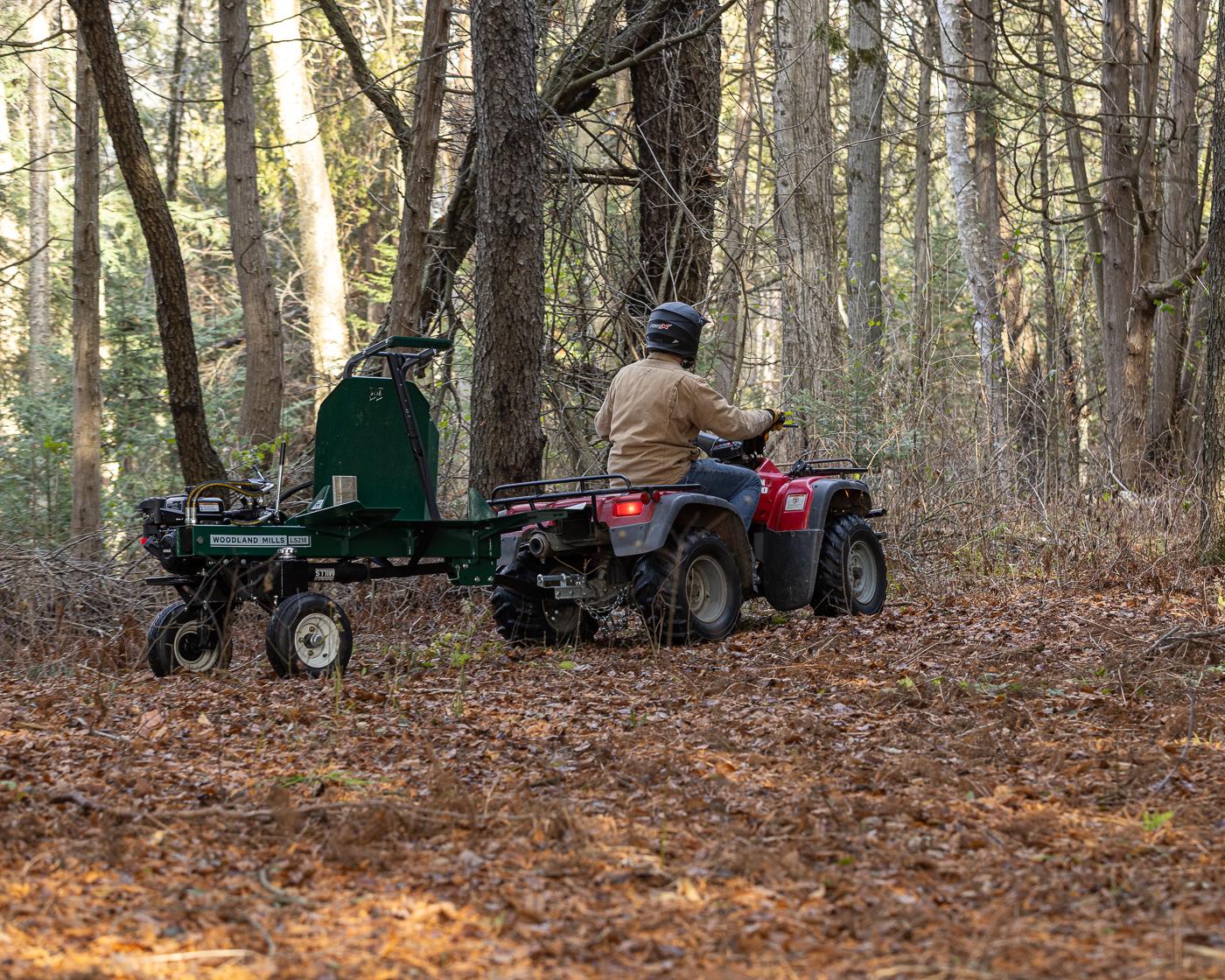
Since the LS218 is towable, you can also bring the machine closer to a landing, remote cabin or firewood pile. Remember that the best setup is one that allows you to complete the job with speed and move onto the next task ahead of you.
What Other Forestry Equipment Can Support Firewood Production?
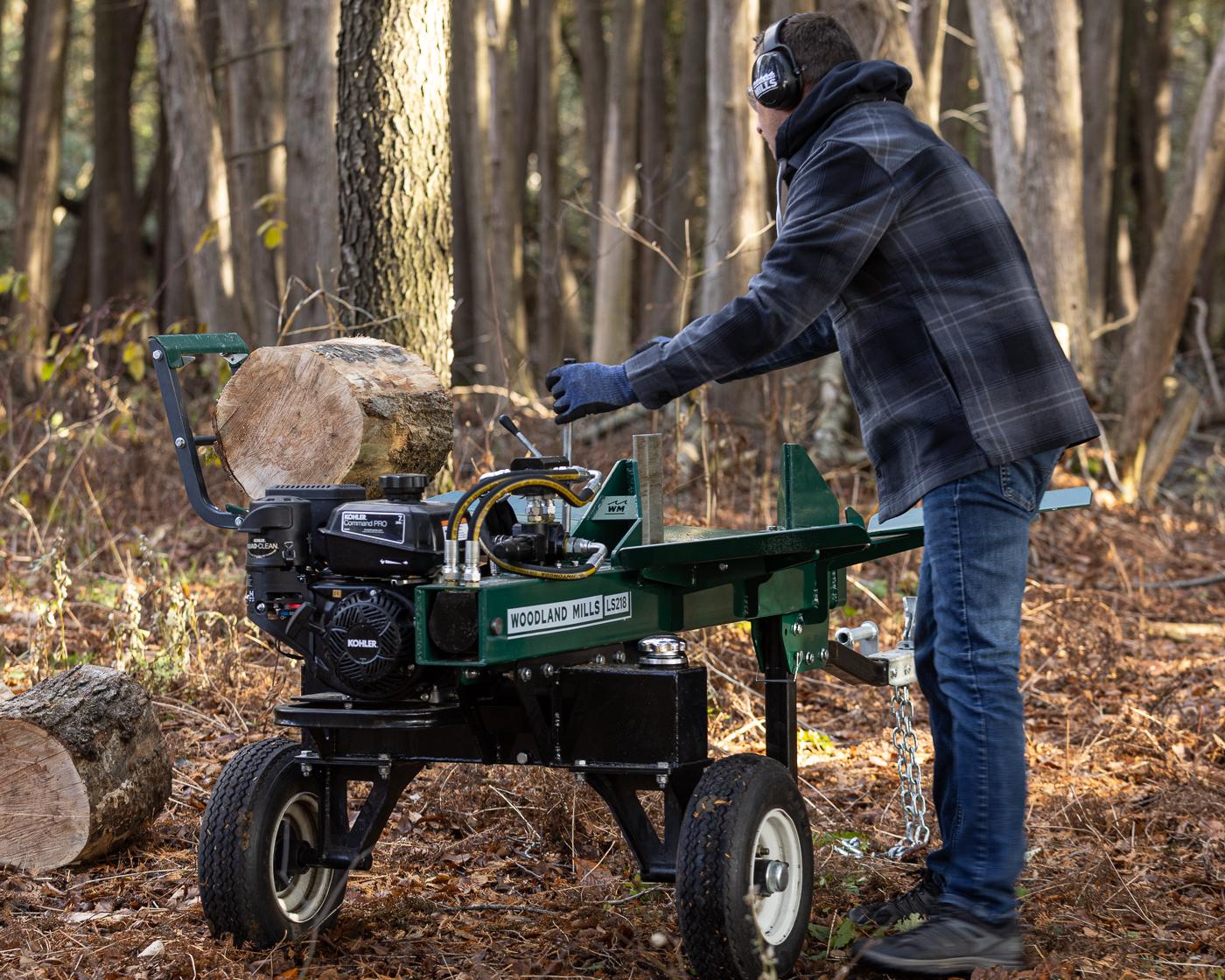
A log splitter handles only one stage of the firewood process. You may also need to retrieve logs, position them for bucking, process branches and transport finished firewood.
Helpful Woodland Mills equipment includes:
-
-
Log Arch: Lifts the leading end of a log to reduce dragging when retrieving timber behind a compatible ATV, UTV or tractor
-
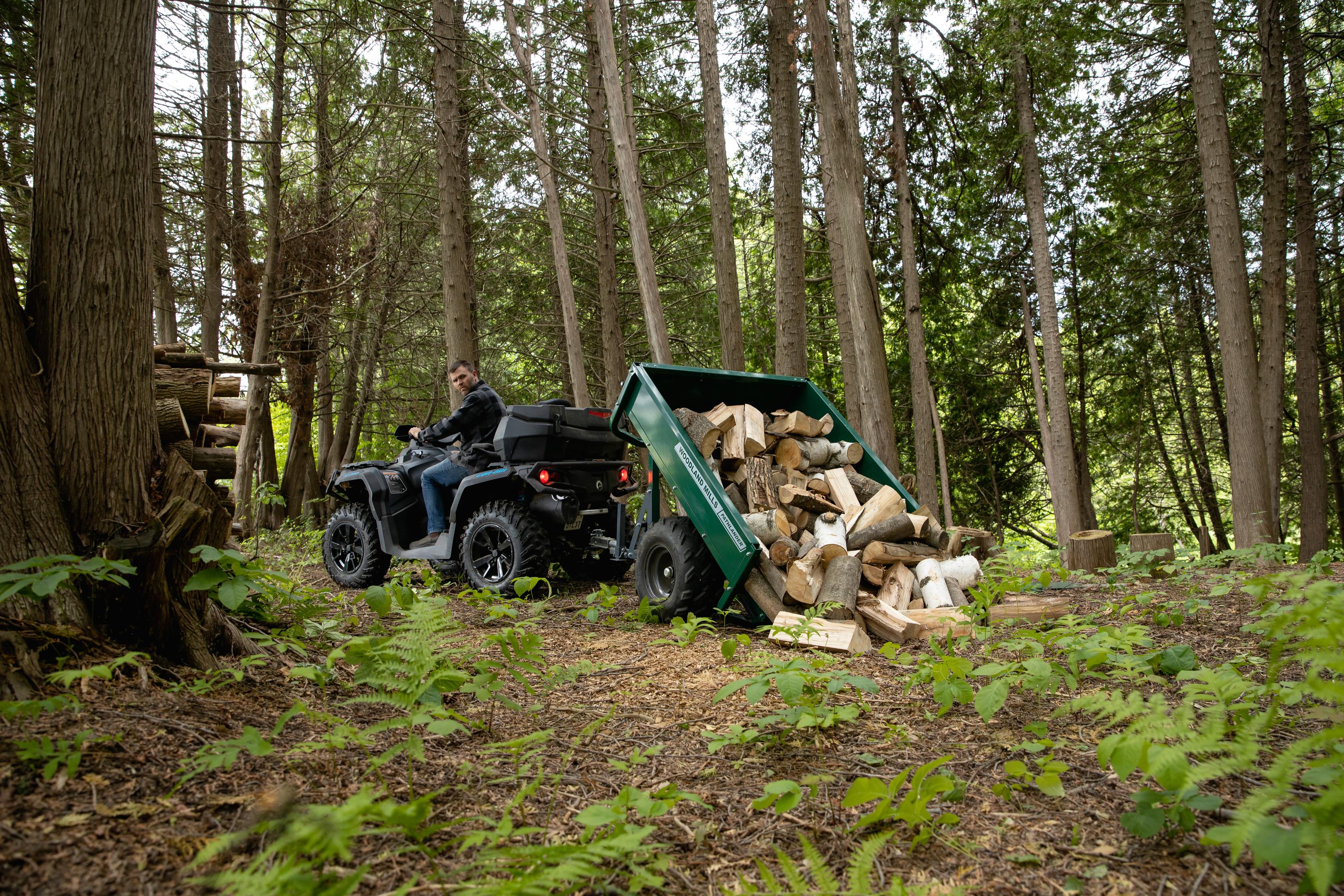
Off-Road ATV Trailer: Moves rounds, split firewood, tools and other materials across rural properties
-
Wood Chipper: Processes suitable branches and treetops into chips that can be reused for trails or landscaping
-
Cant Hook: Provides leverage for rolling and positioning logs before bucking or loading
-
Choose equipment according to the main bottleneck in your workflow. A log arch may be the priority when logs are difficult to retrieve, while an ATV trailer may deliver more value if moving split wood is the most time-consuming part of the job.
What Are the Cost Considerations for a Wood Splitter Setup?
The log splitter is only one part of a complete firewood-processing budget.
Your initial equipment costs may include a chainsaw for tree harvesting, protective equipment, log-handling tools, a moisture meter and a suitable way to move rounds or finished firewood. You may also need pallets, racks or a covered storage area.
Ongoing costs include:
-
-
Fuel and routine engine maintenance
-
-
-
Chainsaw chains, bars and sharpening supplies
-
Transportation and firewood storage
-
You can reduce the initial cost by starting with the equipment required to solve your immediate problem. Manual tools may be sufficient for manageable logs, while mechanical loading and hauling equipment becomes more valuable as round size, production volume or travel distance increases.
Why Do Landowners Trust Woodland Mills Log Splitters?
Woodland Mills designs equipment for landowners who want to handle more of their forestry, firewood and property-maintenance work themselves.
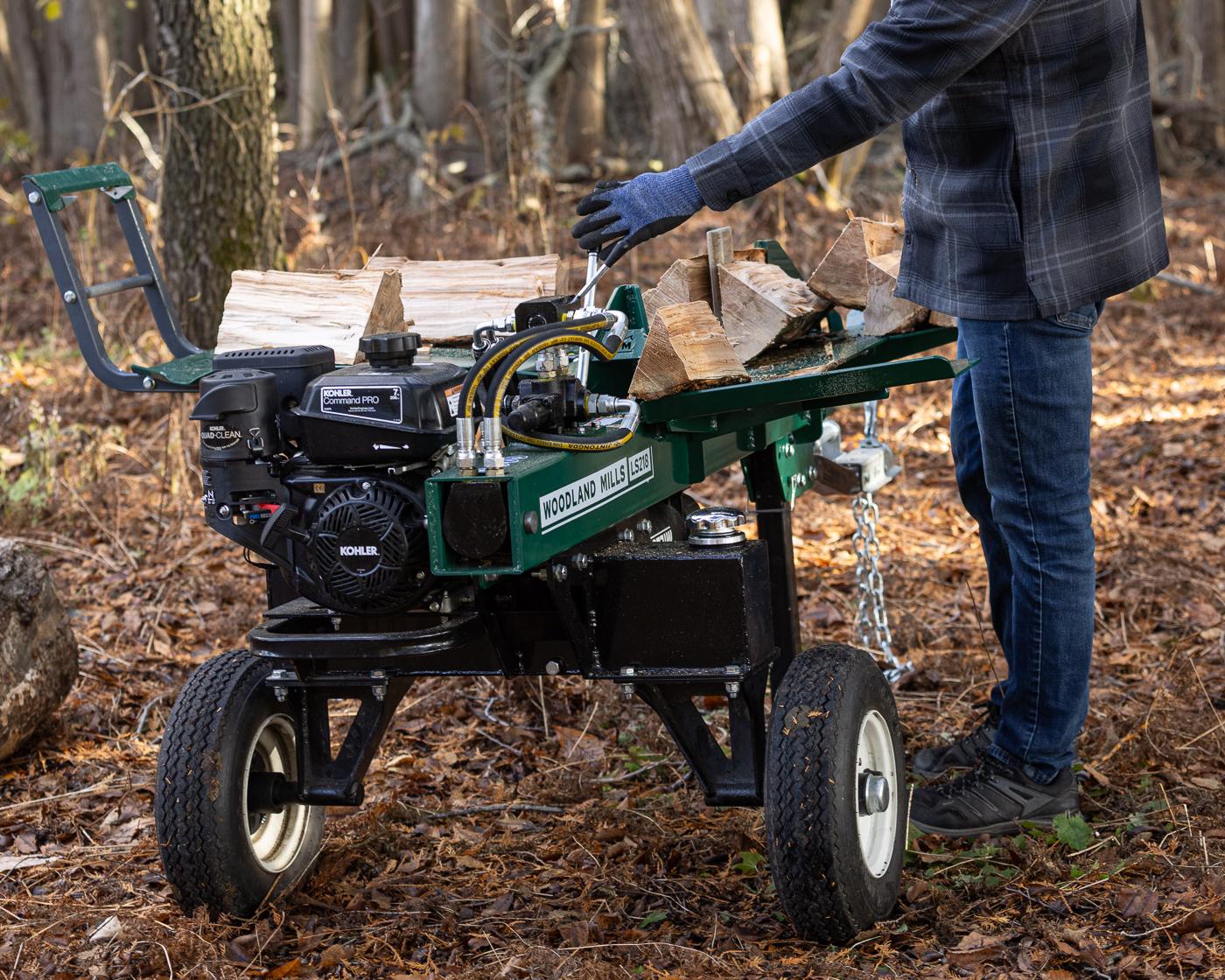
The LS218 is a popular choice for landowners that combines rugged construction with an 18-ton hydraulic system, two-way splitting action and a dependable power source. Its reinforced work platform, integrated secondary wedges and adjustable tow hitch are designed around a practical firewood workflow.
Woodland Mills core products are supported by a three-year warranty, providing added confidence when purchasing equipment for recurring work. Products ship promptly and directly to the end of your driveway, replacement parts are readily available, and excellent customer service is available when you need help with assembly, operation or maintenance.
"We bought the LS218 splitter based on our experience with Woodland Mills wood chipper," says LS218 owner J.C. "The chipper has been a solid implement with quality features made to be durable. The LS218 turned out to be the same. We purchased the lifting and side tables to make it easier to handle big rounds without straining our backs. It worked like a charm. The two-way splitting knife helped us fill 16 tote baskets in about one-third less time than our old splitter."
Landowners can also learn from Woodland Mills customer reviews and the Woodland Mills Product Owners and Community Facebook Group, where owners share equipment experience, firewood setups and completed property projects.
FAQs: Buying a Low Cost Log Splitter
Q: How much splitting force do I need for firewood and is an electric log splitter okay?
The required force depends on round diameter, wood species, moisture content, grain direction and the number of knots or forks. The LS218 provides 18 tons of splitting force for many common landowner and firewood-processing applications. Cutting difficult rounds to a suitable length and positioning them so the wedge works with the grain can improve splitting performance.
Gas-powered log splitters are also a favorite for landowners who require strong splitting force from their units, since electric log splitters often utilize less splitting power and can't split more difficult rounds without assistance.
Q: What is the benefit of a two-way log splitter?
Wood splitting with a two-way log splitter produces a split during both the forward and return movement of the wedge. This eliminates an unproductive return stroke and allows the operator to stage the next round on the opposite side.
The LS218 combines this design with a 7 to 8 second cycle time to maintain a continuous splitting workflow.
Q: Is the hydraulic lifting table worth adding to the LS218?
The hydraulic lifting table can be worthwhile when you regularly process rounds that are uncomfortable or unsafe to lift manually. Its 250 lb lifting capacity allows large rounds to be raised into the working area with less physical effort. It's a much better solution than requiring heavy duty equipment like a skid steer to lift rounds.
If your firewood consists primarily of smaller rounds, you may prefer to begin with the standard splitter and add the lift if your needs change.
Q: What other tools would be useful for wood splitting?
A cant hook is helpful for rolling larger logs, while a log arch can be used to haul entire stems through rough terrains and trails to your splitting area.
Join the Woodland Mills Community Facebook group. Search advice and insights from over 65,000 knowledgeable, supportive members.
- Pre-purchase considerations
- Sawmill set-up support
- Project inspiration photos and videos
- Community troubleshooting support