



What should you not put in a wood chipper?
A quick guide on what materials are safe to feed into your equipment
A wood chipper is a useful piece of equipment for your property but you need to be careful about what materials you feed into it.
While your Woodland Mills wood chipper is designed to safely chip tree branches, there are materials which could potentially damage the blades or mechanisms. In this guide we go over the basics of safe wood chipper handling and what material can and cannot go in your chipper.
Keep your chipper in top shape
Wood chippers turn wood into wood chips by feeding material through the infeed chute and into either infeed rollers, or directly into the flywheel, where sharp blades spin quickly and chip the material.
You should be cautious about what you feed into your wood chipper, as any unintended materials are fed into a rapidly spinning steel disc which could damage the infeed system or cutting blades.
Twin Flywheel wood chippers, available exclusively through Woodland Mills, feature an additional flywheel that improves air flow in the flywheel housing, improving the consistency when chipping wet, green, leafy material. There are still materials you shouldn't feed into any chipper, but Woodland Mills PRO chippers offer greater consistency for wetter, green tree material.
What Can You Safely Put in a Wood Chipper?
Woodland Mills wood chippers are designed to process natural, untreated woody material. The material must fit within the rated capacity of your machine and be free from soil, metal, rocks and other foreign objects.
Suitable material generally includes:
-
-
Clean tree branches within the chipper’s rated diameter
-
Freshly cut limbs with leaves or needles attached
-
Dry branches and woody brush
-
Smaller twigs bundled with larger branches
-
Freshly cut, wet and green branches are not automatically unsafe. The challenge is moving their lightweight leaves and needles through the chipper without material accumulating inside the housing or discharge chute. For single flywheel chippers, mixing in heavier, dry materials with more lightweight materials can help carry them through the chipstream.
Whenever possible, feed branches butt end first. Trim large forks that cannot fit naturally into the infeed opening, and never use your hands or a tool to push material deeper into the chute. Follow the operating instructions for your specific model and allow the infeed system to pull the branch into the machine.
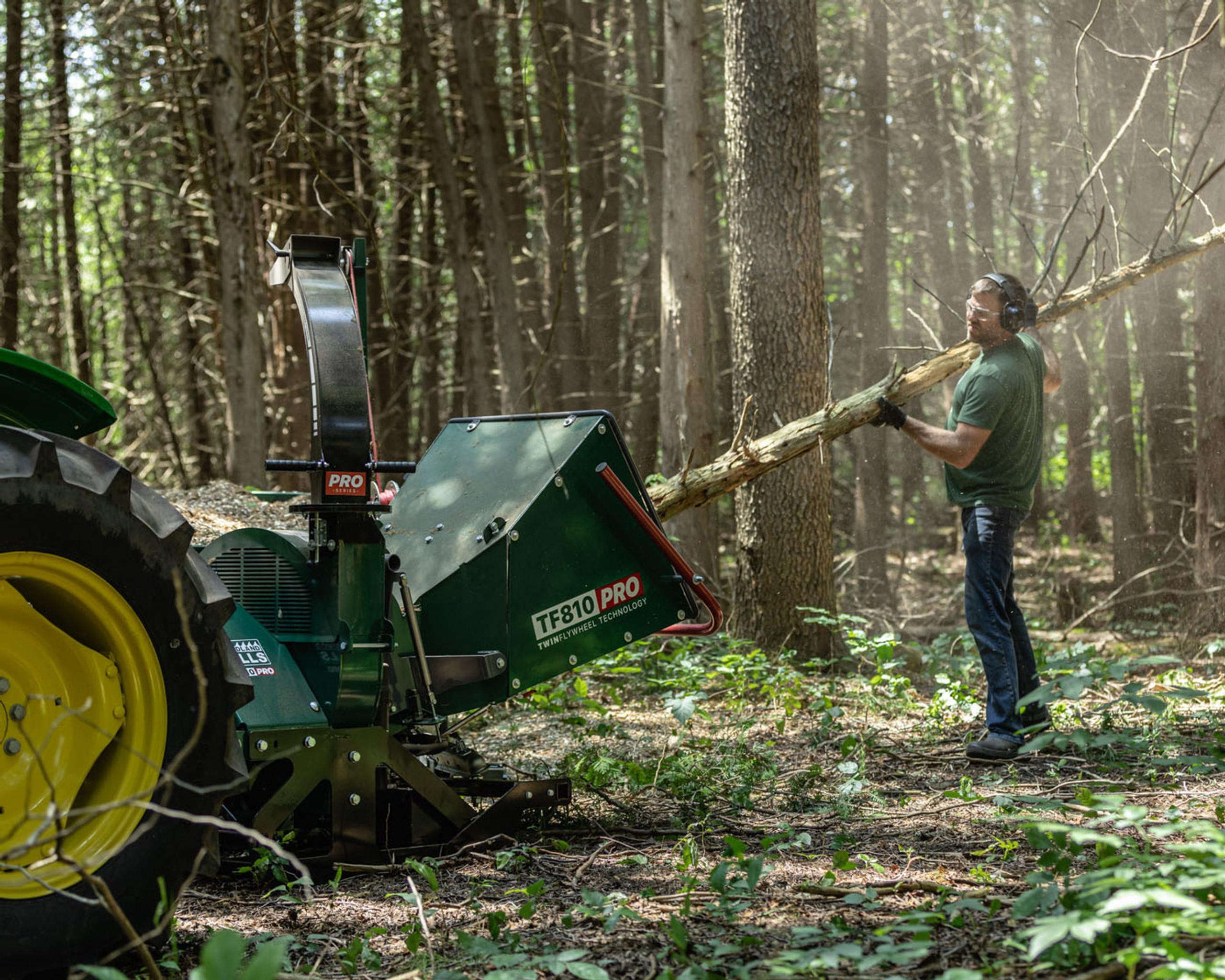
Follow all safety guidelines included in the owner's manual and wear all appropriate safety gear, including ear protection and safety goggles.
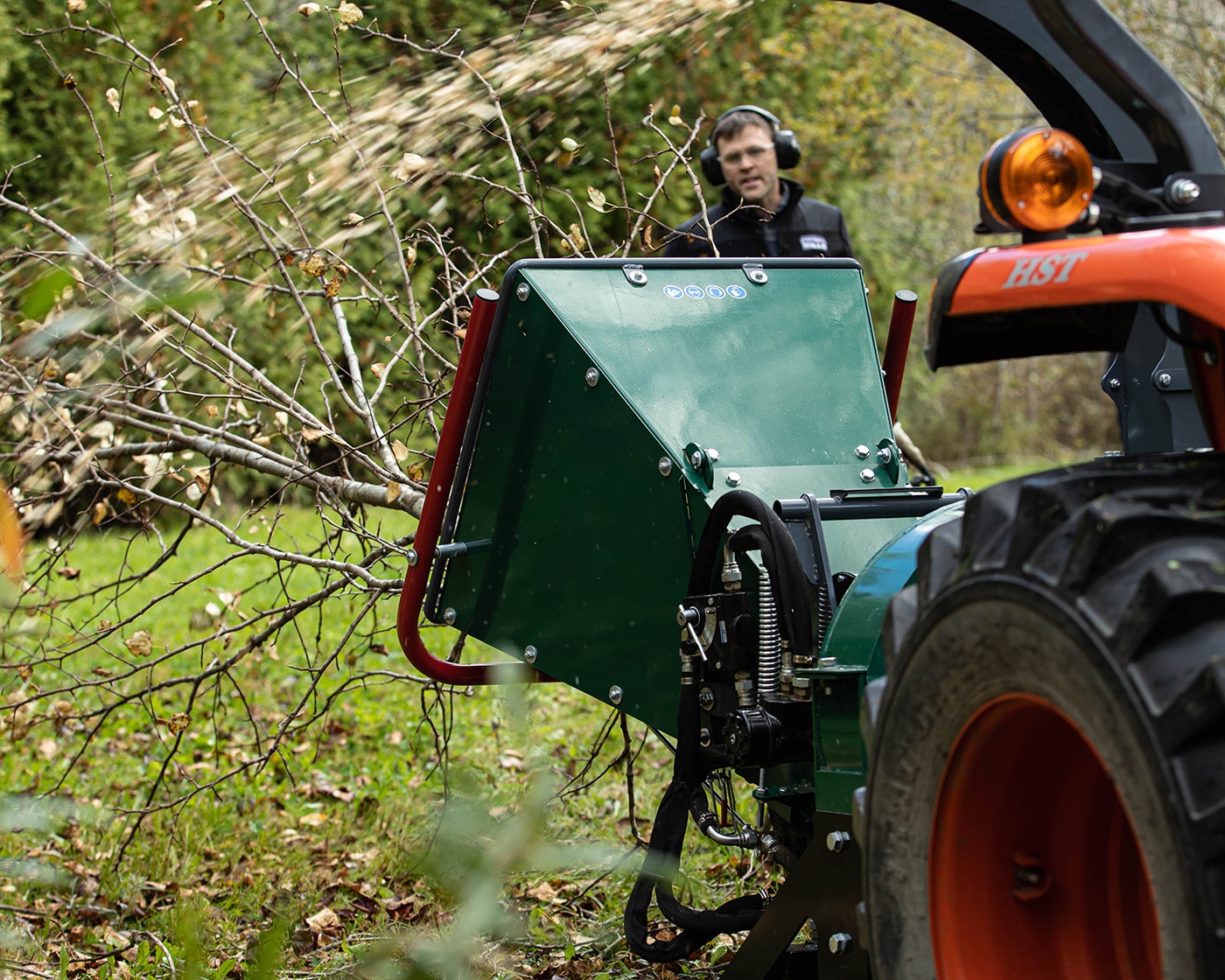
What should you not put in a wood chipper?
While wood chippers are durable pieces of equipment but it's always recommended you follow the best practices and safety tips and avoid putting in materials which are unintended for these tools. Always check trees for fencing, nails or other obstructions before feeding them into your chipper.
Materials you should be wary about making their way into your chipper include:
Ground Debris such as:
-
-
Rocks
-
Gravel
-
Metal objects such as:
-
-
Nails and screws
-
Wire fencing
-
Metal stakes
-
Plastics and Rubber such as:
-
-
Garden hoses
-
Landscaping Tarp
-
Plastic bags
-
Vines and stringy materials such as:
-
-
Ivy and creeping vines
-
Rope-like vegetation
-
Long grasses
-
Wet or green materials such as*:
-
-
Fresh grass clippings
-
Soggy leaves
-
Recently cut saplings
-
*see below section on Twin Flywheel exceptions to this
If you do notice a material entering the infeed chute that should not be there, use the appropriate safety controls to shut off the machine and reverse the hydraulic rollers to remove the material.
Always follow your unit's guidelines in the owner's manual and don't exceed the maximum branch diameter recommended when feeding material into the wood chipper.
What is the harm in putting the wrong materials into a wood chipper?
Inserting materials not intended to be fed into a wood chipper could potentially damage parts of the machine and affect its performance.
-
-
Metal objects can notch or snap blades upon impact
-
Plastics and rubber do not chip cleanly and can jam the cutting mechanism
-
Vines and stringy vegetation can wrap around internal components
-
Glass and rocks can cause projectile hazards
-
On non-Twin Flywheel wood chippers wet or green materials can be too lightweight and clog within the flywheel housing
-
How Does Twin Flywheel Technology Handle Green and Leafy Material?
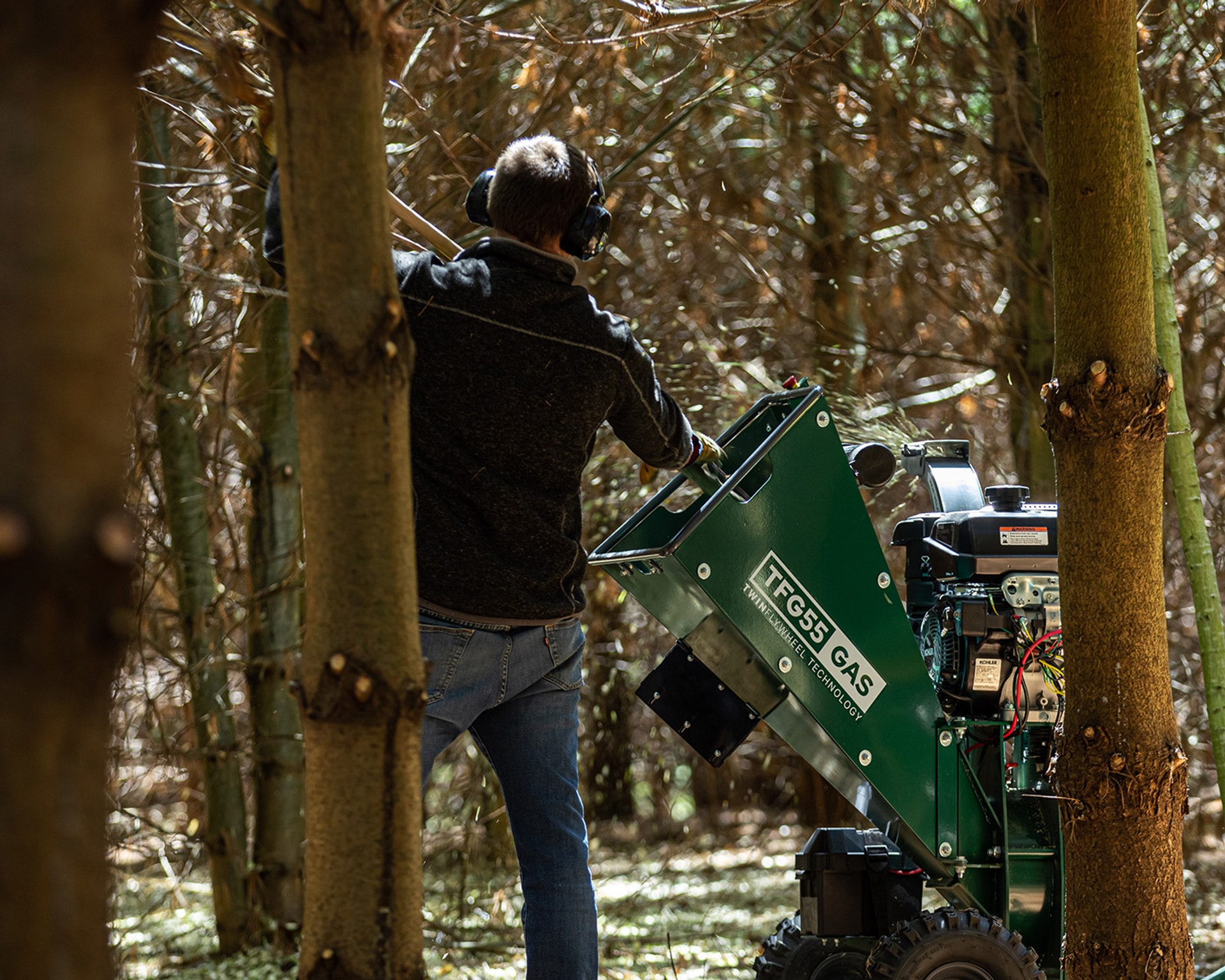
A conventional single-flywheel chipper uses the same flywheel to cut the branch and discharge the resulting chips. This provides dependable performance for clean woody material, but lightweight leaves and wet coniferous branches may not move through the chip stream as easily and require more conscious material mixing.
Woodland Mills patented Twin Flywheel Technology separates those two jobs.
The primary flywheel chips the branch, while a faster secondary flywheel produces additional airflow and throws material through the discharge chute. That increased airflow helps carry lightweight, wet, leafy and coniferous material through the machine while reducing potential buildup.
What Should You Do if the Wrong Material Enters the Chipper?
Stop operating the wood chipper if you hear an unusual impact, notice excessive vibration or suspect that metal, stone or another foreign object has entered the housing.
Follow the shutdown procedure in the operator’s manual for your model. For a PTO wood chipper, this generally means reducing the tractor to idle, disengaging the PTO and turning off the tractor. Wait for every moving component to come to a complete stop before approaching the flywheel housing or discharge chute.
Once the machine is safely shut down and cannot restart, inspect:
-
-
The chipper blades and bed plate
-
The housing and discharge chute
-
Fasteners, bearings and drive components
-
The infeed system for wrapped or trapped material
-
Do not reach into the infeed chute or housing while the machine is operating or while the flywheel is still moving. The flywheel can continue rotating after the tractor or engine has been shut off.
If the inspection reveals damage or you are uncertain whether the machine is safe to operate, contact Woodland Mills technical support before restarting it.
Checking your wood for metal
While wood chippers are heavy duty machines, it's recommended to avoid putting metal through them to avoid excessive wear or damage to the teeth.
Many yard trees may have hidden fence material, nails or other metal objects in them, and oftentimes these can be hard to detect because they've been absorbed into the tree as its grown. To avoid damaging your wood chipper, here are some strategies employed by fellow chipper owners to avoid the risk of accidentally chipping metal:
-
-
Visually inspect your timber before putting it in a wood chipper
-
Use a magnet to detect and pull out any metal
-
Use a metal detector to check your wood pile before chipping
-
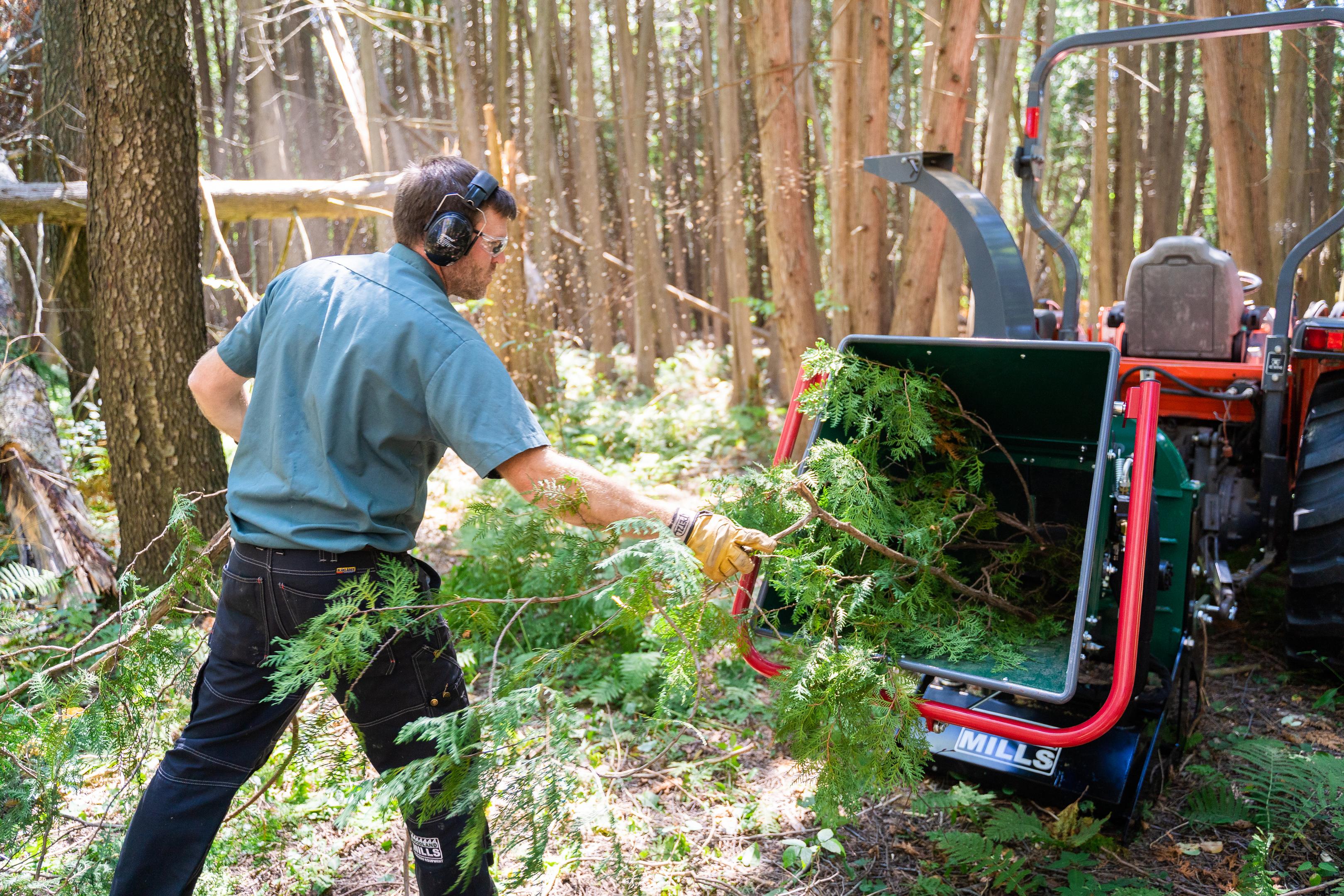
How Can You Check Branches for Hidden Metal?
Begin with a visual inspection of the full branch or stem. Pay particular attention to wood harvested beside fences, barns, property boundaries and former recreational structures.
A handheld metal detector can provide an additional check when the history of a tree is unknown. A strong magnet may locate exposed ferrous metal, but it should not be relied on to identify every hidden object.
If a section of wood contains staining, an unexplained bulge, embedded wire or evidence of an old fastener, cut around that area and dispose of it through an appropriate method. A small amount of questionable wood is not worth risking damage to the chipper or injury to the operator.
What Size Woodland Mills Wood Chipper Is Right for You?
Choose a wood chipper according to your tractor’s PTO horsepower, the diameter of branches you process regularly and the type of material found on your property.
-
-
12 to 30 PTO HP: The TFG55 PTO provides a 5-by-5-inch infeed opening and Twin Flywheel Technology for compact and subcompact tractors
-
15 to 30 PTO HP: The WC46 and TF46 PRO provide up to 4-inch chipping capacity
-
20 to 50 PTO HP: The WC68 and TF68 PRO provide up to 6-inch capacity
-
35 to 100+ PTO HP: The WC88 and TF810 PRO provide up to 8-inch capacity for demanding cleanup
-
The TFG55 GAS provides an independently powered Twin Flywheel option for landowners without a compatible tractor. Its 5-by-5-inch opening accommodates forked and leafy material with less preparation, while its rated maximum branch diameter is up to 3 inches.
In general, choose the largest model your tractor can safely operate. A larger infeed opening accepts wider forks and bushier branches, reducing the trimming required before chipping.
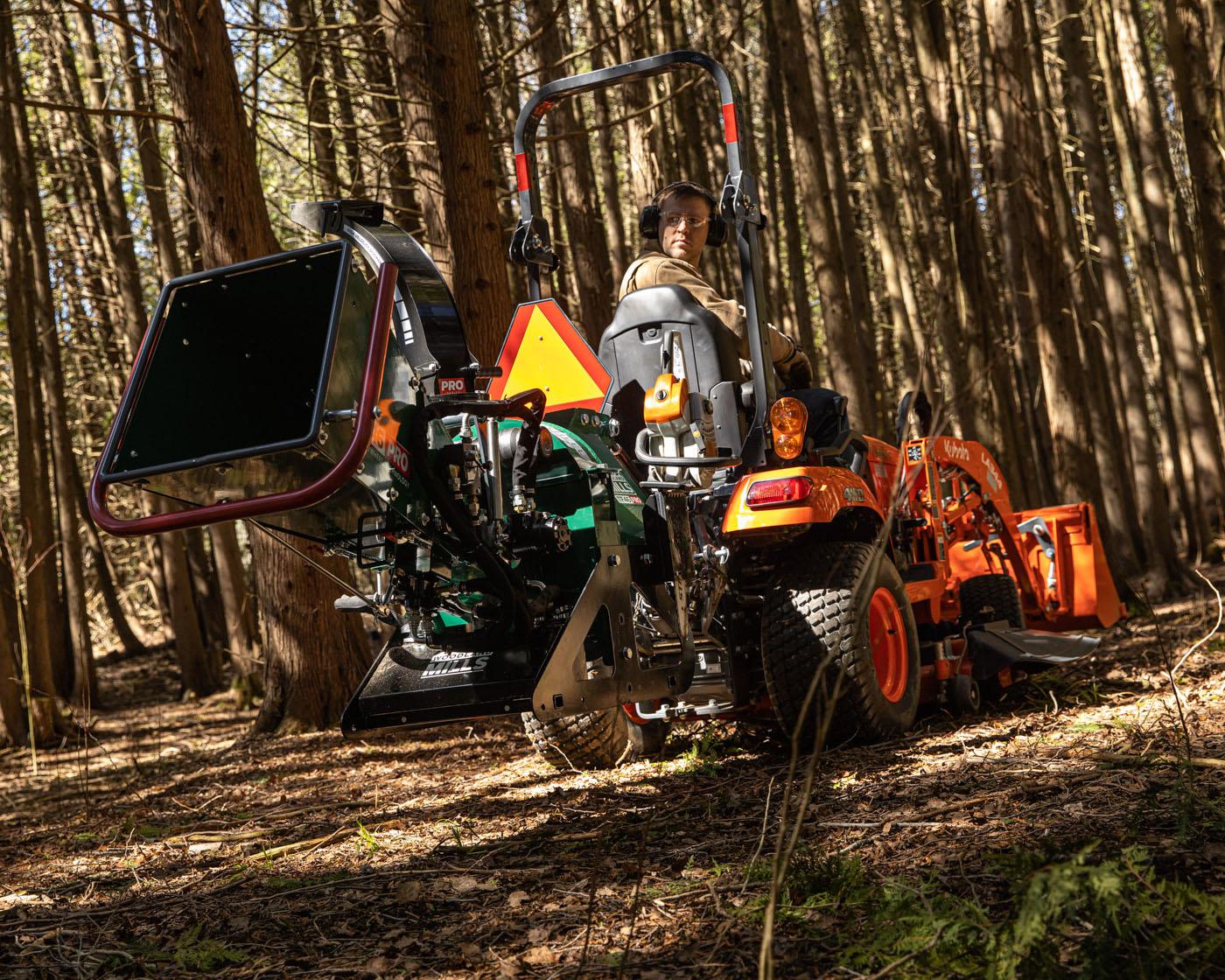
Should You Choose a Single or Twin Flywheel Wood Chipper?
The right flywheel design depends on the material you process most often and how much time you want to spend preparing or mixing light weight material with heavier materials.
A single-flywheel WC Series chipper can be a practical choice when your work mainly involves clean, woody branches. These machines provide hydraulic infeed and are available in several capacities for tractors of different sizes.
Consider a Twin Flywheel model when you regularly process fresh pruning debris, pine branches, spruce limbs or other leafy and coniferous material. The additional airflow can help maintain a more consistent chip stream and reduce the amount of lightweight material left inside the housing, reducing the need to mix in heavy materials.
Twin Flywheel models include the TFG55 PTO, TFG55 GAS and PRO Series PTO chippers. Your final choice should still be based on power compatibility, branch diameter and workload rather than flywheel design alone.
What Other Forestry Equipment Can Support Wood Chipping?
Chipping branches is usually one stage of a larger tree-maintenance or land-clearing process.
Useful Woodland Mills equipment includes:
-
-
Stump Grinder: Reduces the stump remaining after a tree has been safely removed
-
Off-Road ATV Trailer: Moves branches, wood chips, soil and other material around rural properties
-
Log Arch: Lifts the leading end of suitable logs for retrieval behind a compatible ATV, UTV or tractor
-
Portable Sawmill: Converts sound logs into boards, beams and custom lumber instead of chipping usable timber
-
Think about the full workflow before buying equipment. A wood chipper may solve the immediate problem of branch piles, but a trailer can eliminate much of the labour involved in moving the resulting chips.
Positioning a trailer near the discharge chute also allows chips to collect directly in the box. This avoids creating a pile on the ground that must later be shoveled and loaded by hand.
What Are the Cost Considerations for Owning a Wood Chipper?
A wood chipper requires a larger initial investment than renting a machine for one weekend. Ownership becomes easier to justify when pruning, storm cleanup, trail maintenance or land clearing are recurring jobs.
Consider the complete cost of your current process:
-
-
Rental charges or contractor fees
-
Time spent loading and hauling branches
-
Disposal or tipping fees
-
Mulch or wood chips purchased for the property
-
PTO wood chippers use the tractor as their power source, which means there is no separate engine on the attachment to fuel and maintain. Meanwhile gas-powered wood chippers like the TFG55 GAS operates independently and can be moved between suitable work areas without a tractor. This adds a separate engine to maintain, but it can be valuable for landowners who do not own a compatible tractor or need the tractor for another task.
Ongoing ownership costs may include fuel, hydraulic oil, grease, blade sharpening, replacement blades, belts and routine maintenance, as well as safety equipment like hard hats, hearing protection and gloves.. Keeping clean material out of the chipper is one of the simplest ways to protect those components and control long-term costs.
What are the Benefits of Reusing Wood Chips?
Branches are not automatically waste. Once processed, suitable wood chips can become a useful material for trails, landscaping, animal areas and garden projects.
Reusing chips can reduce the amount of material that must be burned, hauled away or delivered to a disposal facility. It may also reduce the amount of mulch or pathway material purchased from another source.
By reusing clean tree material on the property, landowners can turn the result of pruning and storm cleanup into a resource that supports other maintenance projects.
Why Do Landowners Trust Woodland Mills Wood Chippers?
Woodland Mills designs wood chippers for landowners who want to manage more of their branch cleanup, trail maintenance and tree care themselves.
Customers regularly highlight heavy-duty construction, thoughtful engineering and dependable performance in their reviews. Woodland Mills wood chippers are supported by a three-year warranty, providing added confidence when investing in equipment for recurring property work.
Products ship promptly and directly to customers, replacement blades and parts are readily available, and excellent customer service is available when help is needed with compatibility, assembly or maintenance.
"The wood chipper is a wonderful time saver," says TF810 PRO Wood Chipper owner John M. "I used to stack branches on a hay wagon and make a pile and burn them when they dry out. Now I chip them and blow the chips into the woods or I'll make a pile and mulch my fruit trees with the chips."
Landowners can also find equipment experience, project ideas and practical operating advice through Woodland Mills customer reviews and the Woodland Mills Product Owners and Community Facebook Group.
FAQs: Safe Wood Chipper Material and Operation
Q: Can you put wet branches or leaves through a wood chipper?
Yes, provided the branches are clean, woody and within the rated capacity of the machine.
Wet, green and leafy branches can be more difficult for a single-flywheel chipper to process and discharge and often requires thoughtful mixing with heavier material to keep in the chip stream. Woodland Mills Twin Flywheel chippers provide increased airflow to help carry this type of material through the chip stream.
Loose piles of wet leaves, grass and compost should not be fed into the chipper. A chipper shredder are a separate category of equipment more focused on reducing smaller, lighter materials.
Q: Should you remove leaves before chipping branches?
Leaves do not normally need to be removed from suitable branches. A Twin Flywheel chipper is particularly helpful when processing fresh limbs covered with leaves or coniferous needles.
The branch should still have enough woody structure to feed predictably, and its forks must fit safely within the infeed opening.
Q: Can you put lumber through a wood chipper?
Avoid chipping treated, painted or contaminated lumber. Construction material may contain hidden nails, screws or brackets that can damage the machine and create dangerous projectiles.
Woodland Mills wood chippers are intended for clean, natural and untreated wood. The size of lumber you intend to feed into your chipper depends on your model. Smaller off-cuts can easily fit into a smaller chipper like the WC46 while larger pieces of whole lumber can easily be chipped by the TF810 PRO.
Q: What should you do if a wood chipper becomes clogged?
Stop the machine using the procedure in its operator’s manual and wait for every moving component to come to a complete stop.
Never reach into the chipper while it is operating or you may risk serious injuries. Isolate the power source before inspecting the housing, and contact Woodland Mills technical support if the obstruction cannot be safely removed or damage is suspected.
SHOP WOOD CHIPPERS
TFG55 PTO
The TFG55 PTO is our first gravity-feed PTO wood chipper. It was released in the fall of 2024 after two years of research and development at our Canadian head office. Designed to be a value oriented entry-level wood chipper, the TFG55 PTO supports compact and sub-compact tractor owners with yard cleanup and mulch creation.
TFG55 GAS
The TFG55 GAS is a new addition to our long-standing wood-chipper lineup, designed for landowners who need portability in their chipper. It features all the proven technology and durability we've built into our existing tractor-driven products.
WC46 4" PTO
The WC46 chipper has a chipping diameter up to 4". It's designed for tractors with 15-30 HP at PTO and features an auto-hydraulic infeed system and 360-degree swivel discharge.
TF46 PRO PTO
The TF46 PRO chipper features our patented Twin Flywheel Technology. Designed for sub-compact tractors with 15 to 30 HP at PTO, it has a chipping diameter up to 4" (10 cm) and auto-hydraulic infeed system.
WC68 6" PTO
The WC68 chipper has a chipping diameter up to 6". It's designed for tractors with 20-50 HP at PTO and features an auto-hydraulic infeed system and 360-degree swivel discharge.
TF68 PRO PTO
The TF68 PRO chipper features our patented Twin Flywheel Technology. Designed for tractors with 20 to 50 HP at PTO, it has a chipping diameter up to 6" (15 cm) and auto-hydraulic infeed system.
WC88 8" PTO
The WC88 chipper has a chipping diameter up to 8". It's designed for tractors with 35-100+ HP at PTO and features heavy-duty construction and an auto-hydraulic infeed system.
TF810 PRO PTO
The TF810 PRO chipper features our patented Twin Flywheel Technology. Designed for tractors with 35-100+ HP at PTO, it has a chipping diameter up to 8" and auto-hydraulic infeed system.
Join the Woodland Mills Community Facebook group. Search advice and insights from over 65,000 knowledgeable, supportive members.
- Pre-purchase considerations
- Sawmill set-up support
- Project inspiration photos and videos
- Community troubleshooting support