



Making the most of wood chips after grinding a stump
Here's a few ideas on what to do with stump grindings after you've eliminated your tree stumps
After removing a tree stump, you're often left with a pile of wood chips that may seem like waste. However, these stump grindings can be a valuable resource for your property.
All the chips are on the table here, there are some inventive ways of recycling the byproduct of your stump grinder for your yard, garden and across other areas of your property. This guide will explore some practical ways to repurpose your stump grindings:
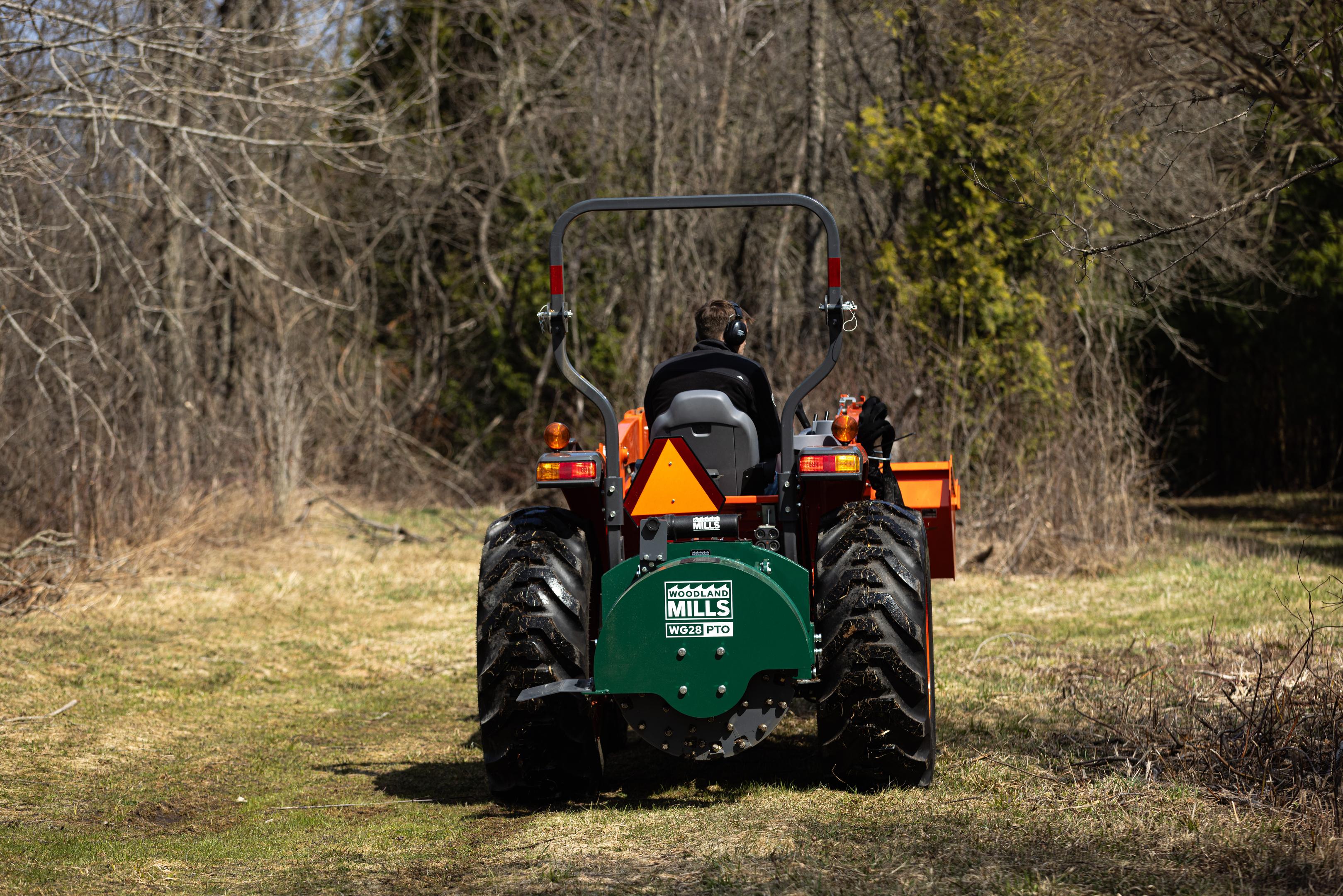
Stump grinding 101: What you need to know
Stump grinding is a part of land clearing that involves mechanically grinding a tree stump into small wood chips. This process typically uses a stump grinder: a powerful landscaping machine designed to chip away at the stump until it's below ground level.
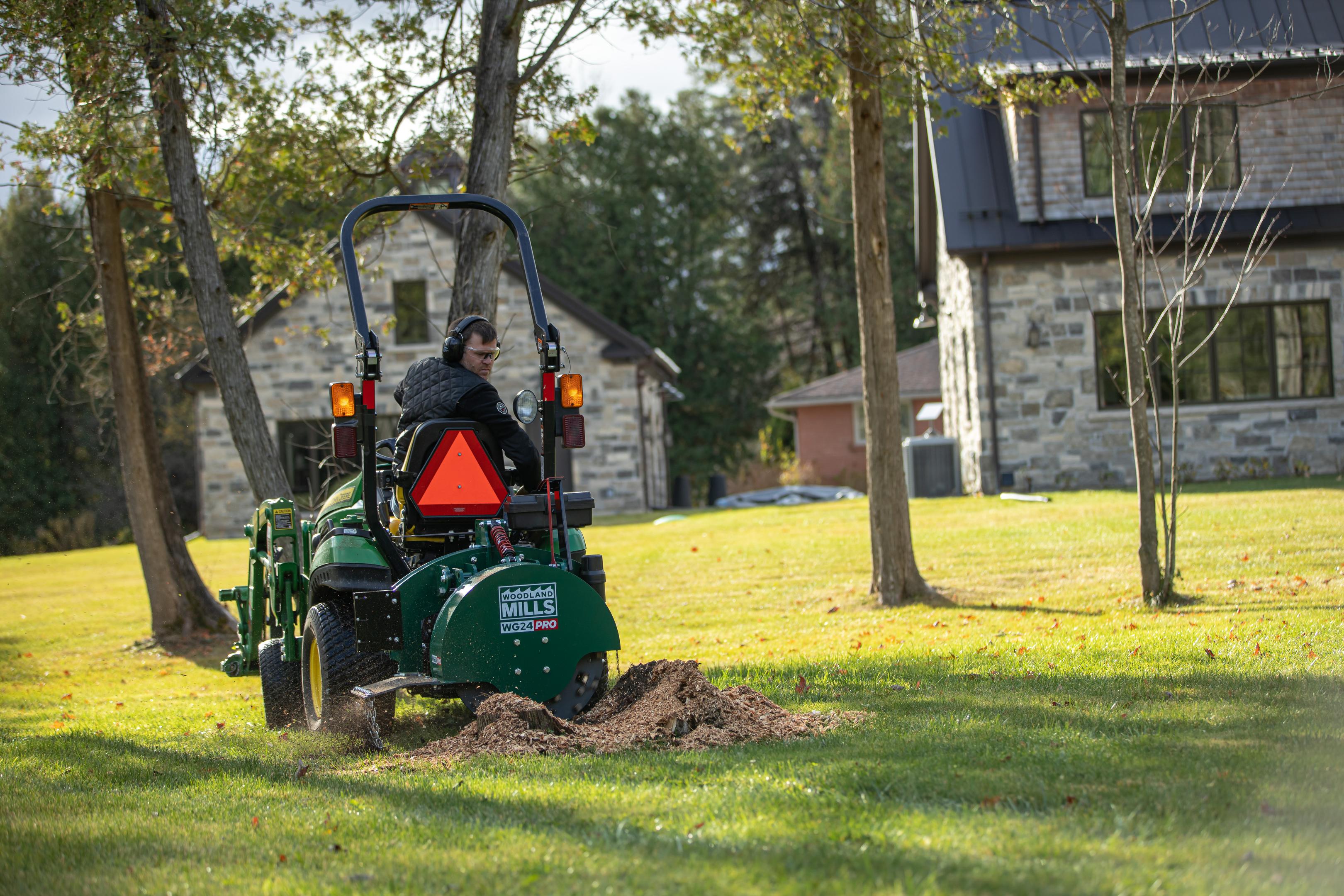
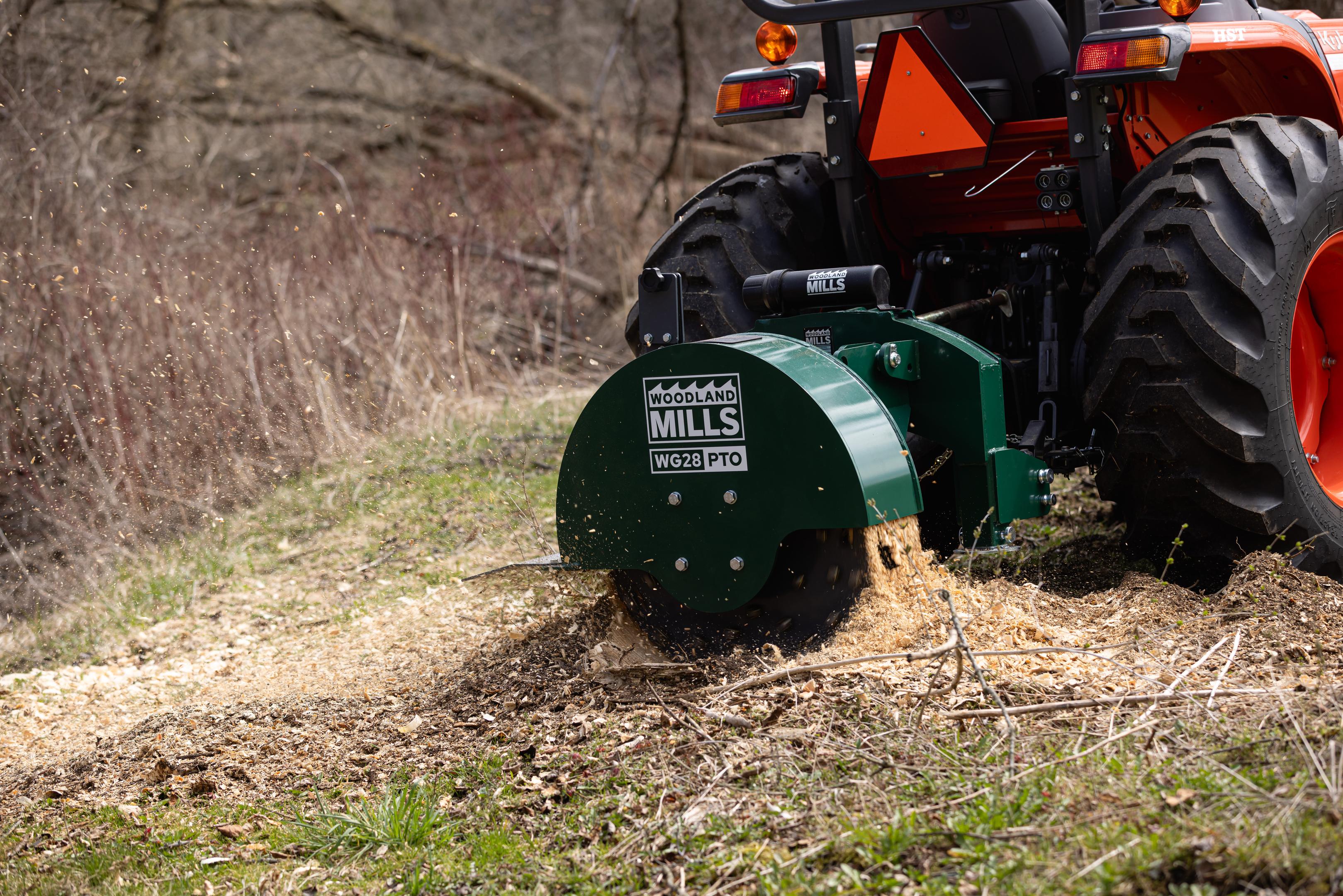
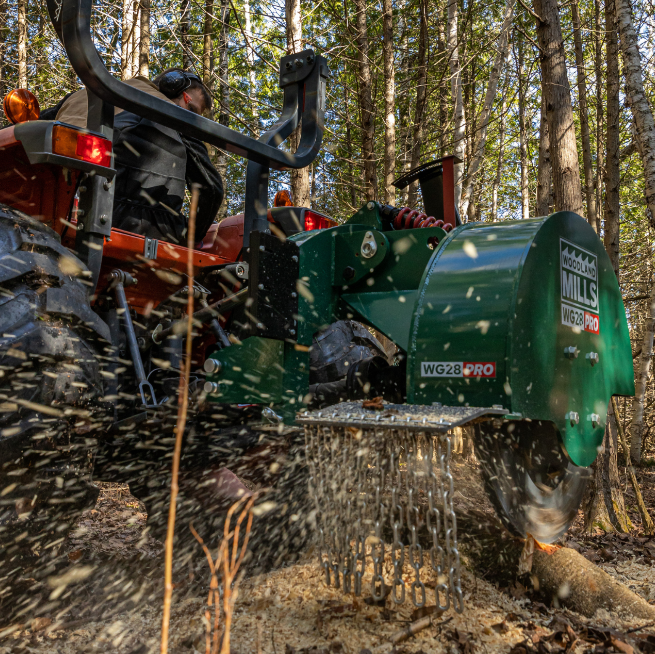
Woodland Mills offers multiple stump grinding options for tractor owners. The Woodland Mills WG24 Stump Grinder is the first option for stump removal. Designed for tractors with 15 to 45 HP at the PTO, it can grind 6" (15 cm) below ground level, making quick work of stubborn stumps even in tight spaces.
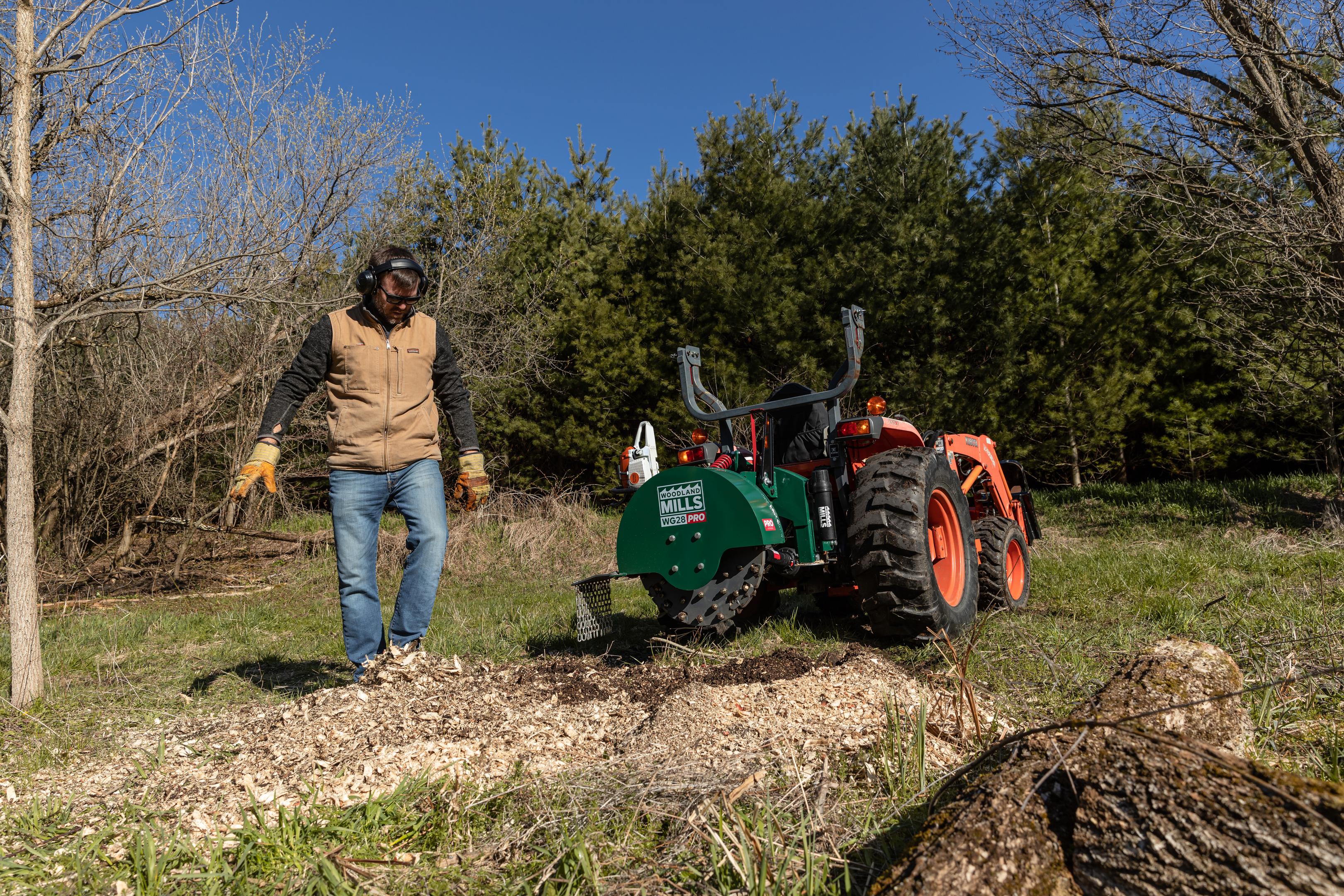
There's also the WG28, the next step up in Woodland Mills' line of stump grinders. Designed for tractors with 35-80 HP at the PTO, it has a grinding depth of 8.5" (22 CM), turning your tree stump into satisfying mulch.
Both models come in WG24 PRO and WG28 PRO versions which feature additional patent-pending shock absorption systems for smoother, more consistent grinds.
When you're done stump grinding, it not only leaves you with a stump hole to do with what you want (fill it in and cover it with grass seed, or use the free space to build a new structure on your property) but gives you the chips which you can use to enhance the surrounding area.
Why is it important to be able to grind stumps on your own?
For landowners who regularly remove trees, maintain trails, clear new areas or manage wooded acreage, stumps can become an ongoing part of property maintenance. They can interfere with trails, mowing and other equipment, create obstacles in areas you want to use, or simply get in the way of your plans for the property.
Owning a stump grinder gives you the ability to address stumps as those projects progress rather than treating stump removal as a separate job every time a tree comes down. It can also complete the tree-management process: branches can be chipped, suitable logs can become lumber or firewood, and the remaining stump can be ground below the surface.
Whether owning a stump grinder makes sense depends on your property and how frequently you're removing trees. For a one-time stump, renting or hiring a contractor may be the better option. For landowners who regularly manage wooded acreage, stump removal may be recurring enough to consider having the equipment on hand.
Making the most of wood chips: 4 solutions
So what are some of the best ways to make use of your stump grounds? Here are some suggestions:
-
-
Use as mulch: Stump grindings make excellent mulch for garden beds, helping retain soil moisture, regulate temperature, and suppress weed growth. Spread a 3-6” (7-15 cm) layer around plants, shrubs and small trees.
-
Create compost: Mix stump grindings with other organic waste materials to create nutrient-rich compost for your garden and small trees.
-
Build garden pathways: Use stump grindings to create natural, eco-friendly paths, especially useful in areas with uneven terrain. Lay a weed barrier, then spread a thick layer of wood chips on top.
-
Improve soil structure: Incorporate stump grindings into your soil to improve its structure. They help aerate heavy clay soils and improve water retention in sandy soils, beneficial for both garden beds and areas with small trees or shrubs.
-
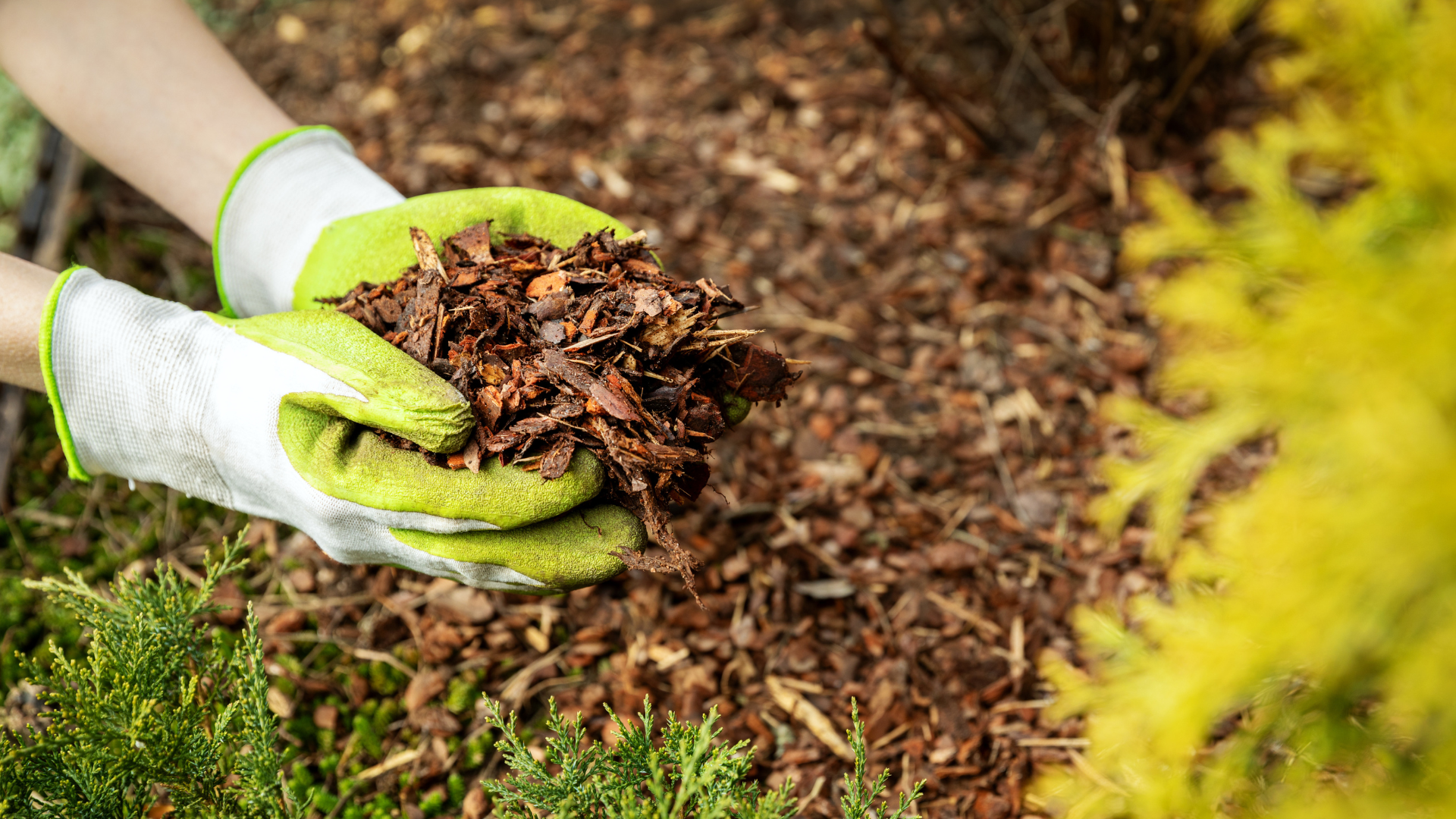
Getting the most from your stump grinder's debris
-
-
Age the chips: Let them age for a few months before using as mulch to prevent nitrogen depletion.
-
Be cautious with diseased wood: Dispose of chips from diseased trees to prevent spreading problems.
-
Mind the acidity: Some species create more acidic chips. Use around acid-loving plants or mix with lime to neutralize pH.
-
Control quantity: Stick to a 3-6” (7-15 cm) layer of mulch to avoid suffocating plants.
-
The environmental benefits of using wood chips
Repurposing stump grindings offers several environmental benefits:
-
-
Reduced waste: Using the waste from a stump grinder helps keep organic material out of landfills, minimizing the impact of land clearing jobs.
-
Carbon sequestration: As chips decompose, they release carbon into the soil, benefiting areas with dense forests or large trees.
-
Water conservation: Wood chip mulch retains soil moisture, reducing watering needs in areas with uneven terrain or steep slopes.
-
Soil health: Decomposing wood chips, including those from evergreens with their needles, improve soil structure and support beneficial microorganisms. More nitrogen may be needed to aid in the decomposition of the wood chips though.
-
Erosion control: Helps prevent soil erosion on steep slopes or uneven terrain, protecting grass and ground cover.
-
Biodiversity support: Creates a favourable environment for local insects and wildlife, especially in areas transitioning from dense forests to managed landscapes.
-
Temperature regulation: Helps regulate soil temperature, benefiting both garden plants and grass roots in areas with extreme temperature fluctuations.
-
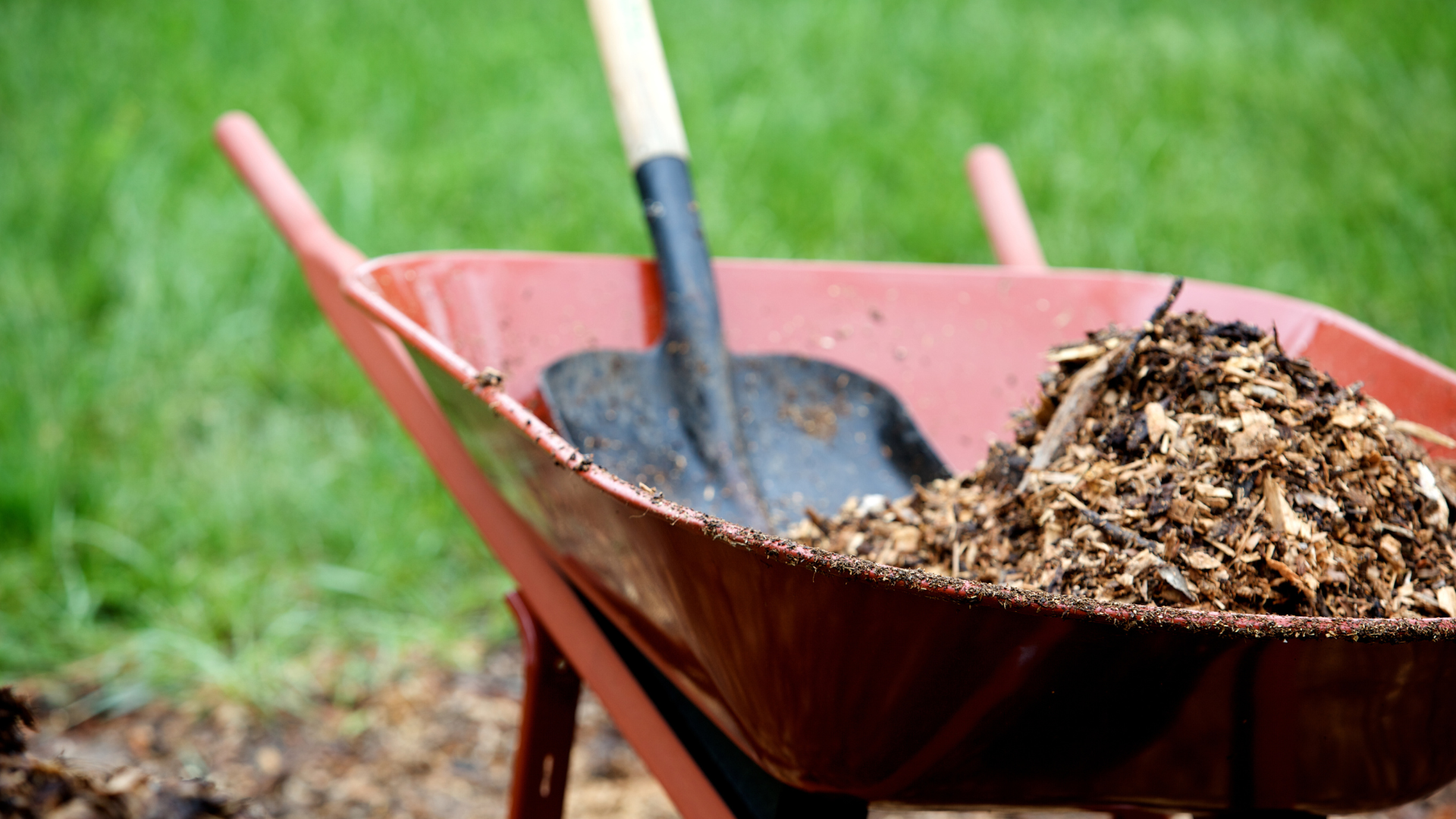
Soil and plant benefits: How stump grinders and their grindings enhance your landscape
Grinding waste an be used in landscaping to positively impact soil and plants by:
-
-
Improving soil structure and water retention
-
Providing slow-release nutrients
-
Suppressing weed growth
-
Regulating soil temperature
-
Helping control erosion, especially on steep slopes or newly cleared land
-
Quick Facts
How long does it take for stump grindings to decompose?
Typically, 6 months to 2 years, depending on chip size, wood species, and environmental conditions.
Can I use stump grindings immediately after grinding?
Yes, for pathways or filling holes. For mulching or soil amendment, let them age for a few months to prevent nitrogen depletion.
Will grass grow in stump grindings?
It may, but it's not ideal, especially on uneven terrain. Mix grindings with topsoil or compost for better results.
Are stump grindings good for vegetable gardens?
Yes, but use cautiously. Aged chips are preferable, mixed with other organic materials for best results.
Is it necessary to own a stump grinder as a landowner?
No. Whether it makes sense to own a stump grinder depends on your property and how often you're removing stumps.
If you only have one or two stumps to remove, renting a machine or hiring someone may make more sense. But if tree removal, trail maintenance, storm cleanup or land clearing are recurring jobs on your property, owning a stump grinder gives you the flexibility to remove stumps as the work happens.
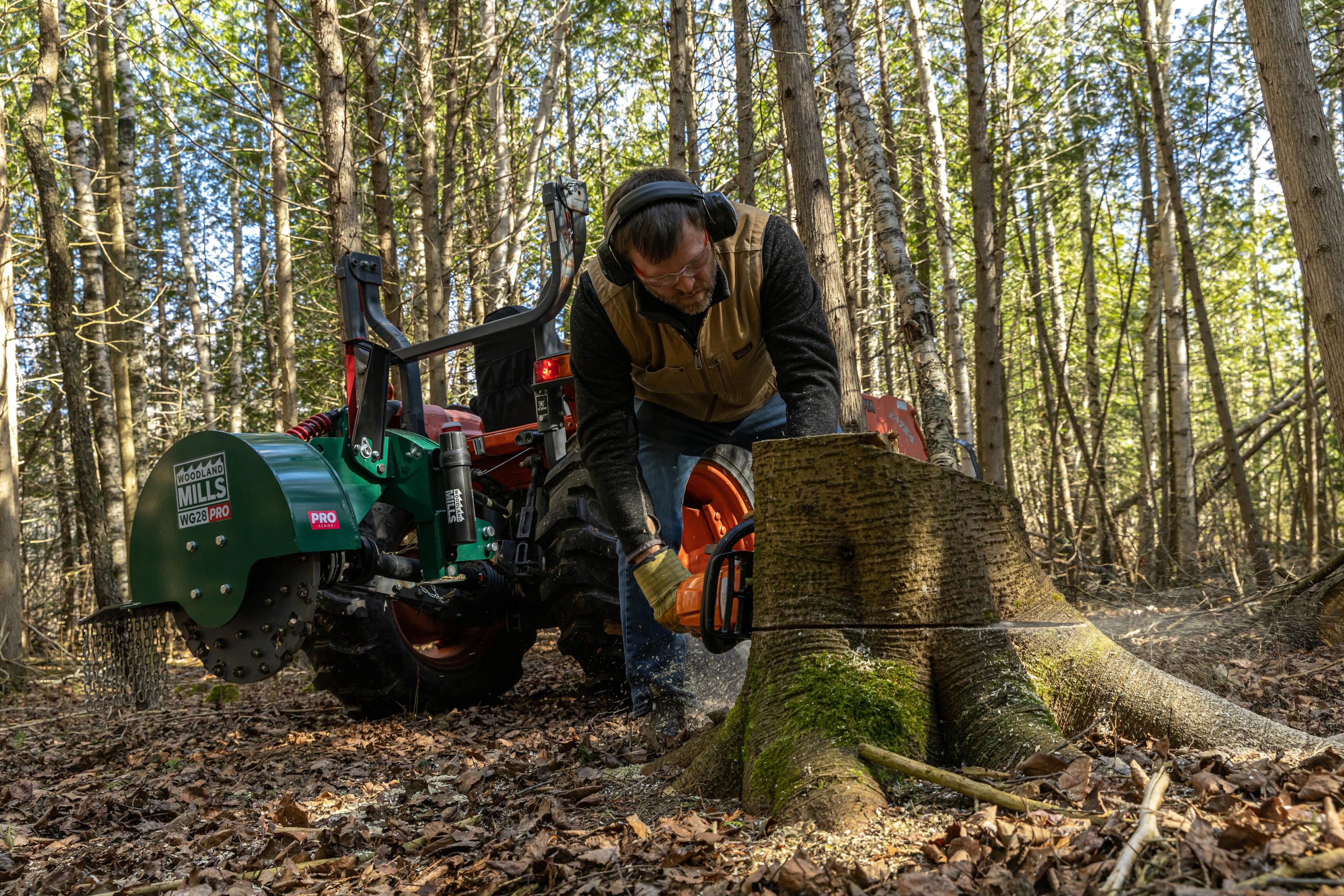
It can also give you the ability to complete more of the tree-management process yourself, from pruning and chipping branches to processing logs and removing the stump that remains.
What are the benefits of owning a stump grinder vs renting?
Renting can be a practical choice for a one-time project or a small number of stumps. Ownership becomes more worth considering when stump removal is an ongoing part of maintaining your property.
The financial comparison will depend on local rental rates, contractor pricing, how frequently you use the machine and how long you expect to own it. Ownership also has a convenience factor: the grinder is available when a stump needs to be removed, whether that's part of a planned clearing project or cleanup after an unexpected tree removal.
Consider the total cost and frequency of use rather than assuming that either renting or owning will always be the less expensive option.
Cost considerations
Purchasing new equipment is a major decision for any landowner. Common factors impacting said decision include:
-
-
How frequently will I use this equipment?
-
Does the cost make sense for my budget?
-
Is it cheaper long-term than hiring someone to do it?
-
How many stumps am I likely to remove over the next several years?
-
Do I already own a compatible tractor?
-
What are rental and contractor rates in my area?
-
There isn't one answer that applies to every property. Renting can make sense for a one-time project, while hiring a contractor may be the right choice for difficult or specialized work. For recurring stump removal, however, repeated rental or contractor costs can add up.
When comparing the options, look beyond the initial purchase price. Consider frequency of use, the number and size of stumps you're dealing with, maintenance and storage requirements, local rental and contractor costs, and the convenience of having the equipment available when you need it.
How a wood chipper can compliment your stump grinder
A wood chipper and stump grinder handle two different parts of the same tree-removal process.
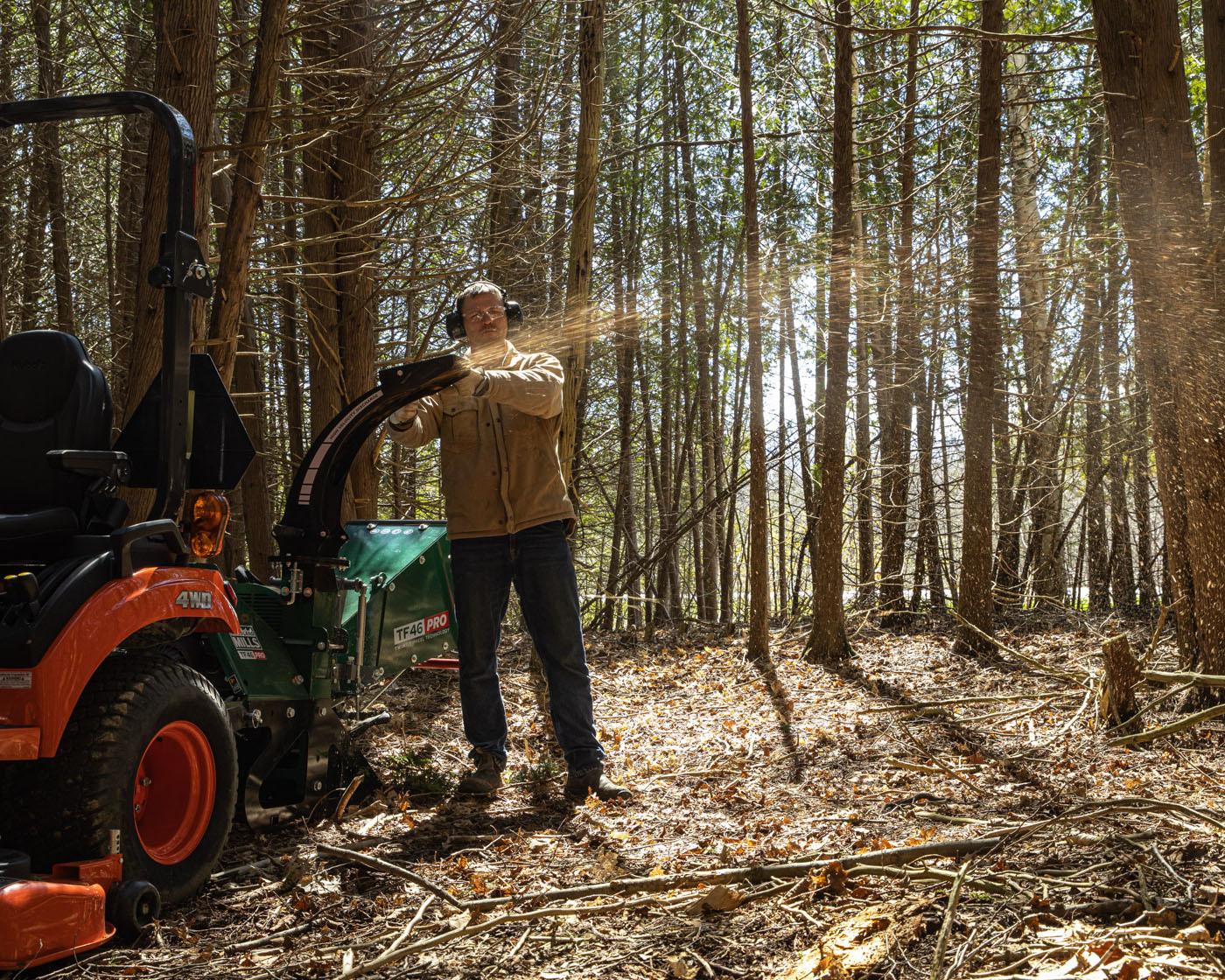
After a tree comes down, a wood chipper can process branches and other above-ground woody debris into wood chips. Suitable sections of the trunk can be set aside for lumber or firewood, while the stump grinder addresses what remains below ground level.
This can be particularly useful during trail maintenance, storm cleanup or land-clearing projects where you're dealing with multiple parts of a tree rather than simply removing one stump.
The resulting wood chips and stump grindings can then be reused around the property for trails, landscaping, surface mulch and other appropriate applications.
What other tools would be helpful for clearing land?
Removing the stump is only one part of a land-clearing project, so it's worth thinking about how you'll handle and move the material you create.
A tractor with a front-end loader can be useful for moving soil, stump grindings and other heavy material around the work area. If you need to transport material farther across your property or through narrower off-road trails, an ATV trailer can provide another option.
The Woodland Mills Multilander ATV Trailer features a 2,000 lb payload capacity and tandem-axle design for hauling wood chips, mulch, soil and other materials around rural properties.
For larger tree-management projects, a wood chipper, chainsaw, log splitter, forestry winch or log arch may also play a role depending on whether you're processing branches, producing firewood or extracting logs from wooded areas.
Why do acreage owners trust Woodland Mills' stump grinders?
Stump grinders do demanding work. The cutting system repeatedly engages dense wood and roots while operating from the power supplied by your tractor, so strong construction, thoughtful engineering and proper tractor compatibility all matter.
We engineer and manufacture our equipment and sell it directly to our customers. That gives us a direct line of contact with the people using our stump grinders, from helping match the right equipment to their tractor to supporting them long after the sale. It's a relationship we value, and just the way we like it.
Woodland Mills stump grinders are also backed by the experience of owners using them on real properties. Customer reviews and our community of nearly 90,000 Woodland Mills owners and enthusiasts provide a look at how the equipment performs across different tractors, stump sizes and land-management projects.
Now to put it into practice
Stump grindings are a valuable resource for your property, offering many benefits for your property. By repurposing this material, you're enhancing your landscape and contributing to sustainable land management. Equipped with a stump grinder, you could even offer a stump grinding service for friends or neighbors, and either reuse or give away the grind waste.
Following these tips will help you turn tree stumps into assets for your property, supporting a healthier, more vibrant landscape in both small residential plots and larger forestry operations.
FAQ: Frequently Asked Questions
Q: Will a Woodland Mills PTO stump grinder be enough for removing large, difficult stumps and root systems?
Woodland Mills PTO stump grinders are designed to handle a wide range of stump sizes, but tractor horsepower, stump diameter, wood species, root structure and grinder size will all affect how quickly a stump can be removed.
The important first step is matching the stump grinder to your tractor's PTO horsepower and specifications. From there, larger grinder models can offer greater grinding capacity and depth, making them better suited to landowners who regularly tackle larger or more demanding stump-removal jobs.
For occasional stump removal with a compact tractor, a smaller compatible grinder may be all you need. If stump grinding is a frequent part of your land-management work, the additional capacity of a larger model may improve productivity.
Q: How do I move the wood chips created by my stump grinder?
For smaller jobs, the grindings can often be moved with a shovel, wheelbarrow or tractor bucket. Larger stump-removal and land-clearing projects can produce considerably more material, making mechanical hauling more practical.
A tractor with a front-end loader is an effective option for moving grindings around the immediate work area. If you need to transport them farther across your property, an ATV trailer like the Multilander can haul larger quantities of wood chips, mulch and other materials over trails and uneven terrain.
Q: What should I do with the hole after I'm done stump grinding?
You can return some of the stump grindings to the hole, but keep in mind that woody material and remaining roots will continue to decompose and settle over time.
If your goal is to establish grass or create a stable, level finished surface, remove excess grindings and use suitable soil or topsoil to finish grading the area. You may need to add additional soil later if the area settles as the remaining roots decompose.
If you plan to replant a tree in the area, consider the remaining root system, soil conditions and why the original tree was removed before choosing the exact planting location. Planting immediately in the same spot isn't always the best option, particularly if the previous tree was removed because of a disease or soil-related problem.
Join the Woodland Mills Community Facebook group. Search advice and insights from over 65,000 knowledgeable, supportive members.
- Pre-purchase considerations
- Sawmill set-up support
- Project inspiration photos and videos
- Community troubleshooting support